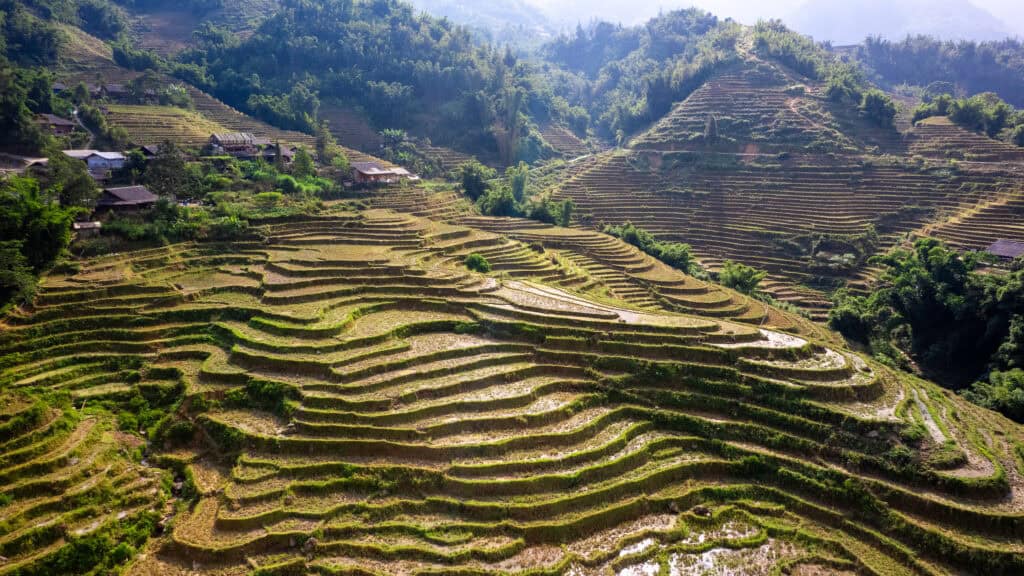
Aerial view of lush green terraced rice fields on hillsides, with scattered houses and trees under soft sunlight in a rural, mountainous area.

Sapa Trekking: Why the Hmong Valley Trek Is Worth It

This post is also available in :

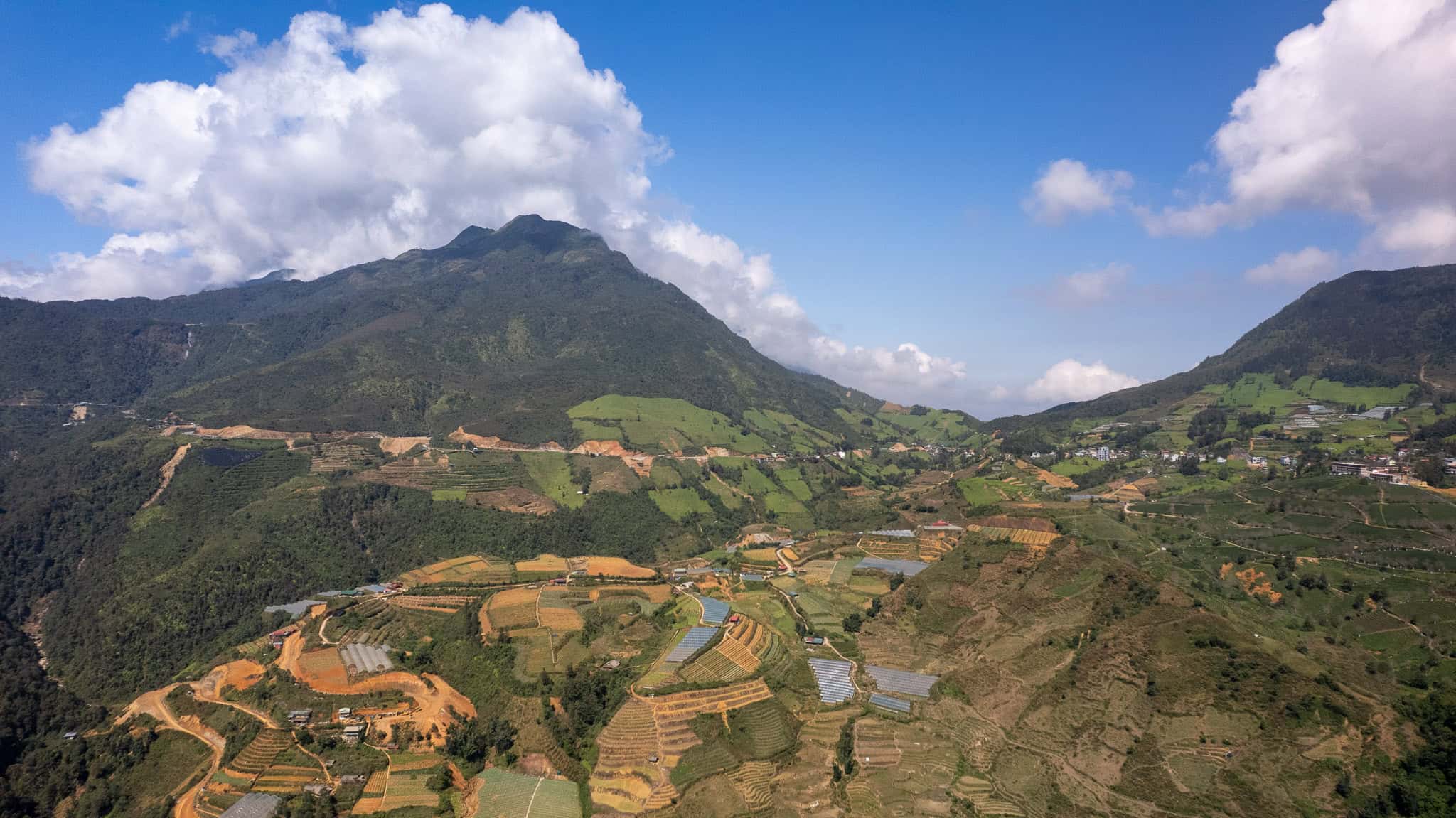
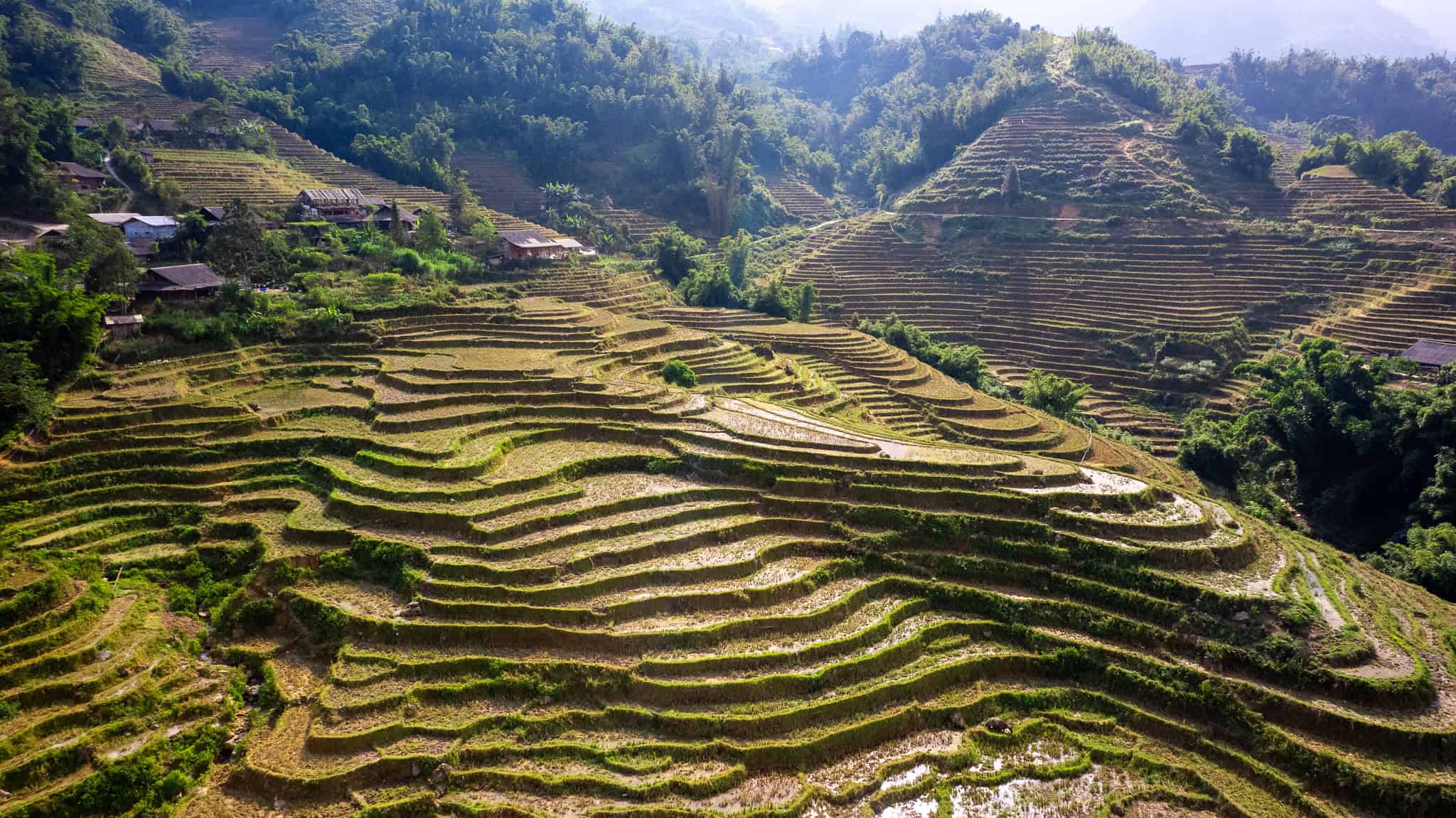
Sapa is famous for one thing above all else, the rice terraces that spill down the mountains in every direction. But you won’t really see them from Sapa town. To get to the good stuff, you need to get out on foot.

Sapa trekking is the single best activity here, and it comes in every shape: a few hours, a full sapa one day trek, or multi-day routes deep into the Hmong valley. I did a one-day trek myself, and this guide walks through exactly what that day looked like, plus what to expect if you go longer or head up toward Fansipan instead.

Table of Contents

Why Trekking Is the Whole Point of Sapa

If you want the bigger picture of the town first, check out my general guide to Sapa before diving into the trekking side of things.

Sapa town itself is pleasant, but it’s not why people come. The real reason is the Muong Hoa Valley and the terraced rice fields that surround it, and you only get access to those on foot.

Any trekking tour sapa operator sells will get you into that landscape. The question is how much time you want to spend out there and how deep into the valley you want to go.

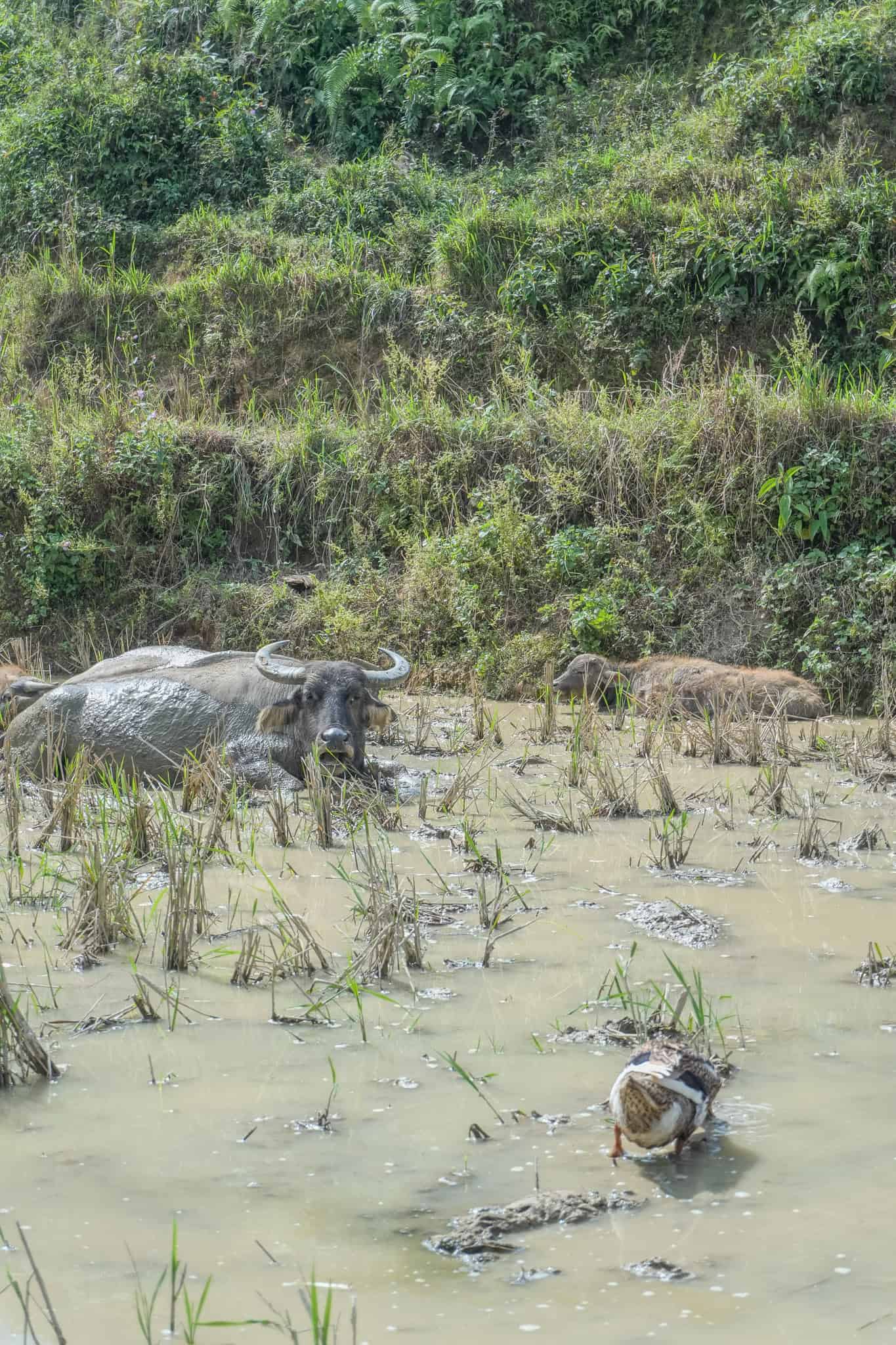
What surprised me most wasn’t the scenery, though that was stunning. It was how quickly the crowds disappeared. Once you’re a couple of minutes past the edge of town, you can walk for hours without seeing another tourist, just rice paddies, farmers, and water buffalo.

If you’re more into two wheels than two feet, I also covered a scooter day trip up to Tram Ton Pass, which is a great way to see a different side of the same mountains.

FREE Google Map - Best 500 Places in the World

Most travelers visit the same 20 places their whole life.

Here are 500 reasons to do better.A curated world map of 500 unforgettable destinations across every continent — open it in Google Maps and start planning.

    Best Time for a Sapa Trek

    I trekked in November, and the rice was just starting to grow back. It wasn’t a sea of mud, but it wasn’t the postcard green or gold you see in photos either. If you’re picking your dates around the terraces, timing matters more than almost anything else.

    Here’s how the seasons actually break down:

    • Water and mirror season, March to May – flooded paddies reflecting the sky, fewer crowds
    • Green season, June to August – lush green terraces, warmer, some rain
    • Golden harvest, mid-September to early October – the iconic gold terraces, the most photogenic, also the busiest
    • Post-harvest, November to February – drier, cooler, terraces mostly bare or just replanted

    If you want the classic gold-terrace photo, aim for late September into early October. If you’d rather trek with fewer people and don’t mind skipping peak color, the shoulder months, including November when I went, are a solid trade-off.

    But please double check the dates and with a local agency, rice production is never a perfect timed science.

    When I’m planning my trip, I always check flights on Skyscanner first, since it lets me compare prices and find the best deal, and most of the time I also go on Trip.com afterward, which is another great price comparison tool for flights and hotels.

    My Sapa One Day Trek, Step by Step

    Starting in Town

    We met up around 8:30 in the morning. I was told the group would be four people plus a guide, but by the time we started, it was just two of us plus the guide. That ended up being the best part of the whole day.

    With a smaller group, you set your own pace, ask more questions, and don’t feel rushed by anyone else. If you’re picky about your sapa day tour group size, ask the operator directly before booking, a private or small-group option is worth the extra cost.

    Our guide was a local Hmong woman who lived in one of the nearby villages. She spoke great English, was completely open about her life and her community, and clearly enjoyed the questions. Having a guide who’s actually from the valley, not just trained to lead tours through it, made a real difference in how much we learned.

    If you want to book a tour or an activity without any hassle, Get Your Guide is honestly one of the easiest platforms I use, with a huge range of experiences, flexible cancellation on most bookings, and you can even get 5% off with my code HORIZONHUGO5.

    Through the Market Street

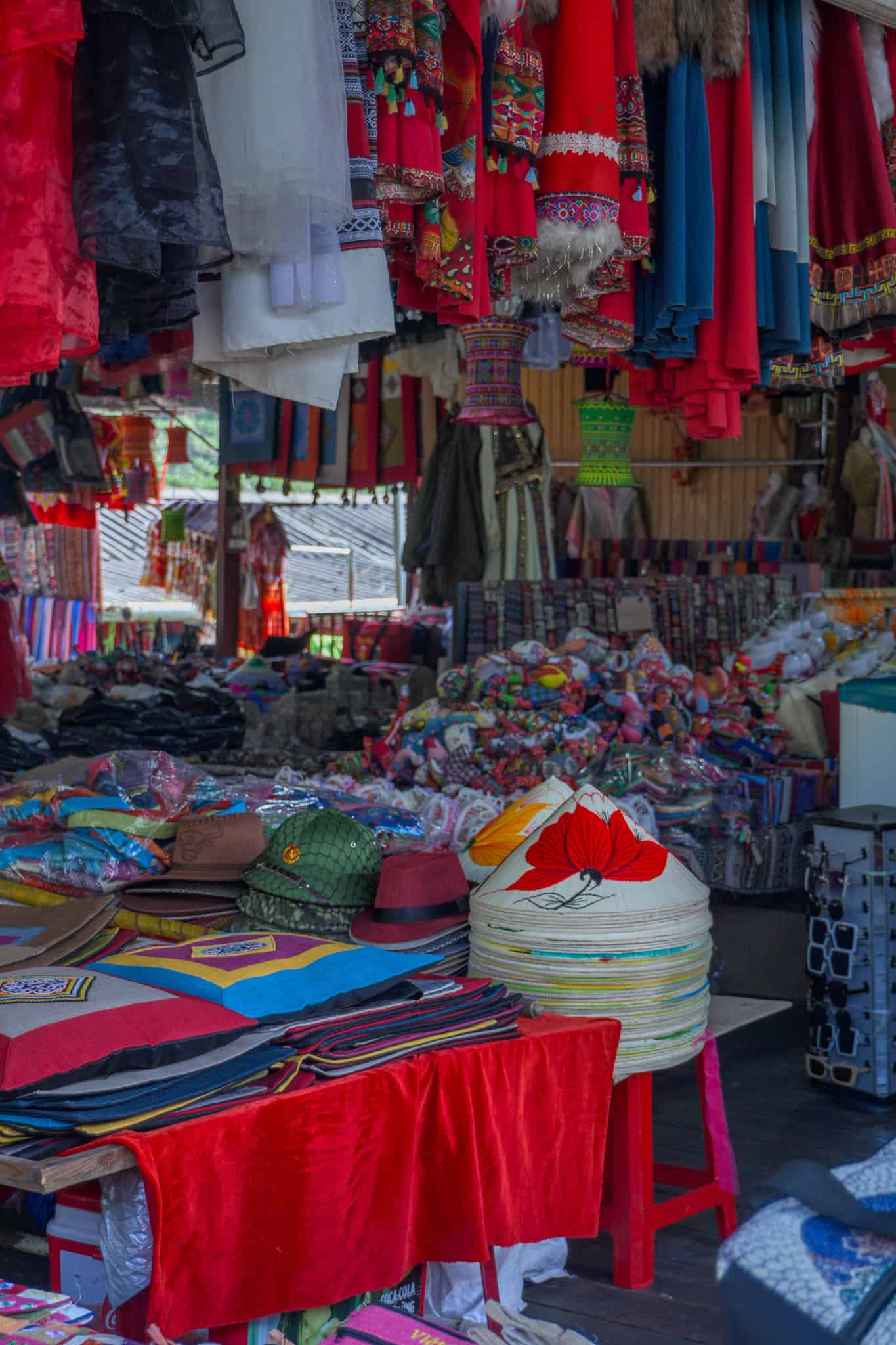
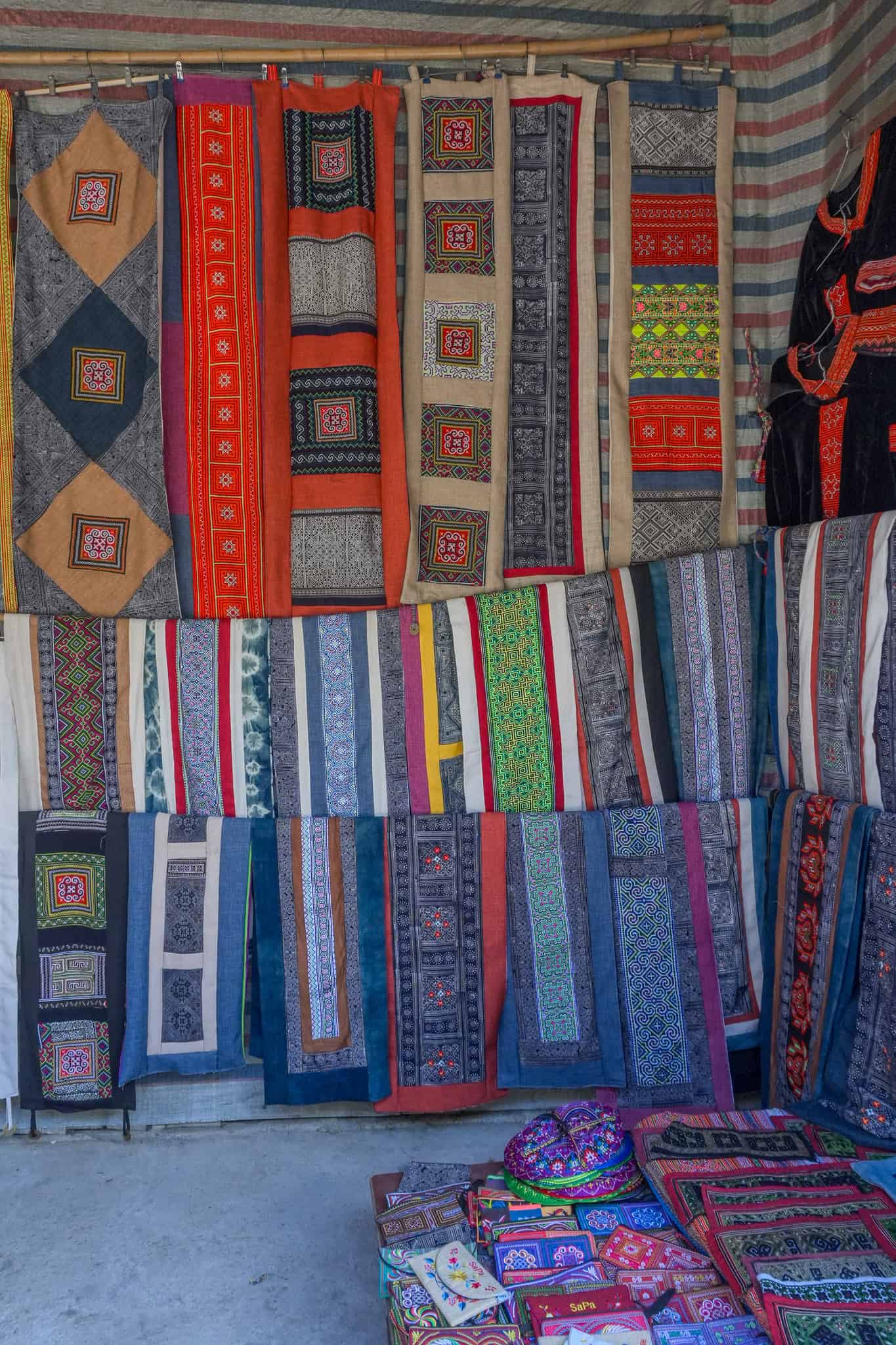
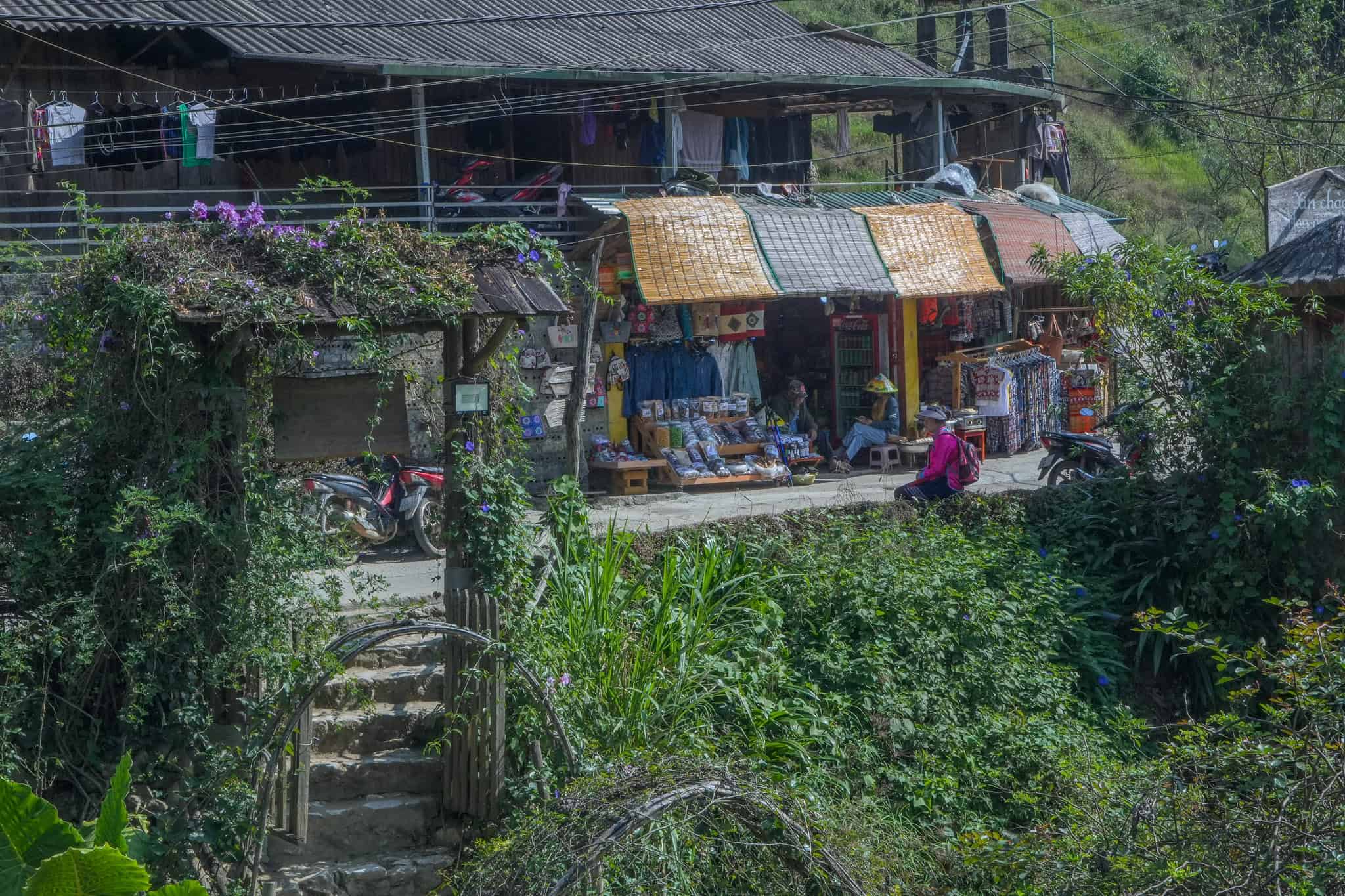
    The first stretch out of the agency was just a few blocks, but the town dropped away fast. We walked down a sloped street lined with small shops, more like a market than a shopping district, selling traditional textiles and clothing.

    The pieces on display were almost certainly Black Hmong garments, deep indigo-dyed hemp cloth, hand-batiked and embroidered, some paired with silver jewelry for special occasions like weddings or New Year celebrations. The color and detail work is genuinely impressive up close.

    One practical tip, don’t buy anything here yet. You’re about to spend a full day walking, and full hands make for a miserable trek. Shop on the way back instead.

    Traditional Houses and Everyday Tools

    Further down, we passed a few traditional wooden houses that were still standing and open to visitors. Inside were old tools once used for harvesting rice and handling other everyday farm tasks.

    It’s rustic, almost like stepping into a different century, but that’s not a performance for tourists. Families in the surrounding villages still use tools like these, and many still live on very little. Seeing that up close is a better introduction to Hmong daily life than anything you’ll read online.

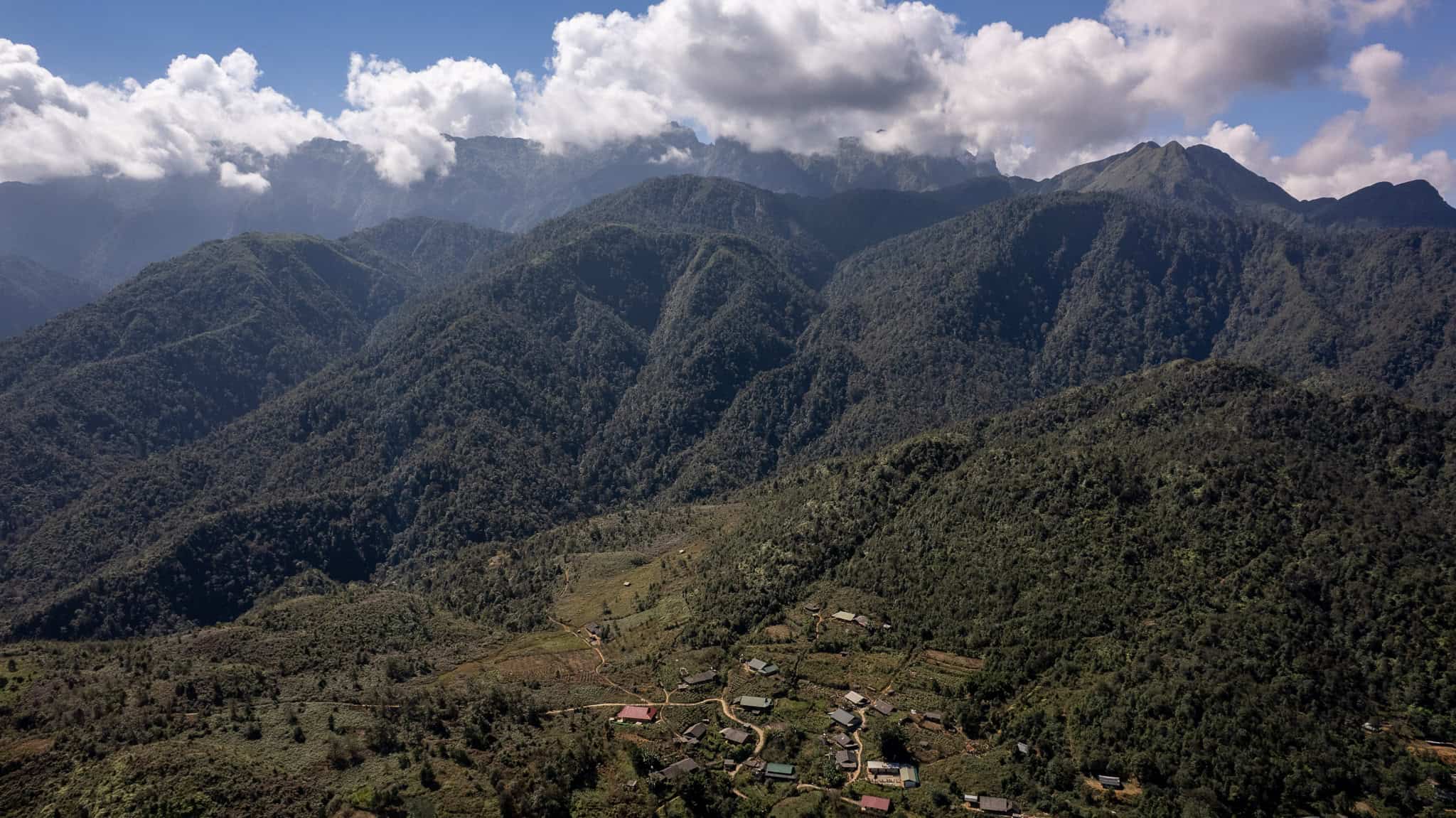
    Past the houses, the valley properly opens up. Buildings thin out, the trail narrows, and the rice terraces start to dominate the view.

    Into the Hmong Valley

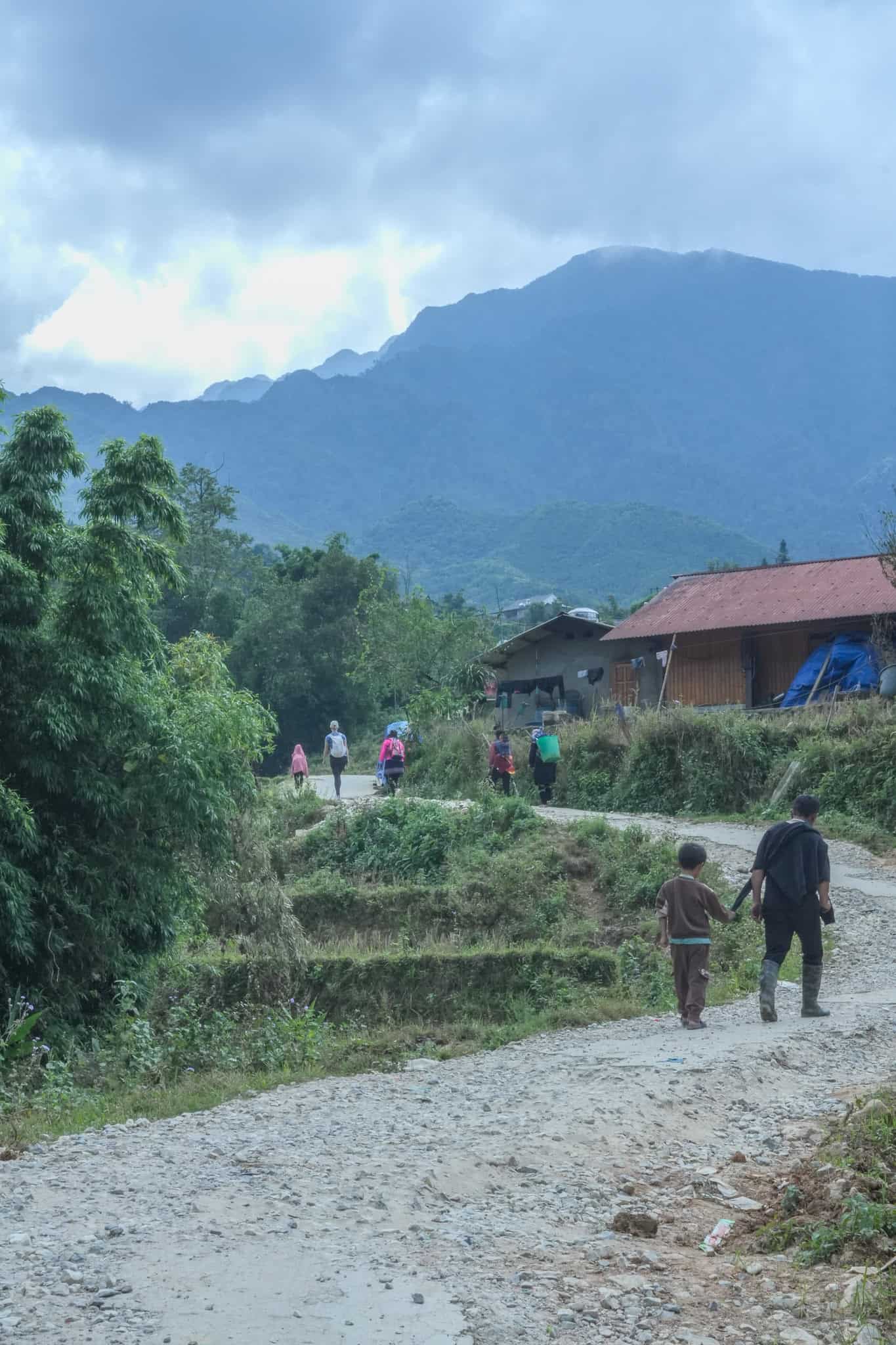
    From here, the trek settles into a rhythm, up and down along small green hills that hug the edge of the valley. None of it is technical, but there’s real elevation change, enough to make you feel like you earned the views.

    This stretch is where the trip starts to feel like an actual Hmong valley trek instead of a countryside walk. The terraces stack up on either side, and the trail hugs the contour of the hills for a couple of hours before dropping into the valley floor.

    The Touristy Complex (Worth a Stop, Not the Highlight)

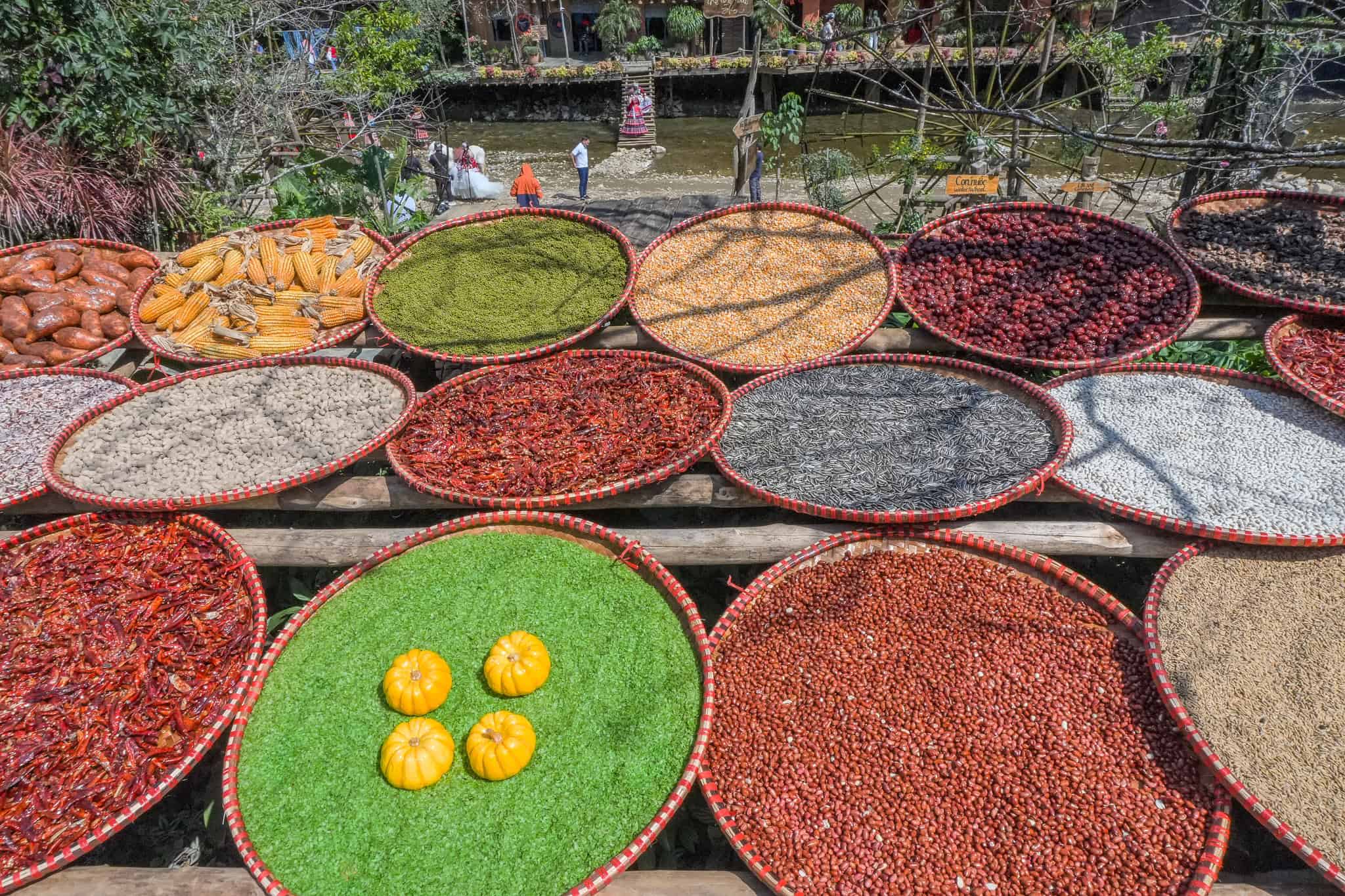
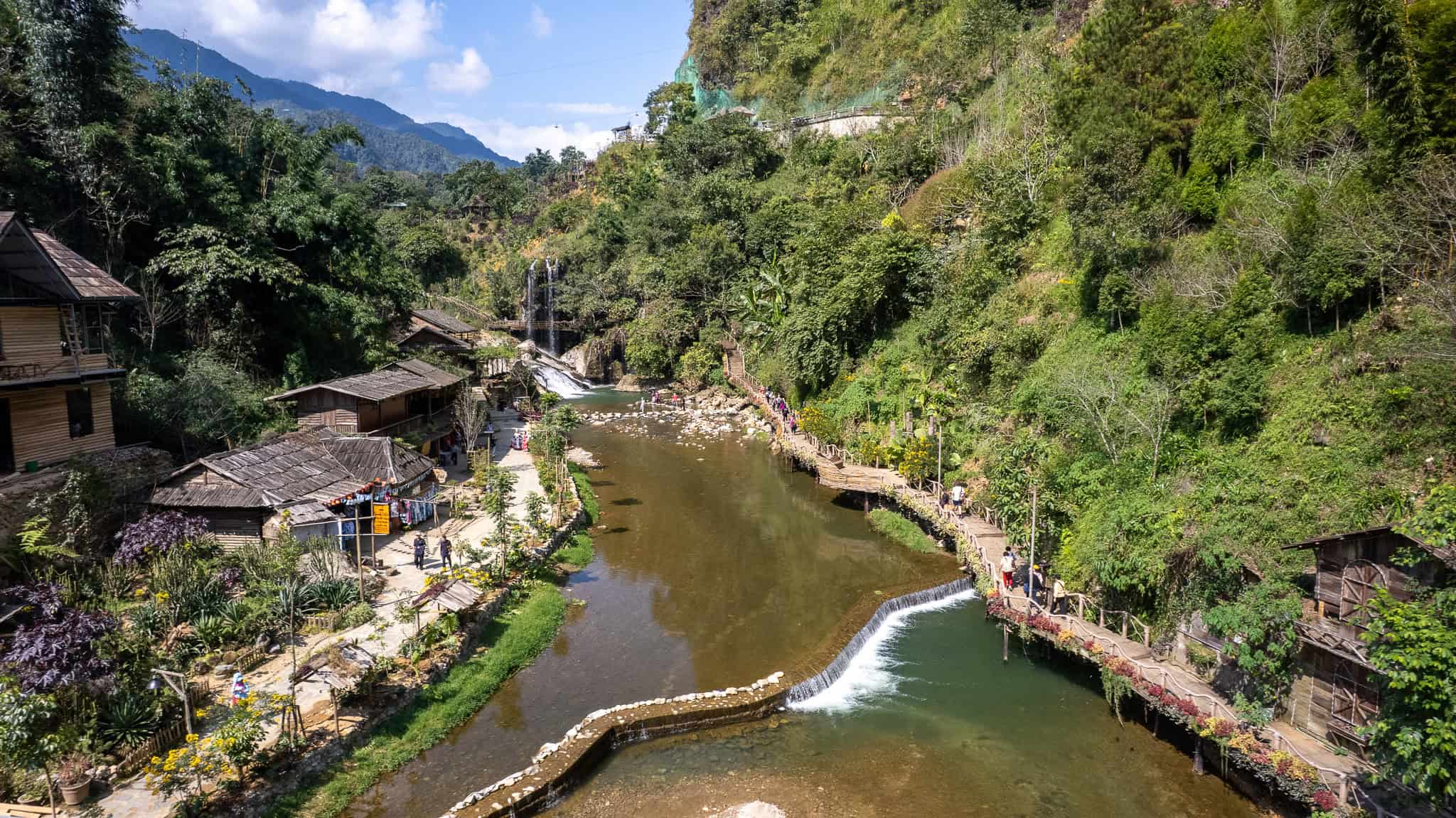
    Eventually the trail drops steeply into a small enclosed valley with a large waterfall on one side. On the other side is a built-up complex of restaurants, bars, and cultural performance areas, clearly built for tour groups passing through.

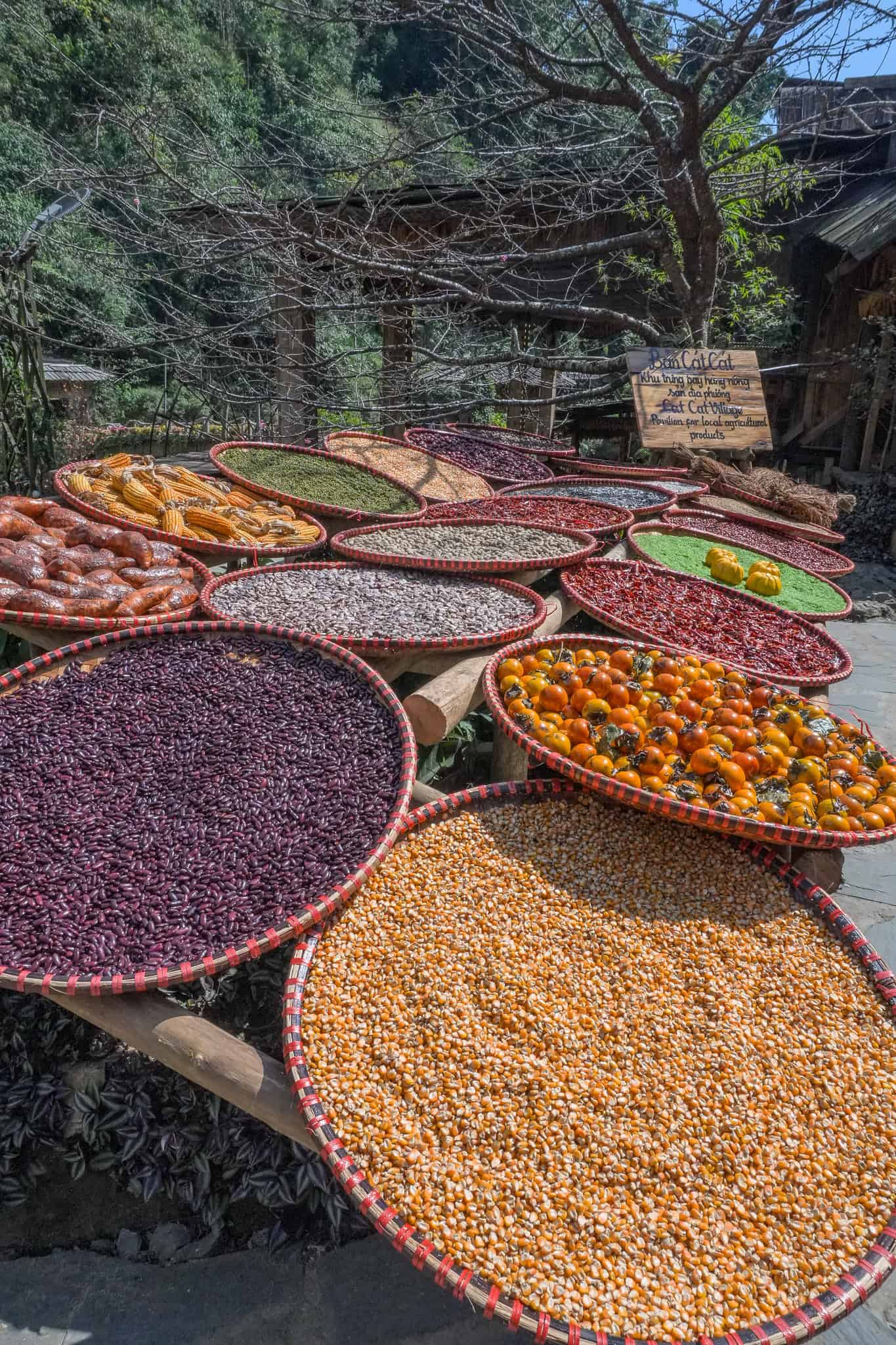
    There are horses for photos, displays of local crops and rice varieties, and demonstrations of traditional weaving and dance. It’s worth a look, and I did learn a few things and see some nice textile work. But it’s the one part of the trek that felt staged rather than authentic, and it’s also where the other tour groups reappear after a quiet morning.

    If your priority is culture over crowds, don’t linger here too long. The best parts of the trek are still ahead.

    Deep Valley Walking

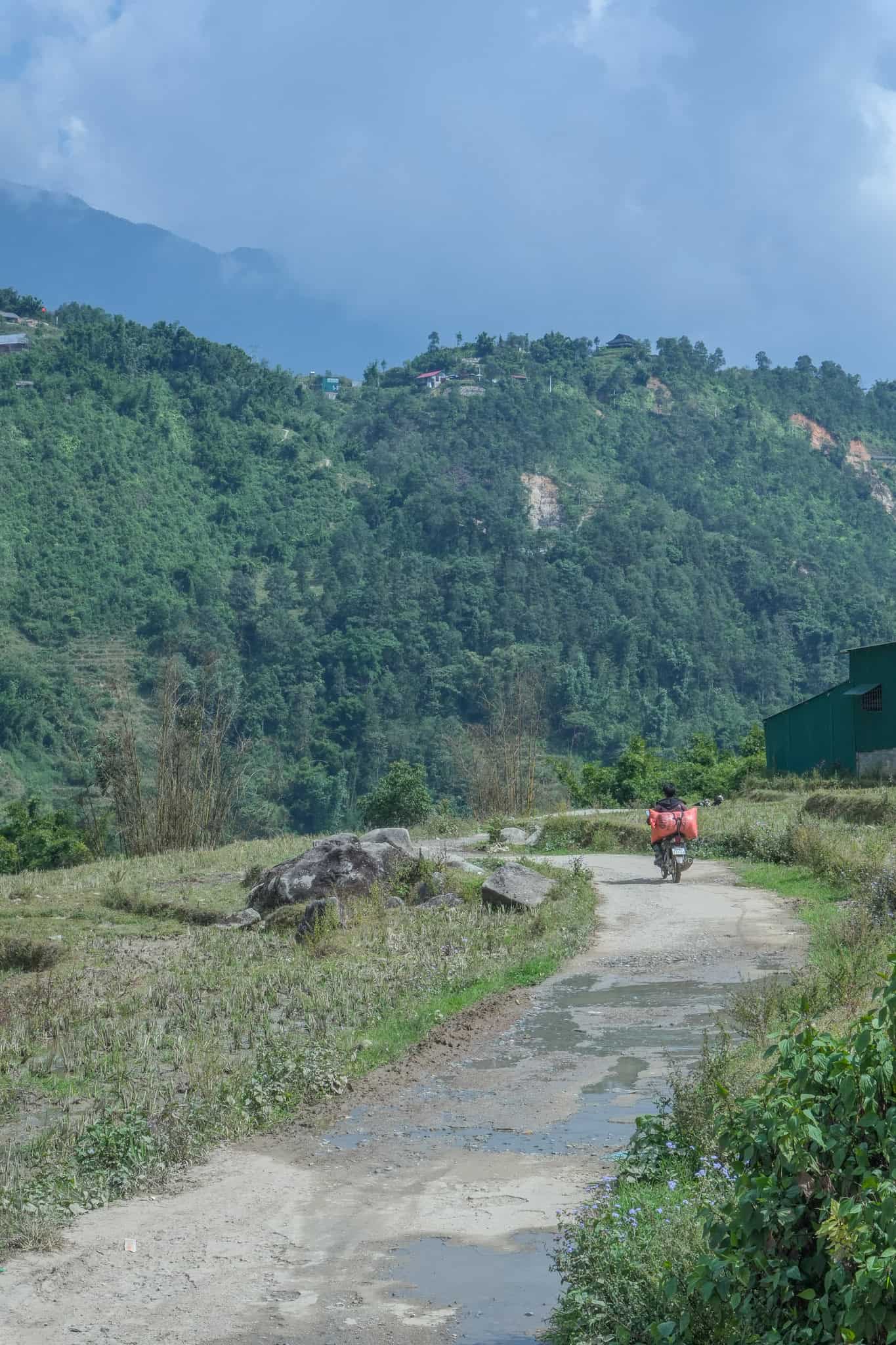
    After the complex, the trail opens back up and the crowds vanish again. This stretch ran for hours through open valley, with rice terraces on both sides and almost no one else around.

    Along the way, our guide pointed out a plant that turns your fingers blue when you rub it, a small taste of the same indigo dyeing process behind those textiles back in town. We also passed water buffalo working the fields and farmers out doing the actual daily labor that keeps these villages running.

    It’s easy to get lost in how pretty it all looks and forget that this is genuinely hard work for the people living here, not a backdrop.

    Lunch With a View

    We stopped for lunch at a small, basic, very local restaurant with a wide-open view over the valley. The food was simple and good, and this was the first time since the market and the tourist complex that we saw other groups again.

    It’s a natural rest point on most sapa day tour itineraries, and a good spot to slow down before the final stretch.

    The Final Stretch

    After lunch, the trekking continued, but it shifted into more of a steady walk than a sightseeing stop. We passed through a few more villages, slightly less rural in feel than the ones from earlier in the day, before a car met us to drive back into Sapa town.

    Our guide stayed behind since she lived close by, which was a nice reminder that for her, this wasn’t a tour, it was just the way home.

    Sapa Day Tour vs. Multi-Day Trek

    A one-day trek is enough to see Sapa’s best rice terraces and get a real feel for the valley, especially if you’re short on time. But it’s not the only option.

    A sapa two day trek typically follows a set path, Sapa town to Y Linh Ho, then Lao Chai, then Ta Van, with an overnight homestay in or near Ta Van. Day two usually continues toward Giang Ta Chai, often passing through bamboo forest and a smaller waterfall, sometimes crossing a rattan or suspension bridge before looping back.

    Some two-day routes also swing through a Red Dao village as a contrast to the Black Hmong villages covered on day one. Expect to pay somewhere around $45 to $65 for a group tour, or $80 to $110 for a private guide, for the standard two-day, one-night package.

    If you have the extra time, I’d genuinely recommend going longer than a single day. Spending a night in a homestay gets you actual time with a Hmong family, not just a guide, and that’s a different experience than a day trek can offer.

    Before you book your next tour, don’t forget to use my code HORIZONHUGO5 on Get Your Guide, it only takes a second to apply and gets you 5% off, so it’s basically free money for something you were going to book anyway.

    Sapa Trek to Fansipan

    Separate from the valley treks is the climb up Fansipan, Vietnam’s tallest mountain. A sapa trek fansipan is a different kind of day entirely, less about culture and villages, more about a physical summit push.

    The standard one-day route covers roughly 12 kilometers one way with about 1,600 to 1,700 meters of elevation gain, and most people are on the trail for 10 to 12 hours total. Most trekkers start around 6 a.m. from Tram Ton Pass, then either hike back down or take the cable car to save their legs on the way out.

    If you want rice terraces, villages, and a guide who can talk about daily Hmong life, stick with a valley trek. If you want a serious physical challenge and a summit photo, Fansipan is the one to book.

    Practical Tips for Trekking in Sapa

    • Group size – Ask for a small group, ideally two to four people, for a more personal and flexible pace.
    • Footwear – Wear shoes you’ve already broken in. The trail has enough elevation change that new boots will punish you.
    • Layers – Mornings are cool even in warmer months, so bring a light layer you can shed later in the day.
    • Cash – Bring enough for lunch, snacks, and any shopping you want to do in the villages on the way back.
    • Local guides – Book with a Hmong guide where you can. The cultural context they add is worth as much as the scenery.

    Is Trekking in Sapa Worth It

    Yes, without question. Whether you do a single sapa one day trek or commit to a longer multi-day route, this is the best way to actually experience northern Vietnam’s landscape and culture, not just look at it from a viewpoint.

    If Sapa has you curious about exploring more of Vietnam, it’s worth planning a proper itinerary around it. Ha Giang for even more dramatic mountain roads, Cat Ba for a completely different island and karst-bay pace, or heading south to Da Nang or Ho Chi Minh City for the coast and city side of the country all pair naturally with a trip up here. Tam Coc is another easy add if you’re building out the north.

    This post is also available in :

    A man in a yellow sports jersey stands on a hill overlooking a scenic landscape with green mountains, a winding shoreline, and blue water below—perhaps contemplating his next adventure and learning how to solo travel while traveling around the world.
    Picture of Hugo Mathieu
    I'm Hugo, a traveler driven by curiosity and a passion for discovering the world's hidden corners. After exploring over 30 countries across Latin America and Southeast Asia, I've learned that every adventure shapes who we become. I'm here to share those lessons and inspire your next great journey.

    Subscribe to the Newsletter

    Join our community and receive exclusive travel stories, guides, and special offers!

      What's on My Desk Right Now

      The Brazilian flag with green and yellow brush strokes, a blue globe with stars and a white banner reading Ordem e Progresso in the center.

      🗺️ Planning a Trip?

      Skip the research rabbit hole.

      I’ll build you a personalised day-by-day itinerary — or answer all your questions on a quick 60-min call.

      Let's Connect

      Affiliate Disclosure

      Some of my posts include affiliate links. If you choose to make a purchase through them, I may earn a small commission—at absolutely no extra cost to you.


      Using these links is the best way to support my work and say thank you, and I appreciate it so much! Of course, everything I share reflects my honest opinions and experiences.

      📸 Work With Me

      Brand, tourism board or hotel?

      Let’s create something together — content, reviews and campaigns that reach real travellers who are ready to book.

      Buy Me A Coffee

      Latest Posts

      A long hanging bridge in Costa Rica stretches across dense, lush green rainforest, surrounded by tall trees and misty skies.
      From the Mistico Arenal Hanging Bridges Park in La...
      A winding road cuts through the lush green mountains of Tram Ton Pass under a cloudy sky, with rays of sunlight streaming down and creating a dramatic, scenic landscape.
      Ride the Tram Ton Pass by scooter for waterfalls, mountain...
      Aerial view of lush green terraced rice fields on hillsides, with scattered houses and trees under soft sunlight in a rural, mountainous area.
      I spent days exploring Sapa, Vietnam, from scootering...
      A narrow valley with a winding road runs between tall, green mountains under a blue sky with scattered clouds. Small houses and fields are visible along the valley floor.
      A practical and honest Ha Giang Loop tour guide with...
      A white helicopter flies near a misty mountain with the Christ the Redeemer statue in the background, framed by green tree branches above—a breathtaking moment often experienced during a rio helicopter tour.
      I've flown the Rio helicopter tour twice, and here's...

      Get My Personal Map of 500 Must-See Places - FREE

      I’ve compiled 500 of the best places across my travels into one free Google Map.

      The kind of spots you won’t find in a guidebook.

        A world map titled UNESCO World Heritage displays numerous brown, blue, and green icons marking heritage sites across all continents.

        Table of Contents

        Got Questions?

        Still figuring things out for your trip, or just want to double check something before you book? Send me a message and I’ll get back to you as soon as I can.

        Or hit me up on Instagram, I’m there anyway and always happy to chat about the trip.

          Share it with the person you to travel with !

          You might also like to read these articles

          Scroll to Top