Monkey Mountain Da Nang: How to See Douc Langurs

This post is also available in :

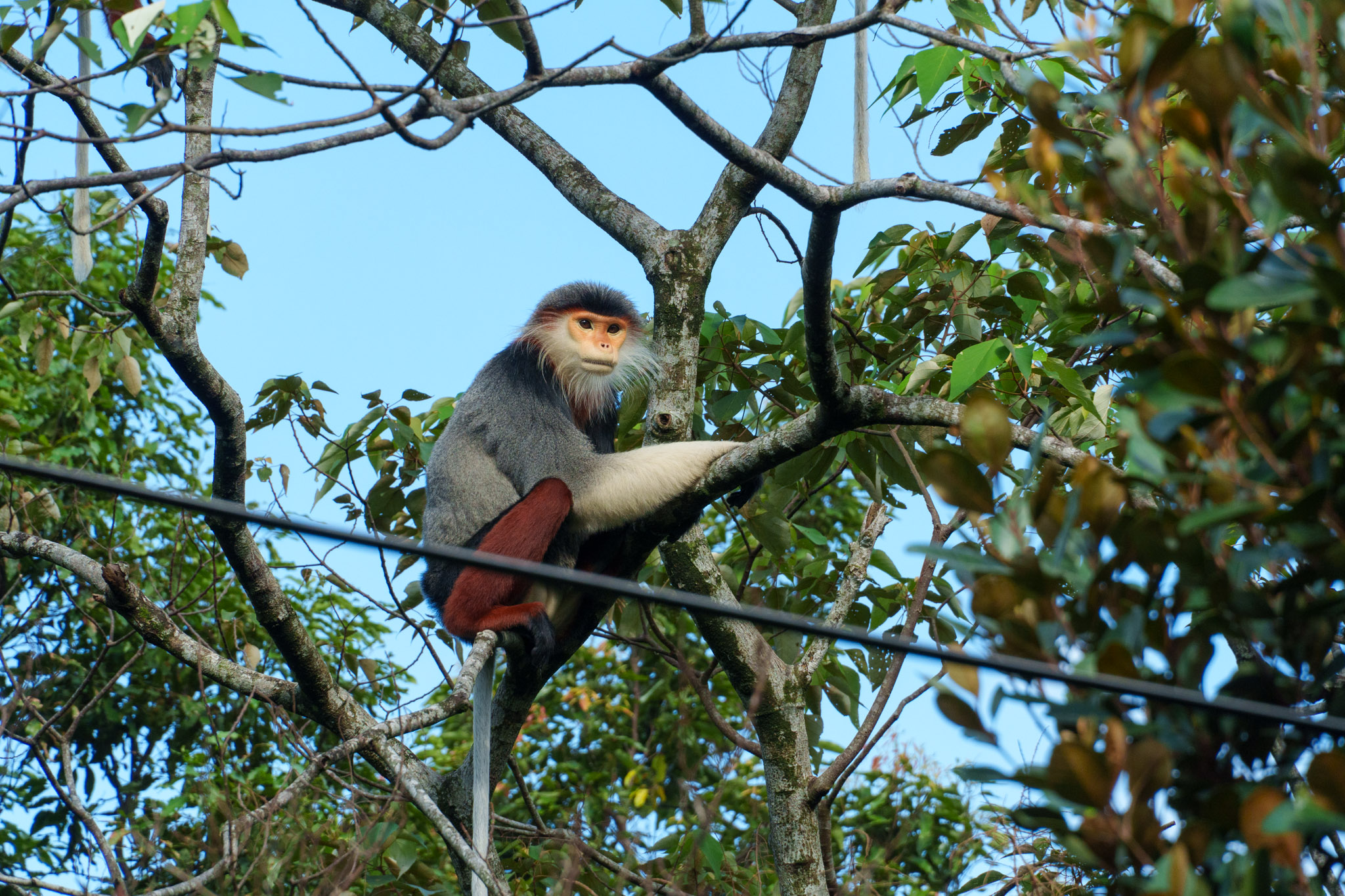
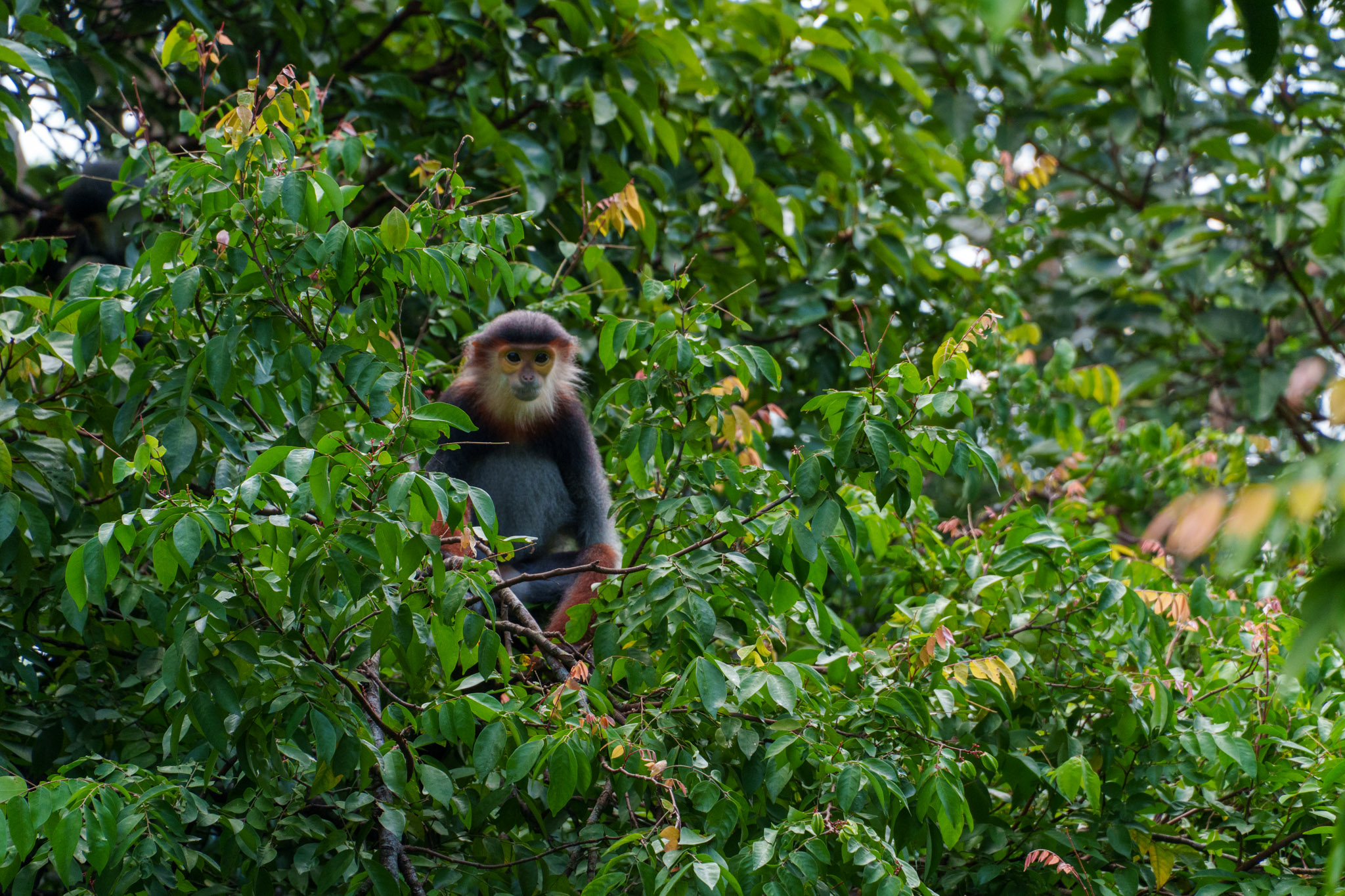
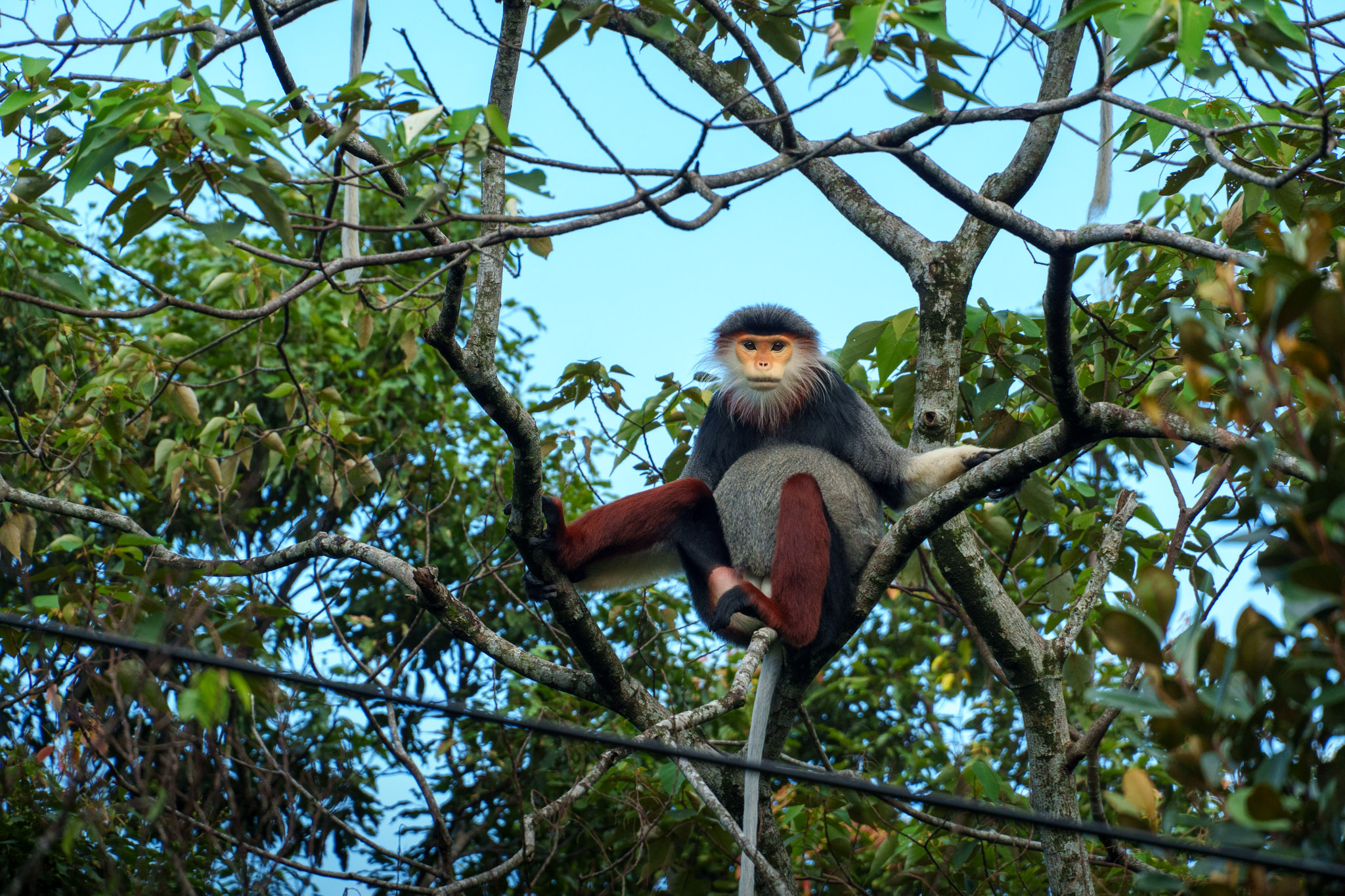
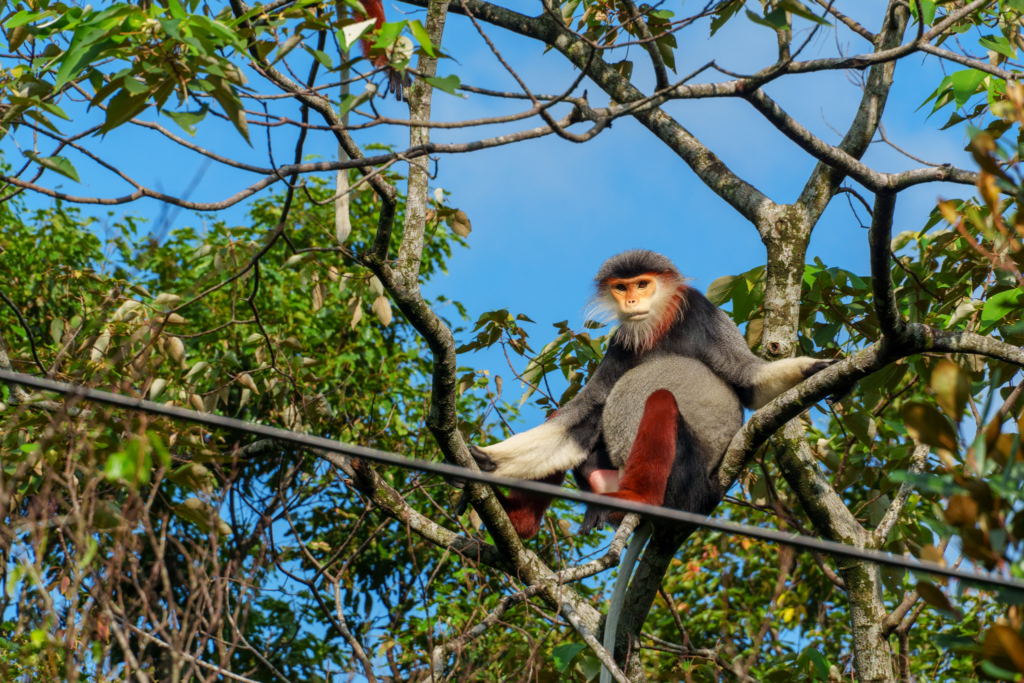
The red-shanked douc langur is one of the most strangely beautiful creatures I have ever filmed. Grey body, burgundy-red legs, an orange and beige face framed by soft white fur. They look like something a filmmaker invented, not an actual primate living wild in a forest outside a major Vietnamese city.

And yet, very few people visiting Da Nang even know they exist, let alone make the early-morning effort to go find them.

In this guide, I will share exactly what my experience on Son Tra Peninsula (Monkey Mountain) was like, plus everything you need to know to plan your own visit. Whether you want to go solo on a scooter or join a guided tour.

I will be honest about what it takes, what you might or might not see, and whether it is worth losing a few hours of sleep.

Table of Contents

What Is Monkey Mountain Da Nang (Son Tra Peninsula) and Why Should You Go?

The Red-Shanked Douc Langur: Vietnam’s Most Stunning Primate

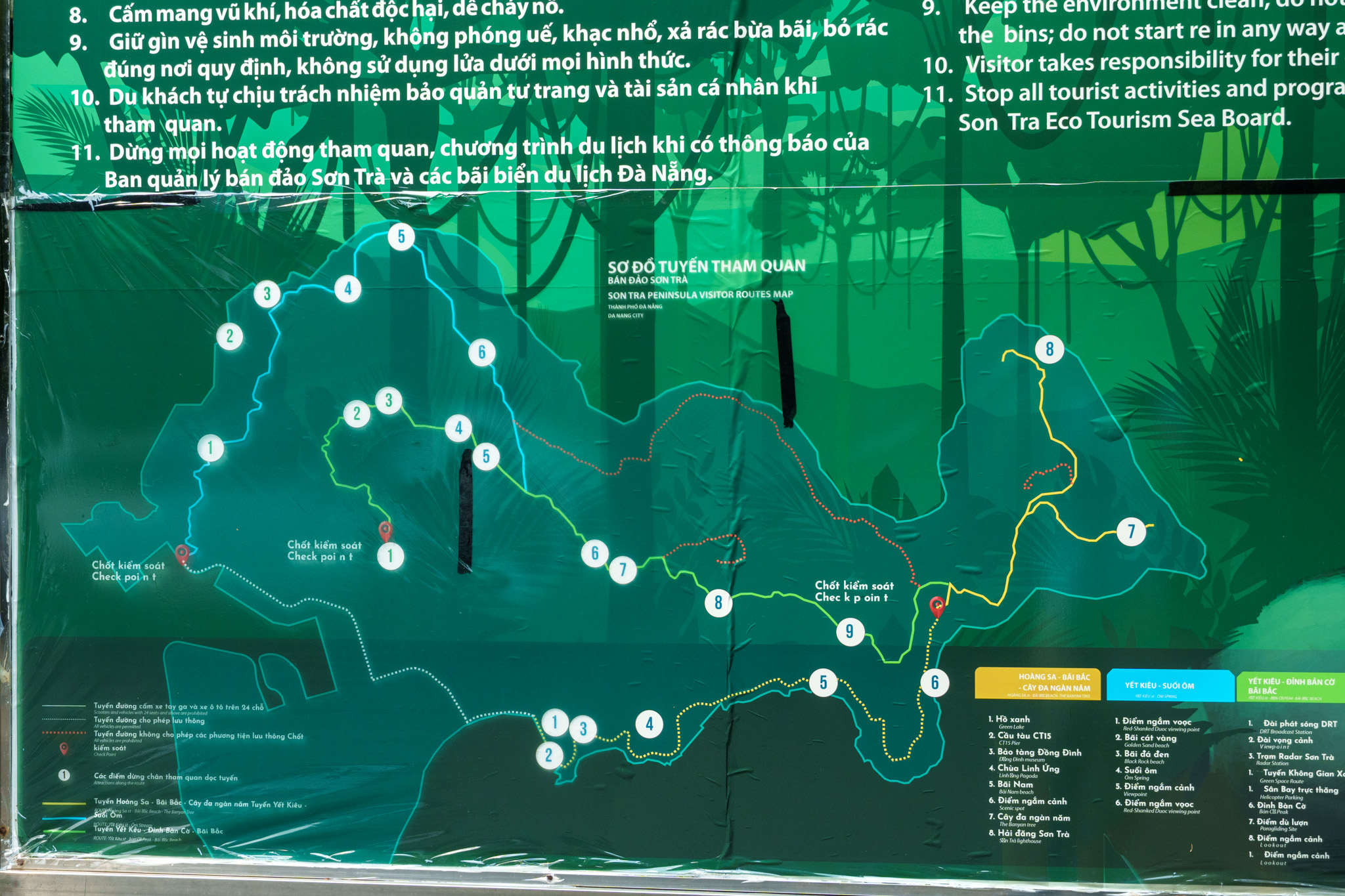
Son Tra Peninsula, known to most travelers as Monkey Mountain, sits northeast of Da Nang city. It is a protected natural reserve and home to one of the last accessible wild populations of the red-shanked douc langur (Pygathrix nemaeus). This animal is critically endangered, and Son Tra is genuinely one of the best places in the world to see it in the wild.

Estimates of how many langurs live here vary. Some sources put the number around 1,300, others closer to 2,000. Either way, the population is small, fragile, and worth protecting.

Why Son Tra Peninsula Is Unlike Any Other Wildlife Spot in Southeast Asia

The douc langur is sometimes called the “five-color monkey,” and once you see one, you understand why. The body is a mix of dark and light grey. The legs are a deep burgundy red. The face splits between a warm orange and a pale, almost creamy beige. A fringe of white fur runs around the jaw, giving the animal a calm, almost wise expression.

When I first saw them, my immediate thought was Avatar. They do not look like any primate I had seen before, and I’ve seen a lot of monkey in south america. They are genuinely striking, and that is not an exaggeration.

FREE Google Map - Best 500 Places in the World

Most travelers visit the same 20 places their whole life.

Here are 500 reasons to do better.A curated world map of 500 unforgettable destinations across every continent — open it in Google Maps and start planning.

    A world map with orange location markers highlighting the Best 500 Places in the World across various continents. The title appears at the top on a beige banner.

    Practical Details Before You Book

    Price and Entry

    There is no general entry fee to access Son Tra Peninsula. The road and forest are free to explore independently.

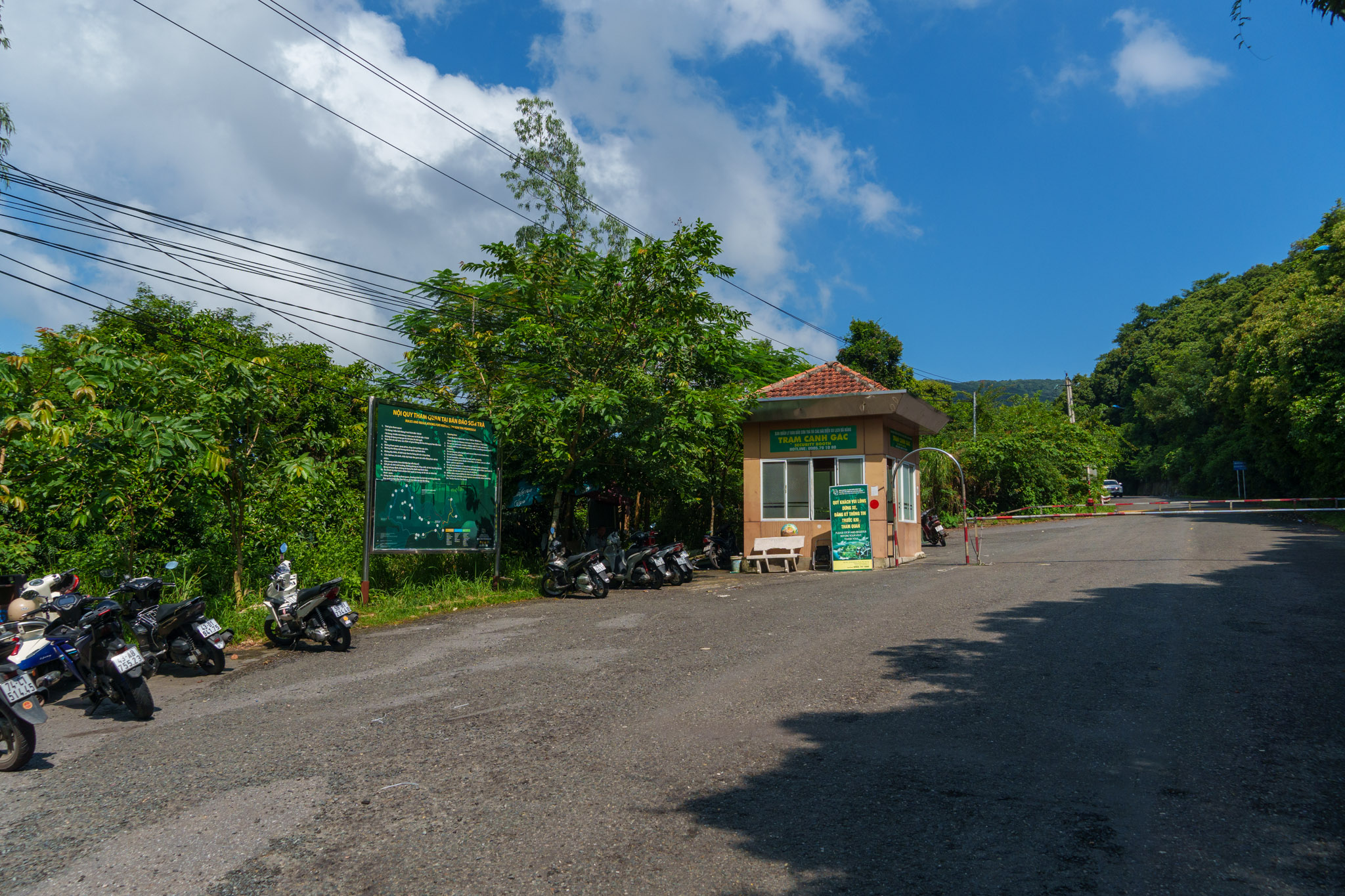
    There is a checkpoint along the route, which exists to register visitors, though when I passed through, the attendant was not really keeping track anymore.

    You will not be charged anything to walk the route.

    How Long to Budget for the Visit

    Budget around 3 to 4 hours for the full outing, based on my experience.

    That breaks down to roughly 30 minutes of travel from central Da Nang, about 1.5 hours walking up from the checkpoint, 30 minutes back down, and time spent actually watching the langurs when you find them.

    Keep in mind that I only covered about a third of the full route. Going further up would require more time or a more capable vehicle than an electric scooter.

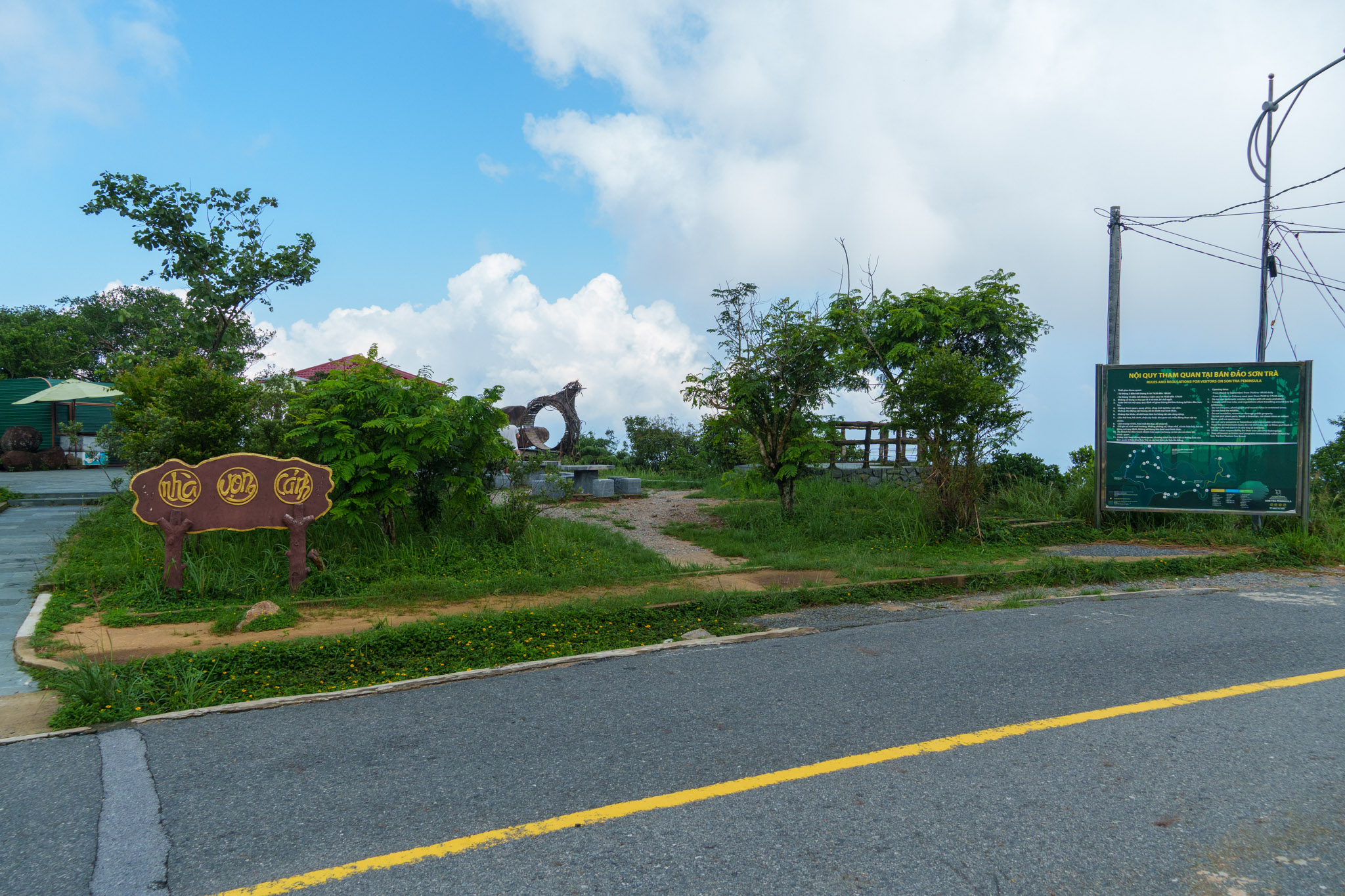
    If you want to make a full day of it, that is also possible. Son Tra Peninsula has more to offer than just wildlife: Linh Ung Pagoda and a temple near the peak of the mountain are both worth visiting and can easily round out your day.

    Best Time of Day and Best Season

    Early morning is your best window. Langurs and other wildlife are most active roughly between 6:00am and 9:00am. They also become more active again in the late afternoon before sunset. Midday is generally not productive for wildlife spotting.

    Yes, waking up before sunrise is annoying. But that is genuinely where your best chances are. I left at 6:30am and was at the checkpoint by around 7:30am, and I spotted langurs within minutes. Arriving later in the morning is likely to be far less rewarding.

    My Experience: What It Was Actually Like to See the Douc Langurs

    First Impressions at the Checkpoint

    I woke up at 5:45am, had a quick breakfast, and was on the road by 6:30am. The ride to Son Tra took about 30 minutes on my electric scooter.

    It was still relatively cool out and the roads were quiet. There is something genuinely nice about being out before most of the city has woken up.

    I arrived at the checkpoint around 7:30am. that checkpoint is already in the Son Tra Peninsula, and my scooter was struggling to go further. A little bit too steep.

    The Moment I Found Them

    As I started walking up from the checkpoint, I noticed some monkeys in the trees almost right away. But they were common macaques, the type you see hanging around temples all over Southeast Asia. Familiar, a little cheeky, but not what I had come for.

    I kept scanning the upper canopy, not finding much. Then I noticed a local man, either a guide or a forest ranger, standing at the side of the road with a monocular.

    He was clearly looking at something specific. That was the turning point.

    What the Langurs Actually Look Like Up Close

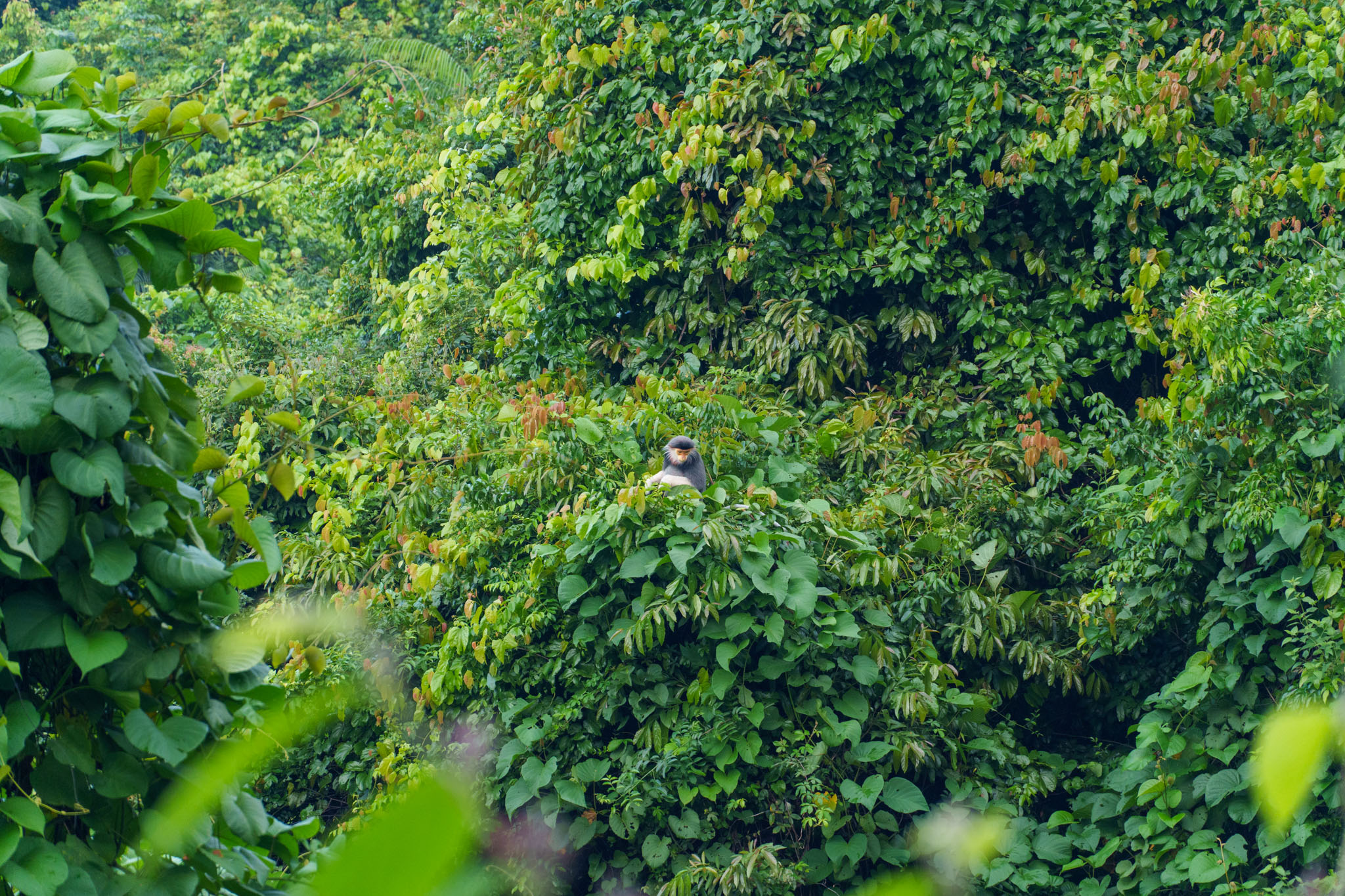
    About 50 meters away, up in the trees, was a group of red-shanked douc langurs. I felt genuinely lucky in that moment, this was only 5 to 10 minutes after passing the checkpoint.

    The colors are even more vivid than in photos. The burgundy legs stand out against the grey body.

    The face is striking.

    Their dark eyes hold your gaze when they look down at you. It is a quiet kind of impressive, nothing flashy or performative. They were just there, living their lives.

    The Encounter That Cut It Short

    I stayed with that first group for about 30 minutes. The langurs moved slowly, ate quietly, and barely interacted with each other. There was very little drama. No swinging, no shrieking, no show.

    If you are used to the chaotic energy of macaques or other primates at tourist sites, the douc langur is almost the opposite.

    They are calm and deliberate. Watching them felt more meditative than exciting, in a good way.

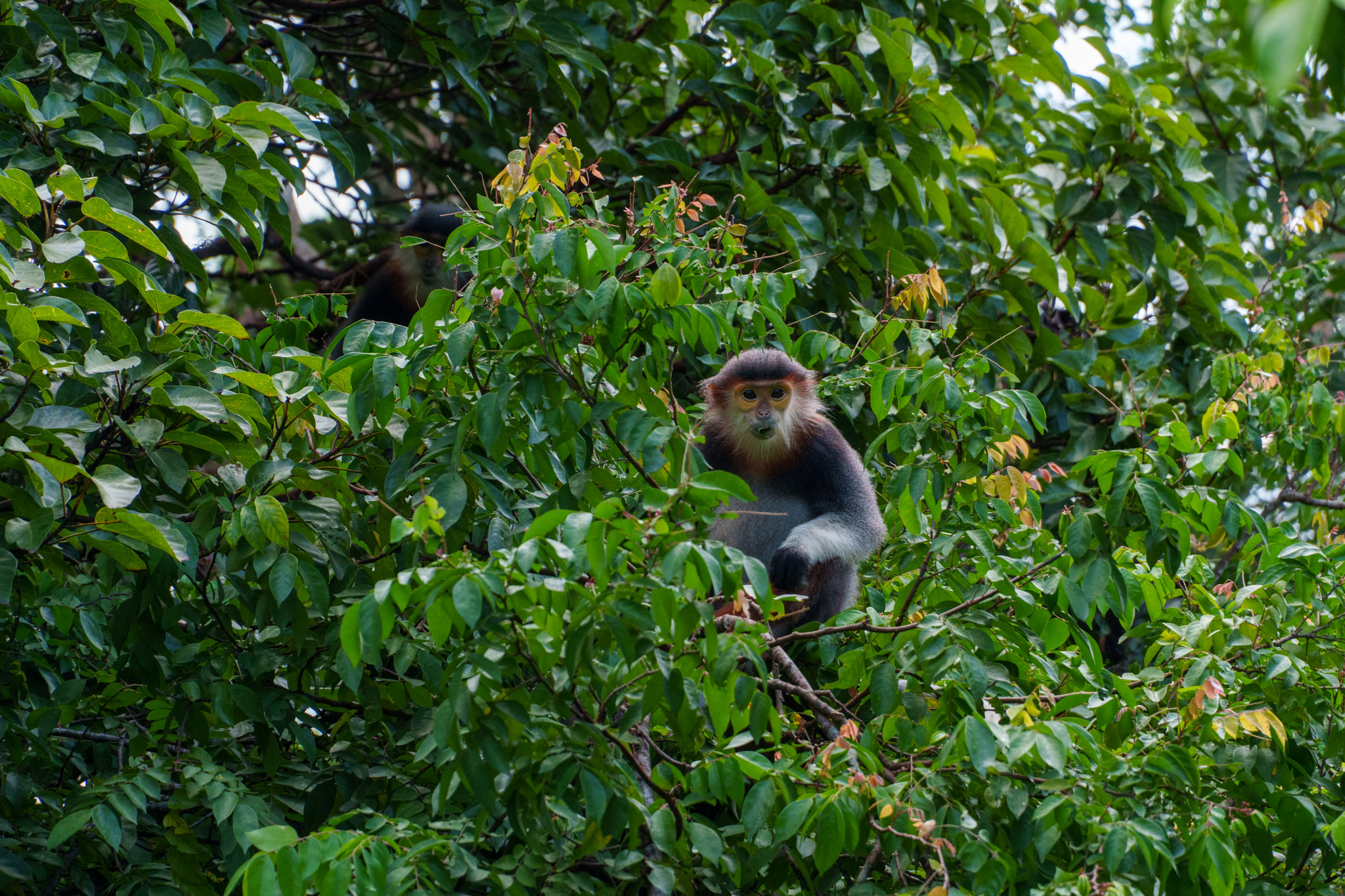
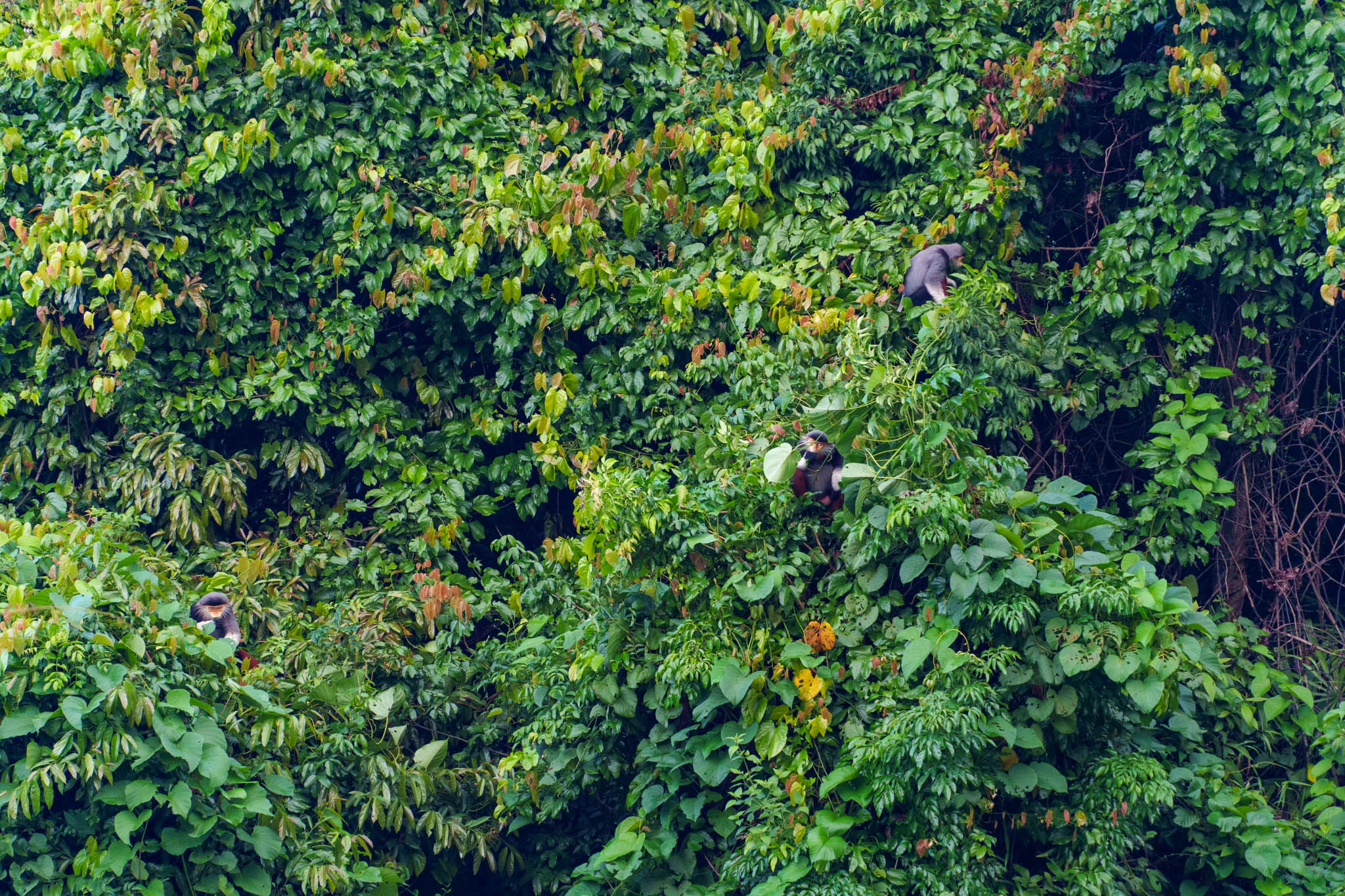
    Later, further up the road, I spotted three more langurs perched in a tree with sparse leaves.

    Their colors were clearly visible, right at the edge of the road.

    I was getting good footage when a group of hikers arrived, started imitating monkey calls, and the langurs disappeared immediately.

    That was genuinely frustrating. But more on that later.

    How to Get to Son Tra Peninsula (Monkey Mountain)

    Going Solo by Scooter or Motorbike

    Son Tra is about 10 to 15 km from central Da Nang, which makes it very easy to reach independently. I rode an electric scooter and made it to the checkpoint in around 30 minutes.

    The roads leading to the peninsula are straightforward.

    The issue is what happens after the checkpoint.

    My electric scooter did not have enough power to continue up the steep mountain roads. If you want to go further than the checkpoint by vehicle, you will need a more capable bike.

    Personally, I would suggest at minimum something around 110cc, though I should be clear that this is my own estimate and not an officially confirmed requirement. Check current vehicle restrictions before you rent.

    Important Note on Driving Licenses in Vietnam

    This is worth understanding before you rent anything. My host rented me the electric scooter without asking for my driving license, so I honestly do not know for certain what the rules are for low-powered electric vehicles.

    But for regular manual or semi-automatic motorbikes, Vietnam legally requires an international driving license. Your regular national license alone is not enough.

    But it should be for electric scooter like mine.

    The international driving license must be obtained before you leave your home country, you cannot get one once you are already in Vietnam.

    Technically, driving without one puts you at risk if something goes wrong. I did the Ha Giang loop driving a moto and without my inernational driving license, wasn’t smart i could have got a fine here.

    If you are not sure about your situation, play it safe and consider the alternatives below.

    Taking a Taxi or Ride-Share to Son Tra

    Grabbing a Grab (the ride-share app widely used in Vietnam) to Son Tra is a practical option. You can book a ride to the checkpoint, to Linh Ung Pagoda on the coastline, or all the way to the temple at the peak of the mountain.

    Getting there is easy. Getting a Grab back down from inside the peninsula is harder, drivers are less likely to be waiting around up there.

    One smart approach is to start your day at the temple near the peak (furthest point), then work your way back down on foot or with arranged transport, rather than trying to book a ride back from the middle of nowhere.

    Booking a Guided Tour

    If you do not have a motorbike license or are not comfortable navigating mountain roads on your own, a guided tour is the most practical option.

    A tour takes care of transport, and a knowledgeable guide will dramatically improve your chances of actually finding the langurs.

    The Safari – Finding the most endangered monkey in the World tour on GetYourGuide takes you into the heart of Son Tra Nature Reserve specifically to find the douc langurs, including a sunset safari format that targets the late-afternoon active window.

    For wildlife lovers who want the best possible chance of seeing these animals without figuring out the logistics themselves, this is a solid choice.

    Before you book your next tour, don’t forget to use my code HORIZONHUGO5 on Get Your Guide, it only takes a second to apply and gets you 5% off, so it’s basically free money for something you were going to book anyway.

    What Surprised Me About Monkey Mountain Da Nang

    The biggest surprise was how fast the langurs appeared. I had mentally prepared for a long search. Instead, within 5 to 10 minutes of passing the checkpoint, I was already watching a group of them through a monocular. I know that involved luck — stumbling onto that local with the monocular made a huge difference — but still, I had expected to work harder for it.

    The second surprise was their behavior. I expected something energetic, maybe chaotic. What I got was stillness. They sat in the trees, chewed leaves slowly, glanced down at me occasionally, and mostly ignored the world. There is something almost dreamlike about watching an animal that rare be that unbothered.

    The third surprise was how few people were there. Even at 7:30am on what seemed like a regular morning, I counted maybe ten other visitors on the whole route. That kind of solitude is rare near any major tourist city.

    The frustrating part — and I want to be honest about this — was the group that scared the langurs away. I was filming a group of three near the road, great light, good distance, everything working. Then a few hikers arrived, started mimicking monkey sounds, and the animals vanished. It was a reminder that wildlife watching depends partly on the behavior of everyone around you, not just yourself.

    Tips to Prepare for Your Visit to Son Tra Peninsula

    Scanning the Trees: How to Actually Spot Langurs

    The most important thing to understand about spotting langurs: look up, not forward. They live in the upper canopy, not at eye level. They do not make noise, they do not draw attention to themselves, and they move slowly and deliberately.

    You need to actively scan the branches above you as you walk. My second group of langurs appeared when I happened to look up and noticed three shapes in a tree with more bare branches than leaves. If I had been looking straight ahead, I would have walked right past them.

    Binoculars or a monocular make a real difference. I found my first group because a local with a monocular was already watching them. Without that, I might have missed them entirely.

    What to Bring

    Wear proper walking shoes. The road is paved but uphill, and you will be on your feet for at least an hour.

    Bring at least one liter of water, there are no vendors once you pass the checkpoint. Sunscreen matters, especially once you get above the tree cover near viewpoints.

    Most importantly, bring binoculars or a monocular if you have them. I cannot overstate how much they help. I spotted my first group entirely because someone else had one.

    Even a basic pair makes scanning the canopy far more effective.

    How to Maximize Your Chances of Seeing Langurs

    Arrive before 7:30am if at all possible. Move slowly and keep noise to a minimum.

    Spend more time looking up into the upper canopy than walking fast to cover ground.

    The langurs do not reward rushing, they reward patience and observation.

    I saw 4 groups over the course of my walk. Some were close to the road, some were further back in the trees.

    The ones I saw best were the ones I spotted by stopping, looking up, and actually paying attention rather than moving through quickly.

    Respecting the Wildlife

    Do not imitate monkey calls. Do not attempt to feed the langurs.

    Keep your voice down and avoid sudden movements near them. The douc langur is critically endangered, and Son Tra’s population is one of the few that remains.

    Every disturbance counts.

    I watched firsthand how quickly a group disappeared the moment people started making noise. These animals are not performing for tourists.

    Give them space and keep quiet, and they may stay long enough for you to actually appreciate what you are seeing.

    Is It Worth It? My Honest Take on Monkey Mountain Da Nang

    Yes, absolutely. The red-shanked douc langur is unlike any primate most travelers have encountered. The appearance alone is remarkable. The calm, quiet nature of the encounter makes it feel more like a privilege than a tourist activity.

    But I want to be honest about what it requires. You need to wake up early. The walk is uphill and physically modest but not nothing. You need patience, and you need some luck, especially without a guide.

    I did not reach the top of the mountain and I did not see everything Son Tra has to offer.

    I still found the whole morning deeply rewarding.

    This is best suited for independent travelers who are wildlife enthusiasts, and photographers.

    Alternatives and Nearby Add-Ons

    Not a fan of a 5:45am alarm on vacation? Fair enough. Da Nang has plenty to do at more reasonable hours.

    Linh Ung Pagoda sits right on Son Tra Peninsula, and you can reach it easily by Grab or any other vehicle. Its Lady Buddha statue stands 67 meters tall and is one of Da Nang’s most recognized landmarks. It pairs well with a langur-spotting morning since it’s in the same area.

    Marble Mountain (Ngu Hanh Son) is the other big attraction in Da Nang that mixes nature and culture. Expect cave temples, Buddhist shrines, and nice views over the city and coastline. It’s more structured than Son Tra, with clear paths and an entrance fee, but there’s no wildlife.

    Ba Na Hills is the most famous activity in Da Nang, and it’s easy to reach. A cable car takes you straight to the top, so you don’t need any hiking or early start. It’s a great pick if you want a big, popular day out without much effort.

    Only one day in Da Nang and you’re not a wildlife person? Go to Marble Mountain or Ba Na Hills. If you love animals and can handle an early start, Son Tra is the more memorable one.

    Son Tra also has small beaches and a reef area at Ghenh Bang that’s good for snorkeling. Spend the morning with the langurs when they’re active, then hit the water in the afternoon when the forest goes quiet.

    This post is also available in :

    Subscribe to the Newsletter

    Join our community and receive exclusive travel stories, guides, and special offers!

      What's on My Desk Right Now

      The Brazilian flag with green and yellow brush strokes, a blue globe with stars and a white banner reading Ordem e Progresso in the center.

      🗺️ Planning a Trip?

      Skip the research rabbit hole.

      I’ll build you a personalised day-by-day itinerary — or answer all your questions on a quick 60-min call.

      Let's Connect

      Affiliate Disclosure

      Some of my posts include affiliate links. If you choose to make a purchase through them, I may earn a small commission—at absolutely no extra cost to you.


      Using these links is the best way to support my work and say thank you, and I appreciate it so much! Of course, everything I share reflects my honest opinions and experiences.

      📸 Work With Me

      Brand, tourism board or hotel?

      Let’s create something together — content, reviews and campaigns that reach real travellers who are ready to book.

      Buy Me A Coffee

      Latest Posts

      view of praia da costa in Itacaré Brazil. there are palms tree, green grass, waves and blue sky.
      I crossed four South American borders and struggled...
      A wide brown river, often traveled on a Vietnam Cambodia tour from Ho Chi Minh City to Phnom Penh, flows past a lush green landscape dotted with houses and several blue-roofed barges under a cloudy sky.
      This three-day route from Ho Chi Minh City covers the...
      A man stands in a plaza at night in front of a brightly lit building covered in colorful signs and advertisements, evocative of scenes from the Ben Tan Market Saigon section of any Ho Chi Minh City travel guide. People sit and walk nearby, while trees frame the bustling scene.
      This Ho Chi Minh City travel guide covers District...
      Aerial view of a river with muddy water bordered by green vegetation and scattered houses, a road extends from the river through a lush rural landscape under a cloudy sky—capturing scenes reminiscent of the picturesque routes you might experience on a Vietnam to Cambodia tour, such as traveling from Ho Chi Minh City to Phnom Penh.
      Discover what to expect at the Cu Chi Tunnels, how...
      Aerial view of several boats sailing among limestone islands in calm blue water under a clear sky, with rocky green islets scattered across the horizon—an iconic scene near Cat Ba Island, home to some of the most beautiful beaches in Vietnam.
      Discover the key differences between Lan Ha Bay and...

      Get My Personal Map of 500 Must-See Places - FREE

      I’ve compiled 500 of the best places across my travels into one free Google Map.

      The kind of spots you won’t find in a guidebook.

        A world map titled UNESCO World Heritage displays numerous brown, blue, and green icons marking heritage sites across all continents.

        Table of Contents

        Got Questions?

        Still figuring things out for your trip, or just want to double check something before you book? Send me a message and I’ll get back to you as soon as I can.

        Or hit me up on Instagram, I’m there anyway and always happy to chat about the trip.

          Share it with the person you to travel with !

          You might also like to read these articles

          Scroll to Top