
8 Best Rivers in South America You Need to See
This post is also available in :
When people search for the best rivers in South America, they’re usually dreaming of turquoise pools, jungle rapids, or a river so long it feels like its own country. This list covers the continent’s true heavyweights, but we’re also sneaking in a few showstoppers from Central America and Mexico. Technically, they’re not South American, but they’re too spectacular to leave out of any real conversation about Latin America’s most beautiful rivers.
We’ve grouped these by what makes each one special. Whether you’re after the longest river in South America, the largest river in South America by volume, or just the most beautiful rivers in South America for your camera roll, there’s something here for every kind of traveler.
Table of Contents
Caño Cristales
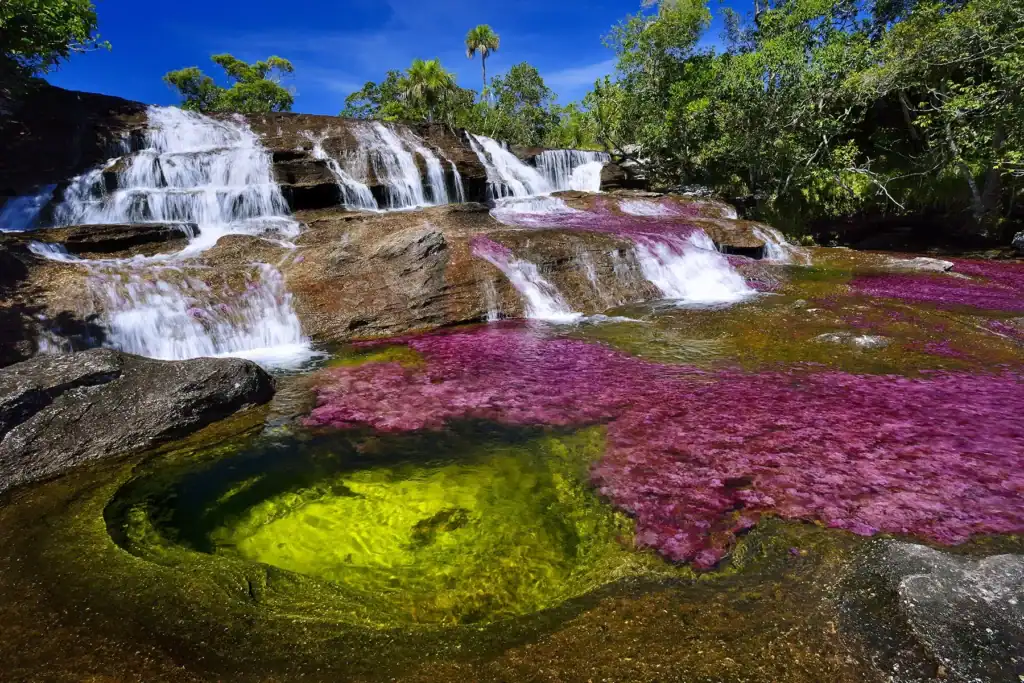
Caño Cristales in Colombia’s Serranía de la Macarena is nicknamed the “Liquid Rainbow” for good reason. From around July through November, aquatic plants called Macarenia clavigera turn the riverbed shades of red, yellow, green, black, and blue all at once.
The river runs about 62 miles (100 km) and sits in a remote spot only reachable by plane, then boat, then a hike. The park itself only opens from mid-June to late November, once the rainy season eases and water levels drop enough for the plants to get the sunlight they need to turn red. For the best colors, aim for a visit between September and October, when the transition between wet and dry conditions hits its sweet spot and the reds peak before the season winds down. Truly one of the wonders of Colombia.
Amazon River

No list of South American rivers is complete without the Amazon, the largest river in South America by discharge and one of the top contenders for the world’s longest. Depending on how you measure it, the Amazon stretches somewhere between 3,900 and 4,345 miles (6,280 to 6,992 km), close enough to the Nile that scientists still argue over which river truly wins the length title.
What makes the Amazon a must-visit isn’t just its size. It carries more water than the next several largest rivers combined, and its basin holds the largest rainforest on the planet. Base yourself in Iquitos, Peru, or Manaus, Brazil, for the easiest access to jungle lodges and river tours. Both are amazing places to visit the river and the Amazon at the same time.
I’ve been through both Manaus and Iquitos, and they couldn’t feel more different. Manaus is a full-blown city, sprawling and industrial in parts, while Iquitos is smaller and feels more laid-back. But once you get near the water, both places share the same connection to the river and the jungle around them, like the rhythm of daily life still runs on the Amazon’s schedule, not the city’s.
Río Celeste
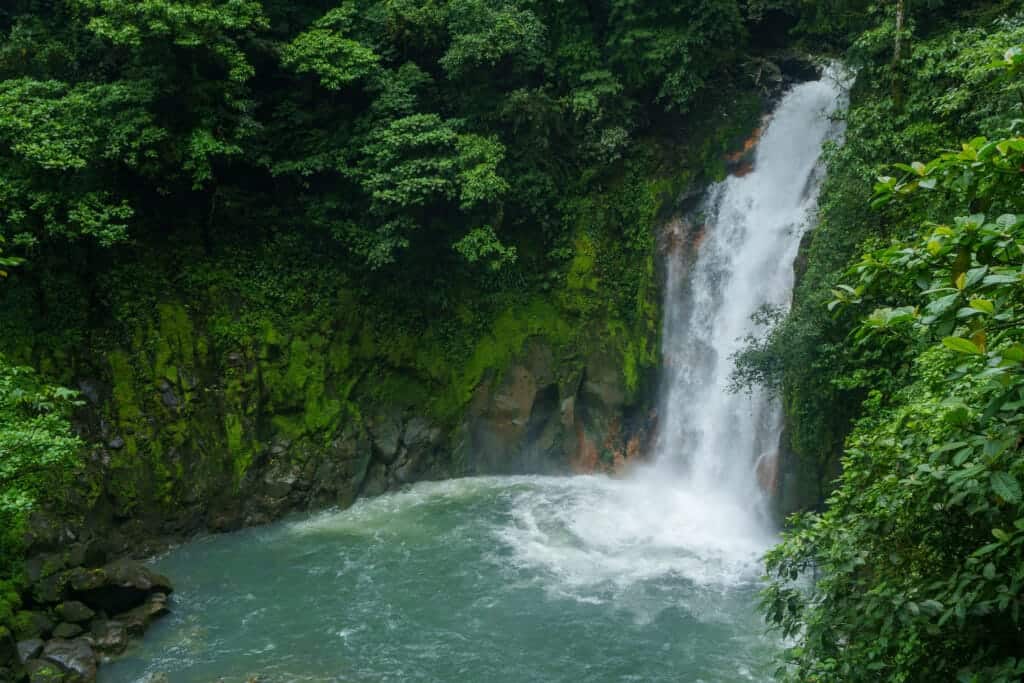
Río Celeste’s turquoise water looks photoshopped, but it’s completely real, and completely explainable by science. The color comes from a phenomenon called Mie scattering, where aluminosilicate particles from two colorless rivers, the Buenavista and an acidic creek, combine and grow just large enough to scatter blue light.
The river sits inside Tenorio Volcano National Park, and the milky-blue color is strongest near a spot locals call Teñidero, or “dye point”. Go on a sunny morning. Direct light makes the blue pop far more than on overcast days.
I visited on a cloudy day, so the famous sky-blue color wasn’t as intense as I’d hoped. Still, it was beautiful. Just upstream and downstream from the Teñidero, the water was incredibly clear, almost glass-like, and honestly just as memorable as the blue itself. It’s definitely a nice activity to add to your itinerary in Costa Rica.
Futaleufú River
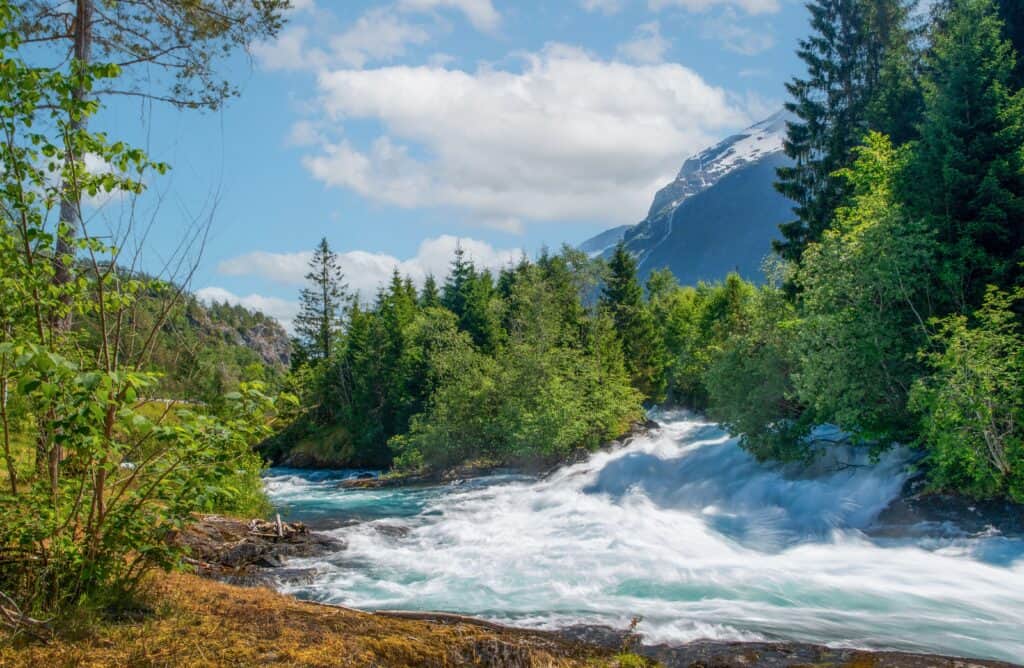
The Futaleufú, or “Futa” to rafters, is one of Patagonia’s premier whitewater destinations, known for glassy turquoise water squeezed through steep granite canyons. It’s fed by glacial melt and a Chilean lake, which gives it that surreal clarity even in the middle of intense rapids.
This river isn’t for beginners. Class IV and V rapids dominate long stretches, so most visitors book multi-day trips with established outfitters rather than going it alone.
Río Cahabón (Semuc Champey)
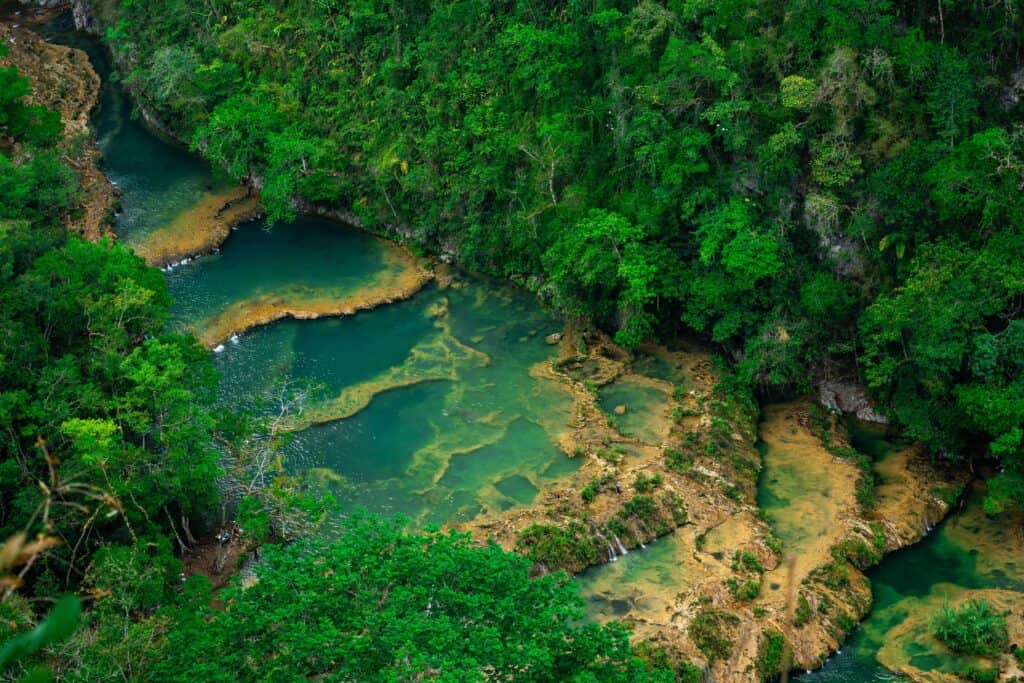
The Río Cahabón runs about 122 miles (196 km) through Guatemala’s Alta Verapaz region, but its claim to fame is Semuc Champey, a series of turquoise limestone pools formed where part of the river tunnels underground. The name means “where the river hides under the stones” in the local Q’eqchi’ Mayan dialect.
Above the pools, the Cahabón is also a popular whitewater rafting river with rapids ranging from mellow to genuinely thrilling. Plan a full day if you want to combine rafting with swimming at Semuc Champey. The two pair perfectly.
I wanted to visit Semuc Champey because it’s part of the classic Guatemala itinerary, but I never managed to make it work with my timing. Still, from everything I’ve read and heard, it’s one of the most beautiful spots to visit in Guatemala, and it stays high on my list for next time.
Magdalena River
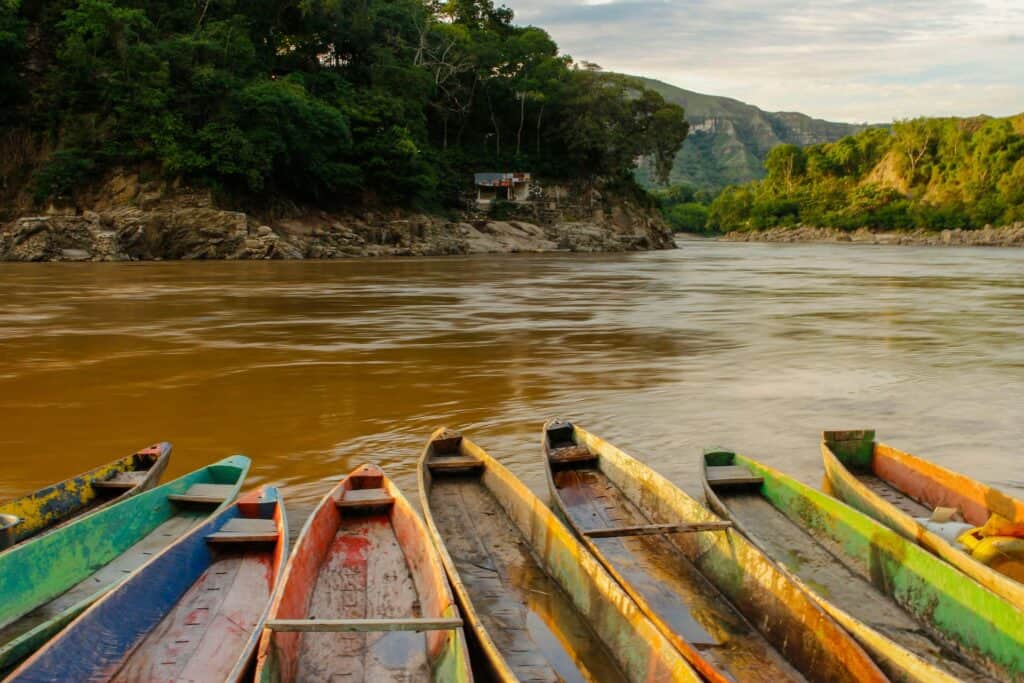
The Magdalena is Colombia’s lifeline, stretching roughly 956 miles (1,538 km) from the Andes to the Caribbean Sea near Barranquilla. About 80% of Colombians live in its basin, and the river has shaped the country’s history, economy, and culture for centuries, inspiring writers like Gabriel García Márquez along the way.
Boat trips along the Magdalena reveal a side of Colombia most tourists skip entirely, from riverside fishing villages to the wetlands near Mompox.
Río Negro
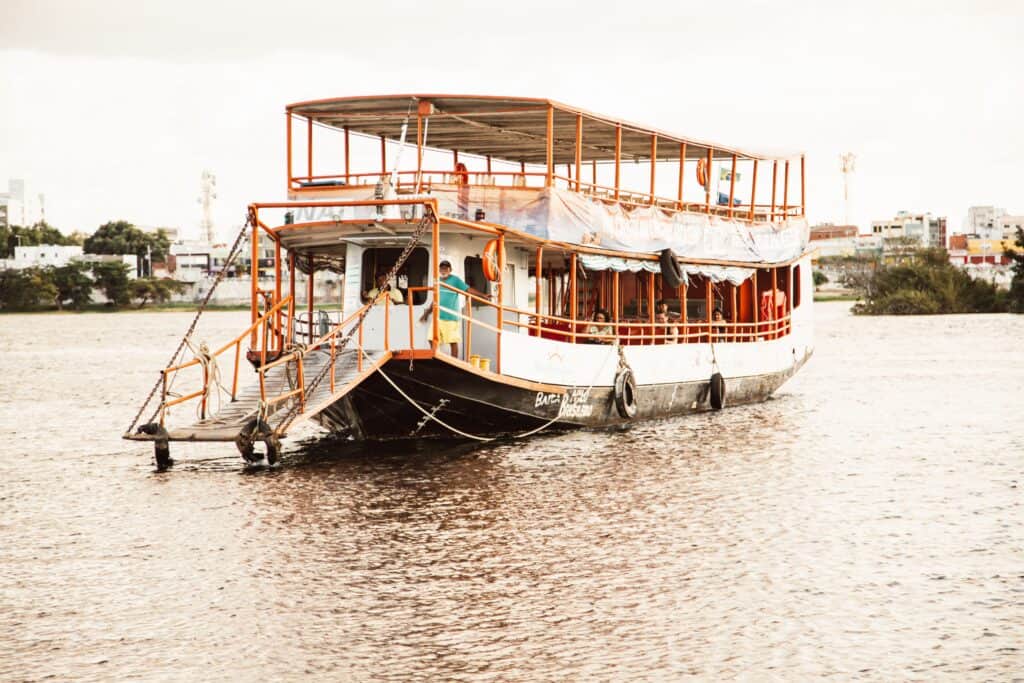
The Río Negro is the Amazon’s largest tributary and one of the most distinct rivers in South America thanks to its dark, tea-colored water, a result of decomposing plant matter upstream. It meets the muddy, pale Amazon at Manaus in a striking phenomenon known as the “Meeting of Waters,” where the two rivers run side by side for miles without fully blending.
Boat tours from Manaus make this an easy add-on for anyone already visiting the Amazon. Maybe you’ll get lucky and see some monkeys.
Usumacinta River
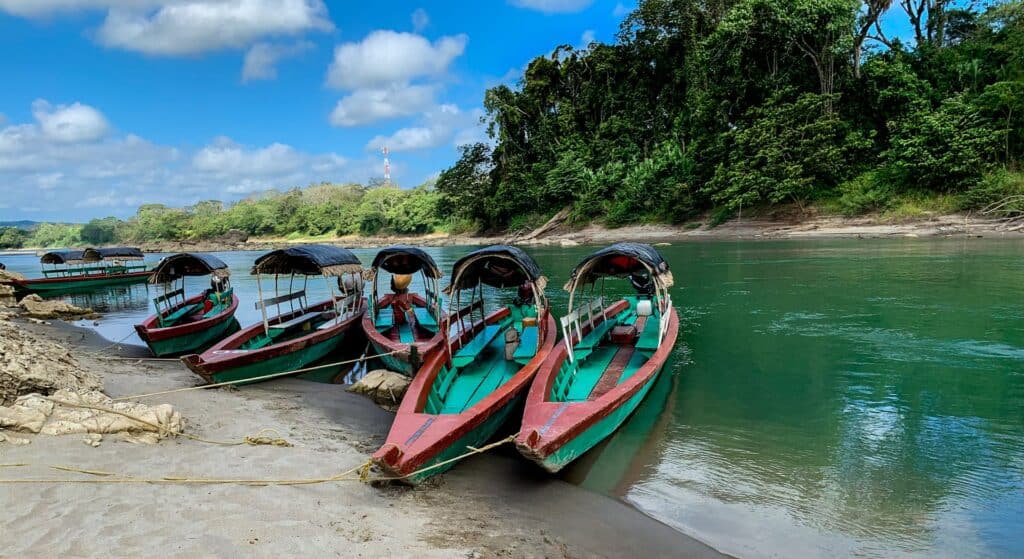
The Usumacinta is the largest river in Mesoamerica and the seventh-largest in the world by discharge, forming much of the border between Mexico’s Chiapas state and Guatemala. It drains part of the Selva Maya, one of the largest stretches of contiguous tropical forest left in the region.
Ancient Maya cities like Yaxchilán and Piedras Negras sit right on its banks, making a river trip here as much a history lesson as a nature escape. For ruins lovers, this river delivers a combination you won’t find anywhere else on this list.
Which River Should You Visit First?
From the liquid rainbow of Caño Cristales to the ancient temples lining the Usumacinta, these rivers prove that Latin America’s waterways are just as worth the trip as its beaches and mountains. Whether you’re chasing the longest river in South America or just want the most Instagram-worthy water on the continent, pick one, pack your bags, and let the current take it from there.
This post is also available in :

Subscribe to the Newsletter
Join our community and receive exclusive travel stories, guides, and special offers!

🗺️ Planning a Trip?
Skip the research rabbit hole.
I’ll build you a personalised day-by-day itinerary — or answer all your questions on a quick 60-min call.
Affiliate Disclosure
Some of my posts include affiliate links. If you choose to make a purchase through them, I may earn a small commission—at absolutely no extra cost to you.
Using these links is the best way to support my work and say thank you, and I appreciate it so much! Of course, everything I share reflects my honest opinions and experiences.
📸 Work With Me
Brand, tourism board or hotel?
Let’s create something together — content, reviews and campaigns that reach real travellers who are ready to book.

Latest Posts
Get My Personal Map of 500 Must-See Places - FREE
I’ve compiled 500 of the best places across my travels into one free Google Map.
The kind of spots you won’t find in a guidebook.
Table of Contents
You might also like to read these articles