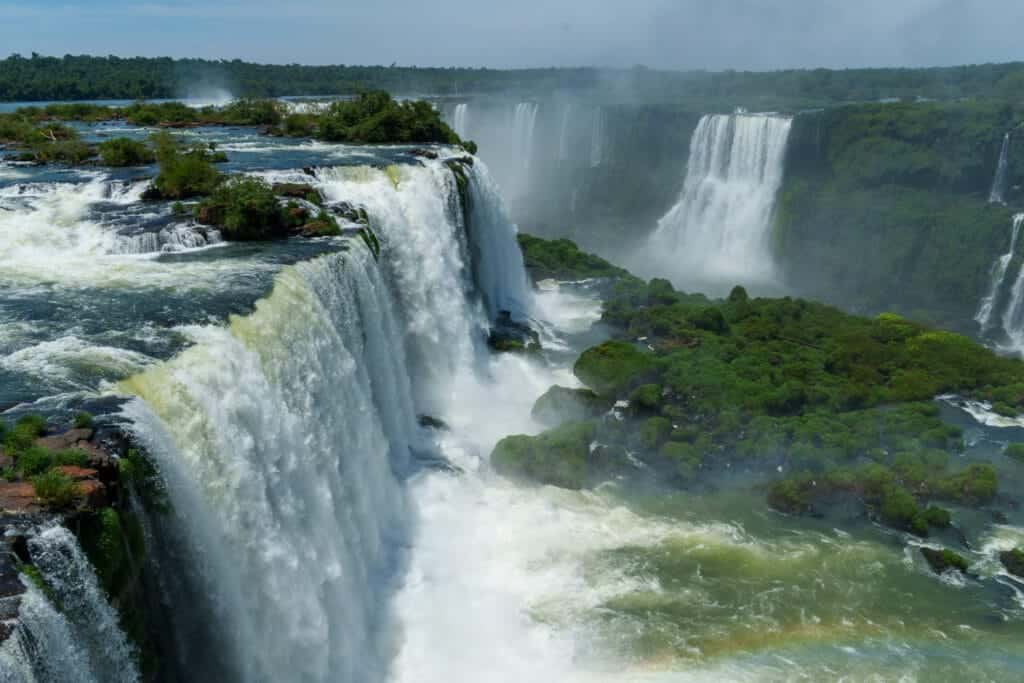
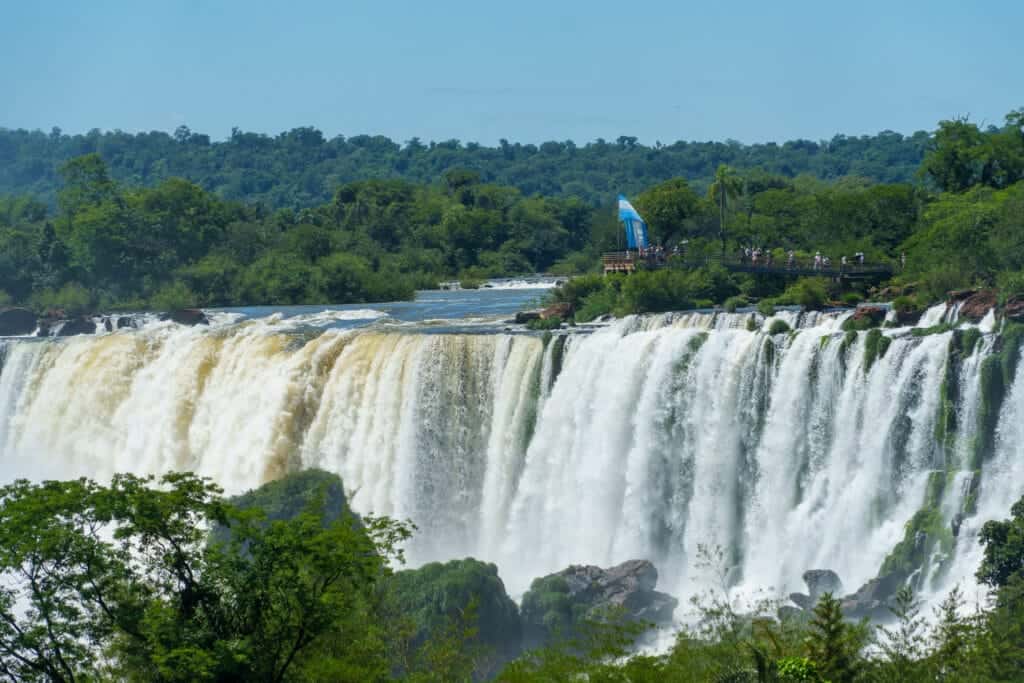
Devil's throat viewpoint with the argentina flag waving

12 Best South American Waterfalls You Need to See

This post is also available in :

Some people plan entire trips around a waterfall. I’m one of them, and I’ll admit it.

Not every waterfall is worth a flight, but some on this list are so remote, so massive, and so unlike anything else on the planet that they genuinely are. I’ve been to several of them, and I can tell you firsthand these aren’t the kind of things you stumble across on a weekend trip. You see them, and you get it.

Here’s a guide to the best South American Waterfalls, the famous ones, the underrated ones, and the ones worth building your whole trip around.

Table of Contents

Argentina & Brazil

Iguazú Falls
Iguazu falls view from Brazil side.

Iguazú Falls is the largest waterfall system in the world, with around 275 individual drops spread over 2.7 km of basalt cliffs on the Iguazú River. It sits on the border between Argentina and Brazil, protected on both sides as national parks and UNESCO World Heritage Sites.

It’s wider than Victoria Falls and higher than Niagara Falls.

The star of the show is Garganta del Diablo (Devil’s Throat), a U-shaped chasm roughly 700 m long and 80 m wide where nearly half the river’s entire volume crashes down at once. Standing at the edge of it is something you won’t forget.

I’ve been twice, and I’d go back without hesitation. The sheer size of this place is unlike anything I’ve seen anywhere else in the world.

Which side should you visit? The Argentine side gets you up close with catwalks cutting right through the jungle and over the falls. The Brazilian side gives you the full panoramic view of the entire horseshoe. If you can, do both.

I’ve put together a full guide on how to visit Iguazú properly, including activities nearby to turn it into a solid multi-day trip. Many people include it as part of their Brazil itinerary.

Ángel Falls (Salto Ángel)

Venezuela

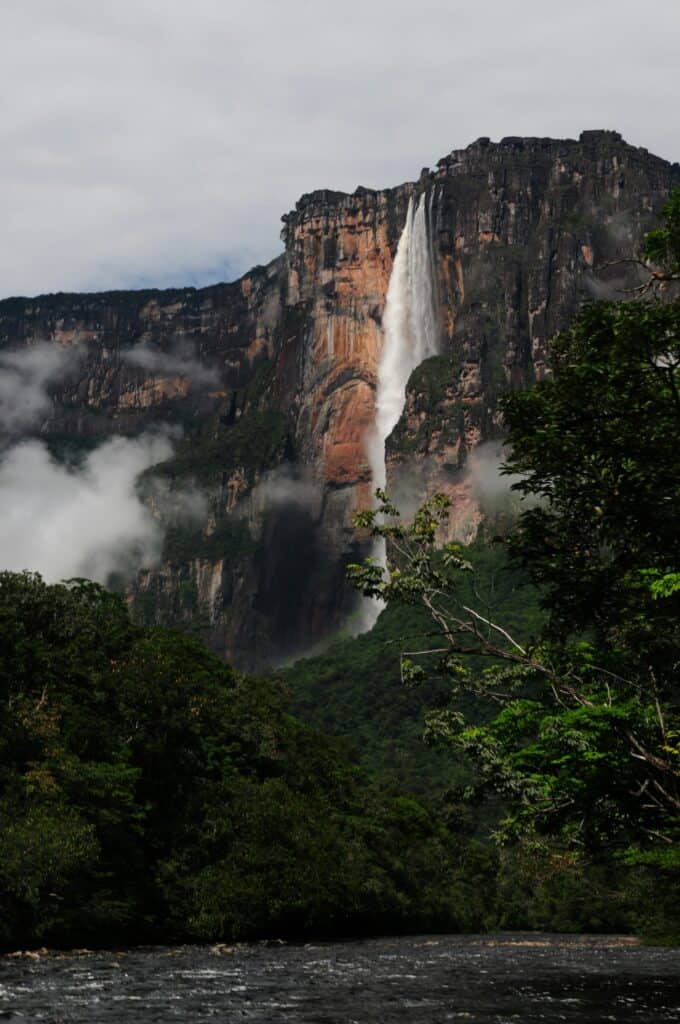
Ángel Falls is the tallest uninterrupted waterfall in the world. Located inside Canaima National Park in southeastern Venezuela, it drops a total of 979 m, with the main free-fall alone reaching 807 m off the edge of the Auyán-tepui plateau. For context, that’s nearly one kilometer of water falling straight down.

The water then continues as cascades and rapids for another 400 m before a final 30 m drop downstream. The falls plunge directly off sheer sandstone cliffs into dense jungle, often wrapped in mist, which gives it that iconic image of a thin ribbon of water seemingly falling from the clouds.

Canaima National Park is a UNESCO World Heritage Site, recognized for its unique table-top mountain ecosystems and landscapes found nowhere else on Earth. It sits near the borders of Brazil and Guyana, which tells you just how far off the beaten path this place is.

Getting here is an adventure in itself. Most visitors fly by small plane to Canaima, then take a river boat and hike to reach the falls. Water flow and visibility are highly seasonal, so timing your visit matters.

This one has been on my bucket list for a while, and honestly, it deserves its own dedicated trip. It’s not a quick detour on your way somewhere else. It’s the destination.

Kaieteur Falls

Guyana

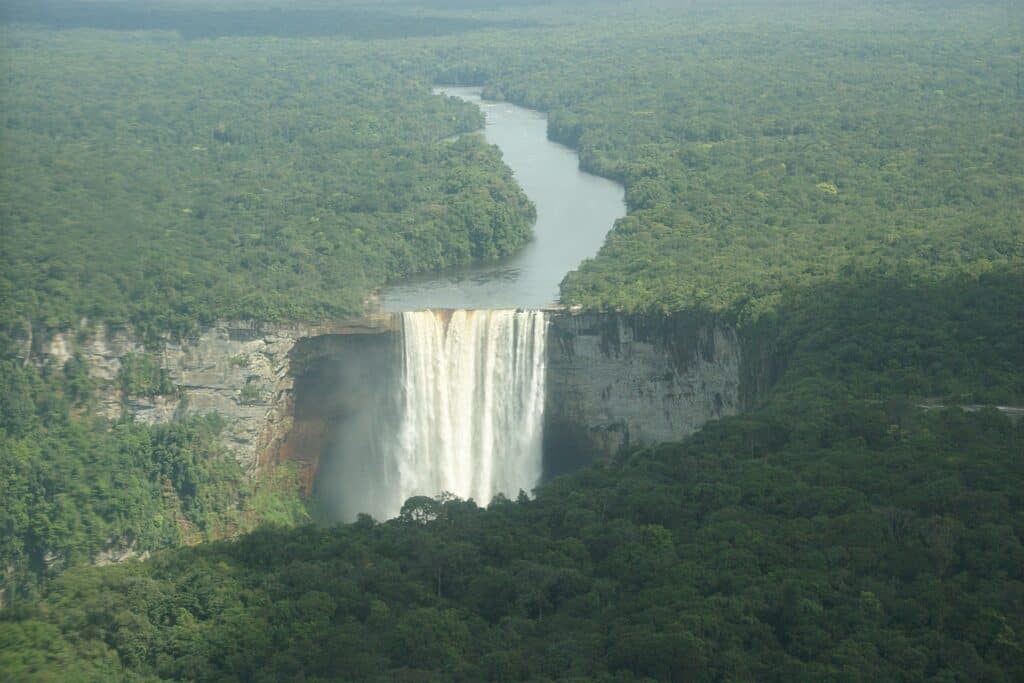
Kaieteur Falls sits on the Potaro River inside Kaieteur National Park, deep in the Guyana Highlands surrounded by Amazon rainforest. It’s one of the most powerful single-drop waterfalls in the world, and honestly one of the most underrated on this entire list.

The main plunge drops 226 m, with a total height of around 251 m including the cascades below. To put that in perspective, it’s roughly four times higher than Niagara Falls and about twice the height of Victoria Falls. That combination is what makes it genuinely unique among the biggest waterfalls in South America.

By some measures, Kaieteur is the largest single-drop waterfall in the world when you factor in both height and volume together. That’s a bold claim, but standing in front of it, it’s easy to believe.

Getting here follows a similar pattern to Ángel Falls. You fly by small aircraft from Georgetown to an airstrip near the falls, then take short jungle trails to the viewpoints. It’s remote, but the access is straightforward once you commit to the trip.

Gocta Falls

Peru

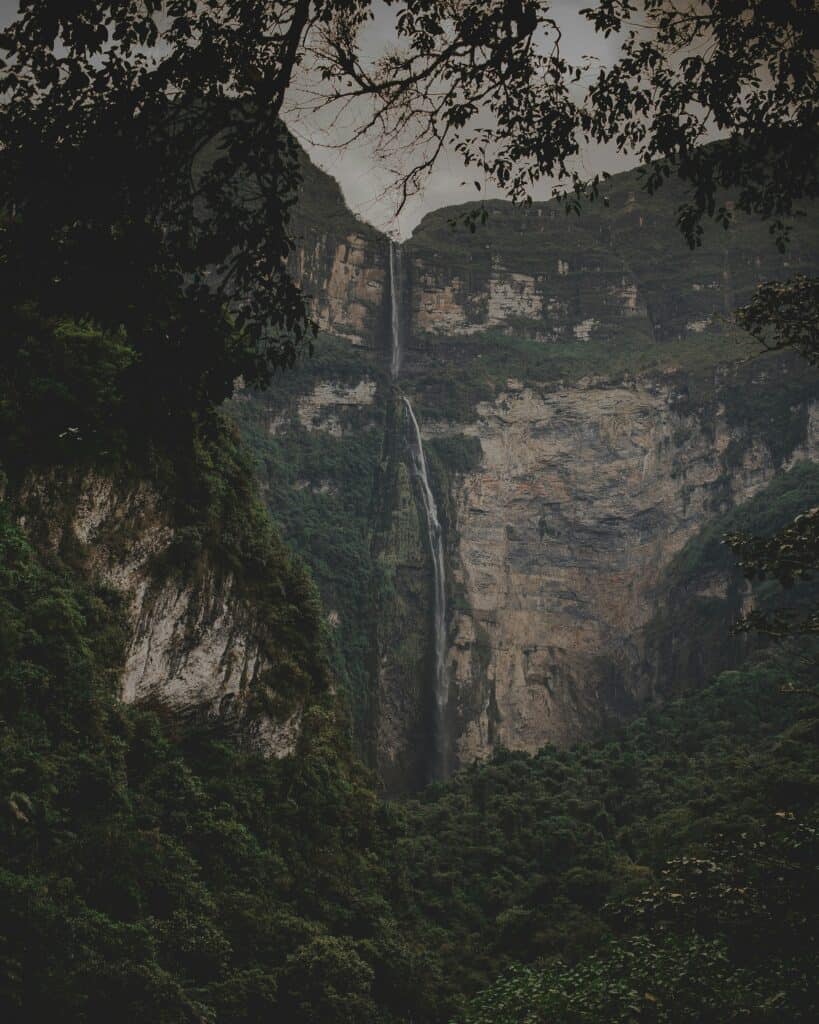
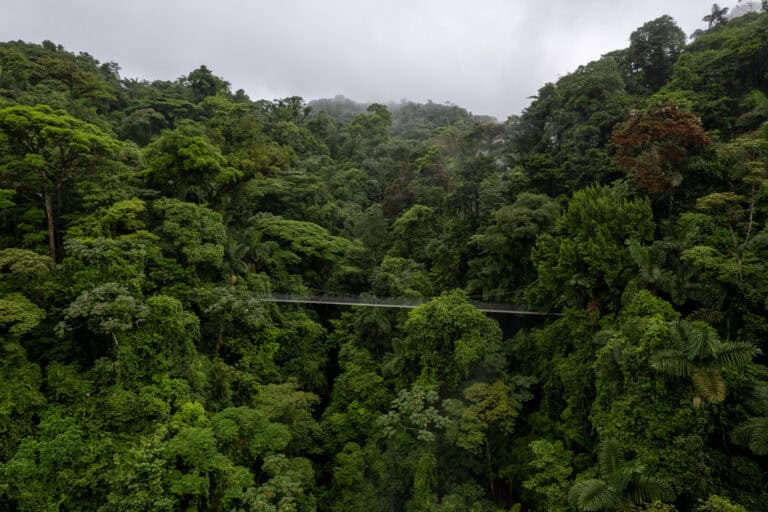
Gocta Falls sits in the Amazonas region of Peru, tucked inside lush Andean cloud forest north of Chachapoyas. It drops in two main tiers for a total height of around 771 m, making it one of the tallest and most famous waterfalls in South America that most travelers have never heard of.

For centuries, local villagers knew about it. The rest of the world didn’t find out until 2005, when a German engineer measured it and the waterfall made international headlines. Early reports called it the third-tallest in the world. Later rankings placed it around 16th or 17th, but either way, 771 m is 771 m. It’s massive.

The trail to the falls runs through cloud forest filled with orchids, bromeliads, and wildlife like the Andean cock-of-the-rock and yellow-tailed woolly monkeys. It’s the kind of hike where the journey is as good as the destination.
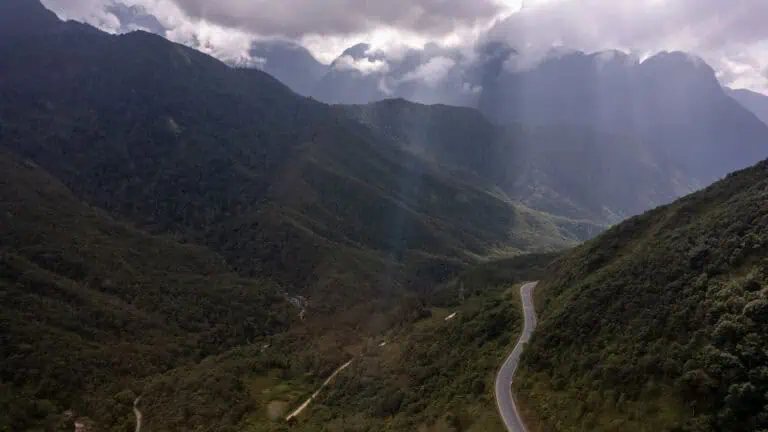
You can access the falls from two communities nearby. Cocachimba is the most popular starting point, with a roughly 3-hour hike to the base of the lower falls and horse rental options if you prefer. San Pablo offers trails and viewpoints for the upper drop. Both are worth considering depending on how much time you have.

Waterfalls of Chapada Diamantina

Brazil

Chapada Diamantina National Park in Bahia, Brazil, is one of the best trekking regions in South America. Table mountains, deep canyons, caves, and dozens of waterfalls make it a proper adventure destination rather than a single-stop visit. Two waterfalls in particular stand out.

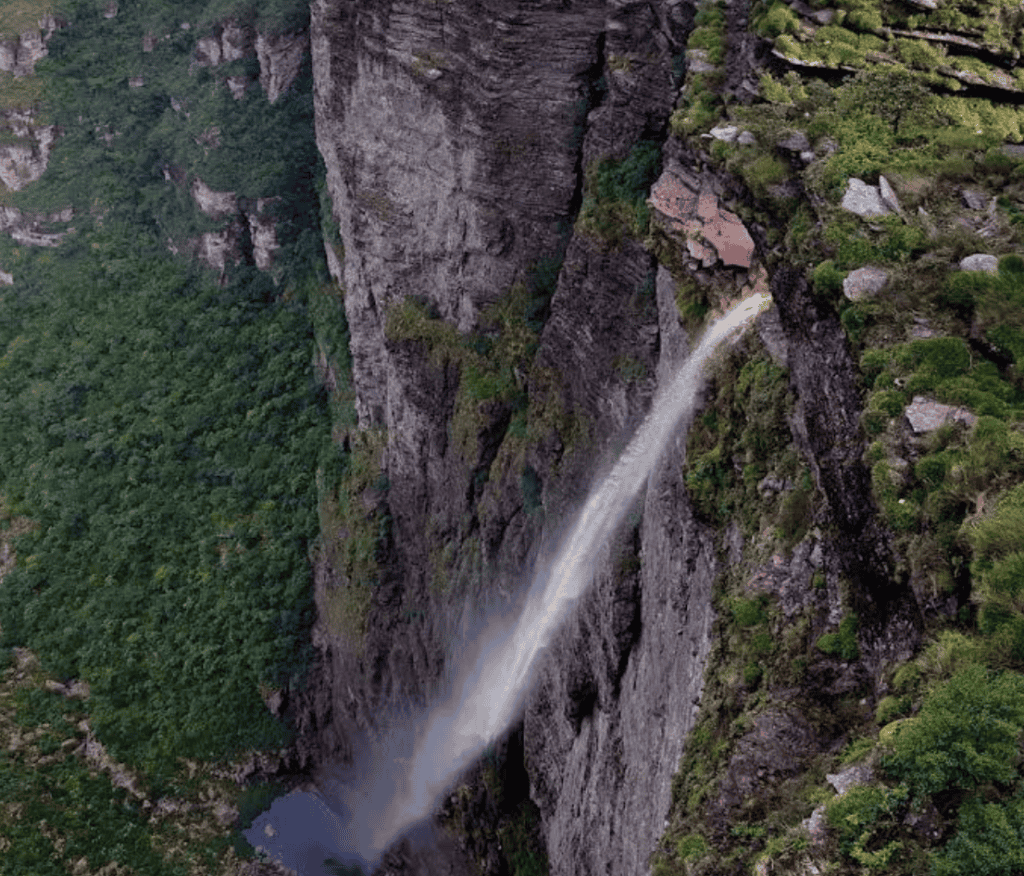
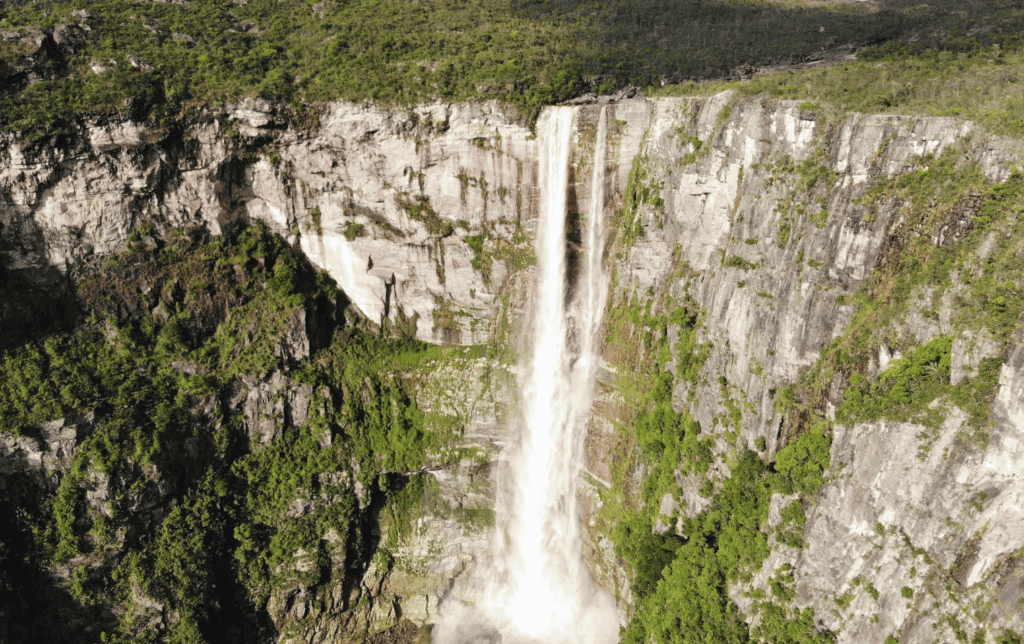
Cachoeira da Fumaça is one of Brazil’s highest waterfalls, with a free-fall of around 340 to 380 m. The volume is often low enough that in windy conditions, much of the water turns to mist before it even reaches the canyon floor. That’s where the name comes from. Fumaça means smoke.

Cachoeira do Buracão is a completely different experience. Located near Ibicoara in the southern part of the park, it drops roughly 85 to 98 m into a circular canyon filled with dark, tannin-rich water. Getting there is part of the adventure. The trail follows the Espalhado River into a narrow rock canyon, and you either cross via ledges and footbridges or swim through wearing a lifejacket to reach the pool directly beneath the falls.

Both waterfalls are regularly combined into multi-day treks through the park, often with wild camping along the way. I’ve done a 3-day trek through that national park, and it was one of the best treks I’ve ever done. Along the way we came across several waterfalls, including one that looked remarkably similar to Cachoeira da Fumaça.

I’ve put together a full guide on the Chapada Diamantina trek that covers other waterfalls and stunning viewpoints.

Cascata do Caracol (Caracol Falls)

Brazil

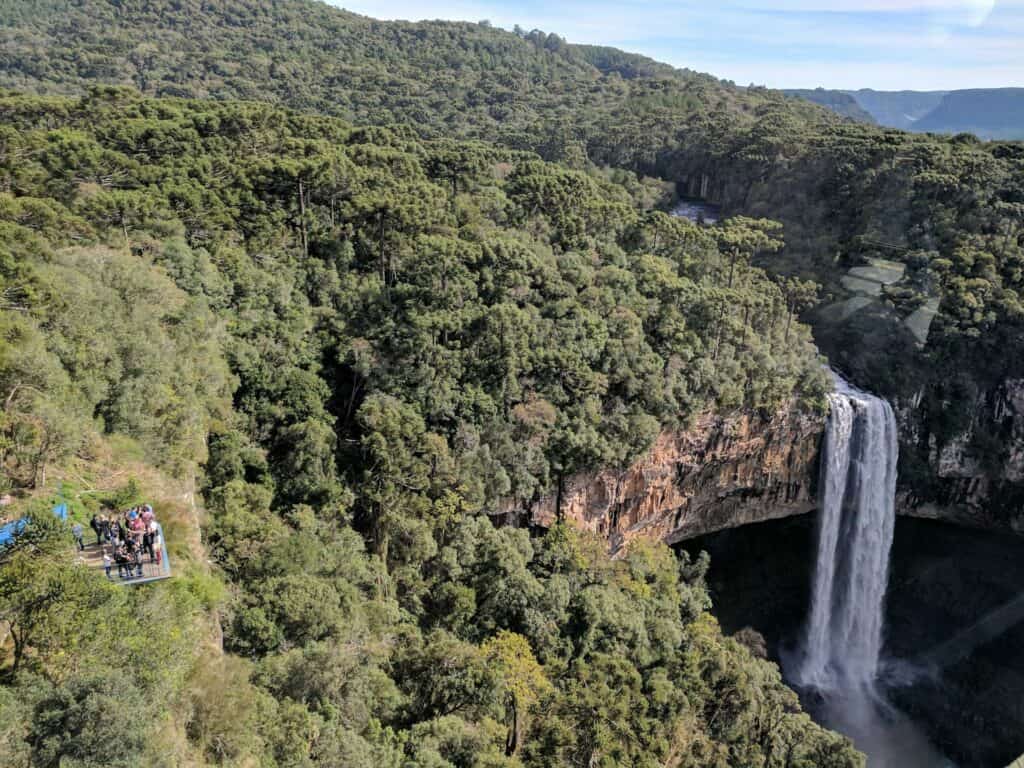
Cascata do Caracol is the centerpiece of Caracol State Park, near the town of Canela in Rio Grande do Sul’s Serra Gaúcha region. It drops 131 m in a single plunge from forested cliffs into a canyon below, and it’s one of the most visited natural attractions in southern Brazil.

The state park itself is relatively small at around 25 hectares, but it’s well set up for visitors. Multiple viewpoints, short trails, picnic areas, and a panoramic observatory give you plenty of ways to take it all in. There’s also a separate cable car park nearby if you want a different angle of the falls.

It’s not the most remote South America waterfall on this list, but it’s one of the most accessible and pairs well with the broader Serra Gaúcha region, which is worth a trip in its own right.

Cascada de Ventisquero Colgante

Chile

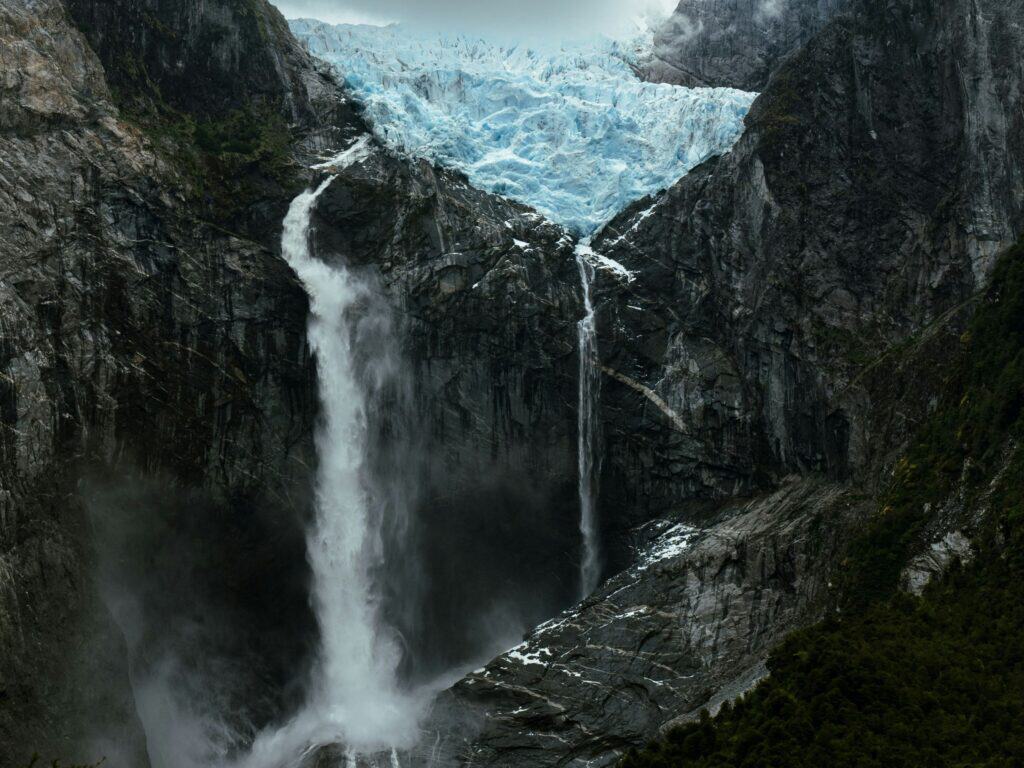
Cascada de Ventisquero Colgante, or Hanging Glacier Falls, is one of the most visually dramatic South American waterfalls on this list. Located in Queulat National Park in Chile’s Aysén region, it’s formed by meltwater from the Ventisquero Colgante glacier dropping from a hanging valley into the park below.

The height is estimated at roughly 550 to 600 m, placing it among the tallest waterfalls in South America. The water falls directly from a glacier cliff into Laguna Témpanos, creating a scene of blue ice, sheer rock walls, and dense rainforest, all typically wrapped in Patagonian mist. It looks like something out of a nature documentary.

Queulat National Park sits along the famous Carretera Austral, making it a natural stop on any road trip through Chilean Patagonia. The glacier viewpoint trail climbs around 400 m over roughly 8 km, a solid half-day hike with a payoff that justifies every step. The park also offers boat trips on Lago Témpanos and several other shorter hikes through lush temperate rainforest.

Salto del Tequendama

Colombia

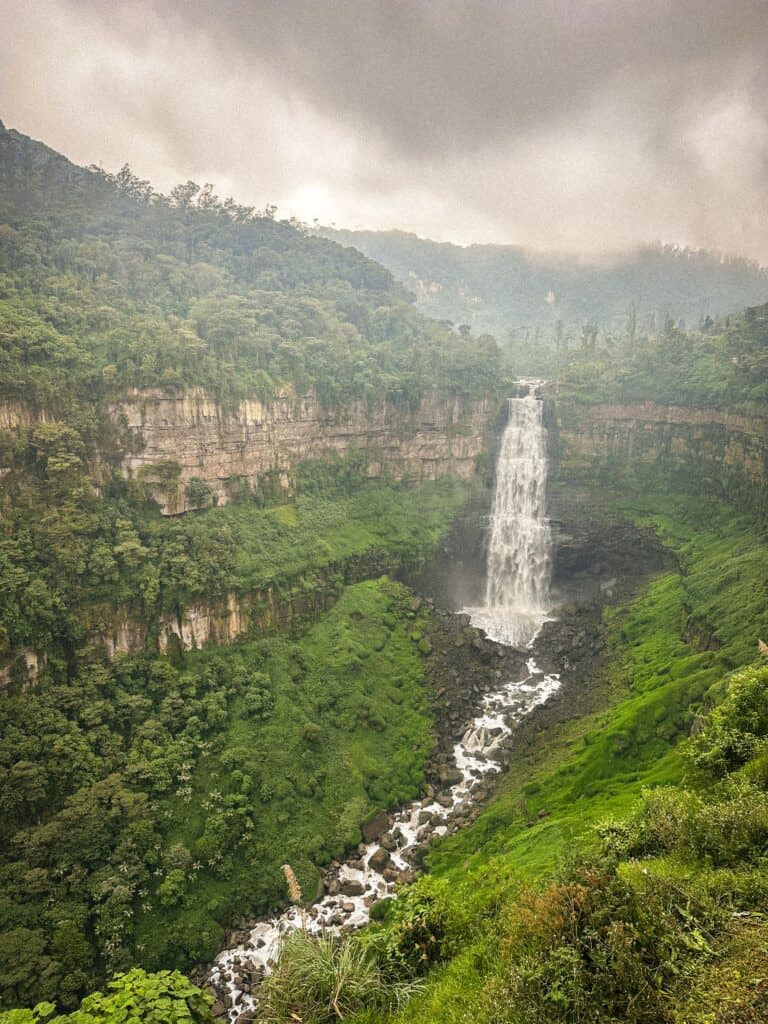
Salto del Tequendama sits on the Bogotá River, about 90 minutes southwest of Colombia’s capital by public or private transport. It drops 132 m from a cliff into a narrow gorge, and it’s one of the most historically significant famous waterfalls in South America that most visitors to Bogotá never think to visit.

The falls carry real cultural weight. For the Muisca people, this site is sacred. Their legends tell of the god Bochica breaking the rock to drain a great flood, creating the waterfall in the process. That backstory alone makes it worth the trip.

The viewing area includes a striking 1920s mansion that originally served as the Tequendama Falls Hotel. After years of abandonment due to river pollution, it was restored and reopened in 2013 as the Tequendama Falls Museum of Biodiversity and Culture. It’s an unusual combination of natural spectacle and heritage building that you won’t find anywhere else.

One thing worth knowing upfront: the Bogotá River remains heavily polluted, which affects the look of the water. It doesn’t take away from the drama of the falls themselves, but it’s worth setting that expectation before you go. Some tour companies offer the tour combining the Tequendama Falls with the visit of the Santa Cruz Zoo.

Salto del Agrio

Argentina

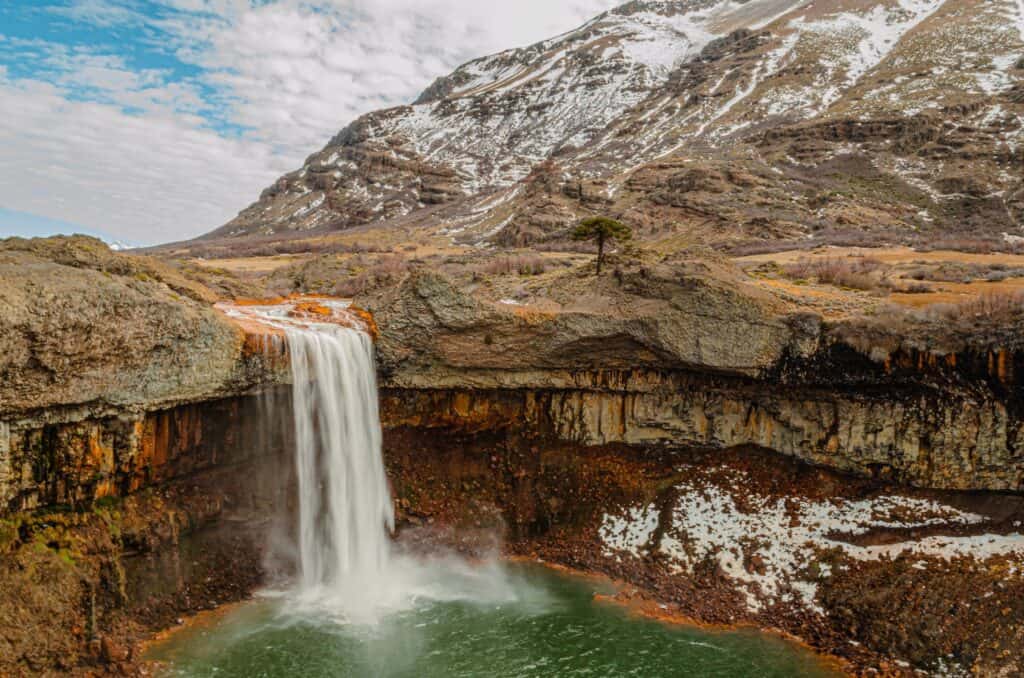
Salto del Agrio is a 60 m waterfall near the mountain town of Caviahue in Neuquén Province, northern Patagonia. What makes it stand out from every other South America waterfall on this list is what the water is actually made of. The Agrio River is naturally acidic, fed by sulphuric content from the nearby Copahue volcano. Agrio literally means sour.

The result is a waterfall surrounded by volcanic rocks in striking shades of yellow, red, and green, a color palette you won’t see anywhere else. In the morning, mist from the falls catches the light and forms a rainbow over the canyon. It’s one of those scenes that feels almost unreal.

Access is easy. A short drive from Caviahue followed by a brief walk gets you to the canyon-edge viewpoints. No long hike required, just a genuinely unique stop in Patagonia that most travelers miss entirely.

Saltos del Moconá

Argentina & Brazil

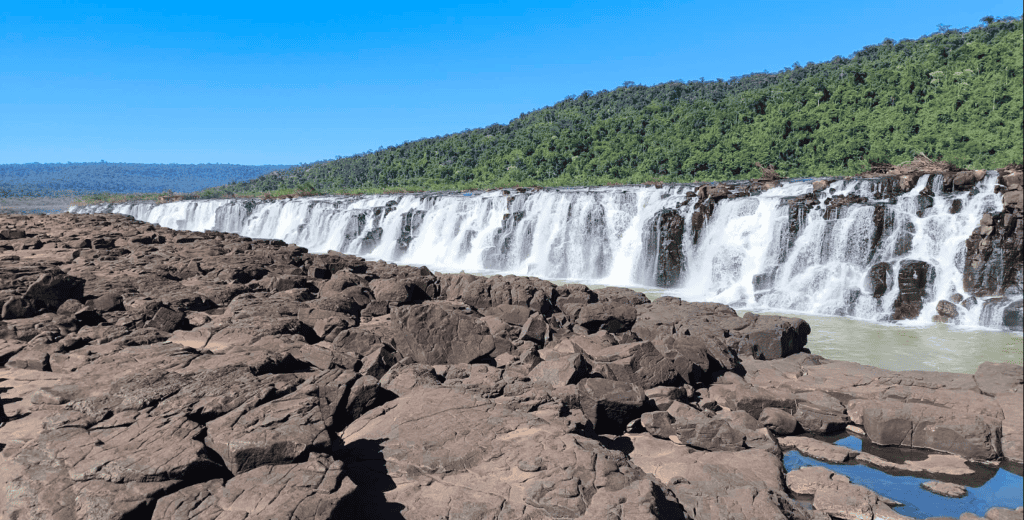
Saltos del Moconá, known as Salto do Yucumã on the Brazilian side, is one of the most geologically unusual South American waterfalls you’ll ever come across. Instead of dropping perpendicular to the river like almost every other waterfall in the world, it runs parallel to it. A massive geological fault carved a longitudinal cut along the Uruguay River, creating a waterfall that stretches for nearly 3 km along the river’s course.

The height varies depending on water levels, typically between 5 and 12 m, which makes it far shorter than others on this list. But height isn’t the point here. The sheer length of the falls and the raw geological oddity of it is what makes it worth the trip.

Timing your visit matters more here than almost anywhere else on this list. During the rainy season, the river level rises and can completely submerge the falls. The dry season between November and April gives you the best chance of seeing them in full.

Access is from the Argentine side through the town of El Soberbio, inside the Yabotí Biosphere Reserve. Speedboat trips along the canyon are available and give you the closest view of the falls. The Brazilian side in Parque do Turvo offers a more elevated viewpoint looking down at the basaltic curtain of white water.

Cachoeira do El Dorado

Brazil

Cachoeira do El Dorado is the tallest waterfall in Brazil and one of the most remote South American waterfalls on this entire list. It drops 353 m in a single vertical plunge off Monte Tantalita, deep inside Serra do Aracá State Park in the far north of Amazonas state. To put that in perspective, that’s the equivalent of a 120-story building of pure falling water.

The falls were only recently brought to wider attention, and very few images of them exist online. The area remains largely unexplored, with no tourist infrastructure on site and only a handful of specialized agencies offering expedition tours at high prices due to the sheer logistical complexity of getting there.

Getting here is a serious commitment. From Manaus, you travel roughly 700 km by large boat to Barcelos, then another 70 km by speedboat, followed by 12 km on foot. Including stops and camps, the full expedition takes around 12 days. Access is only possible during the rainy season between April and September, when the Rio Negro is navigable.

This one isn’t for a casual trip. It’s for the traveler who wants to go somewhere almost nobody else has been, deep into the Amazon, to stand in front of something that most people don’t even know exists.

El Pailón del Diablo

Ecuador

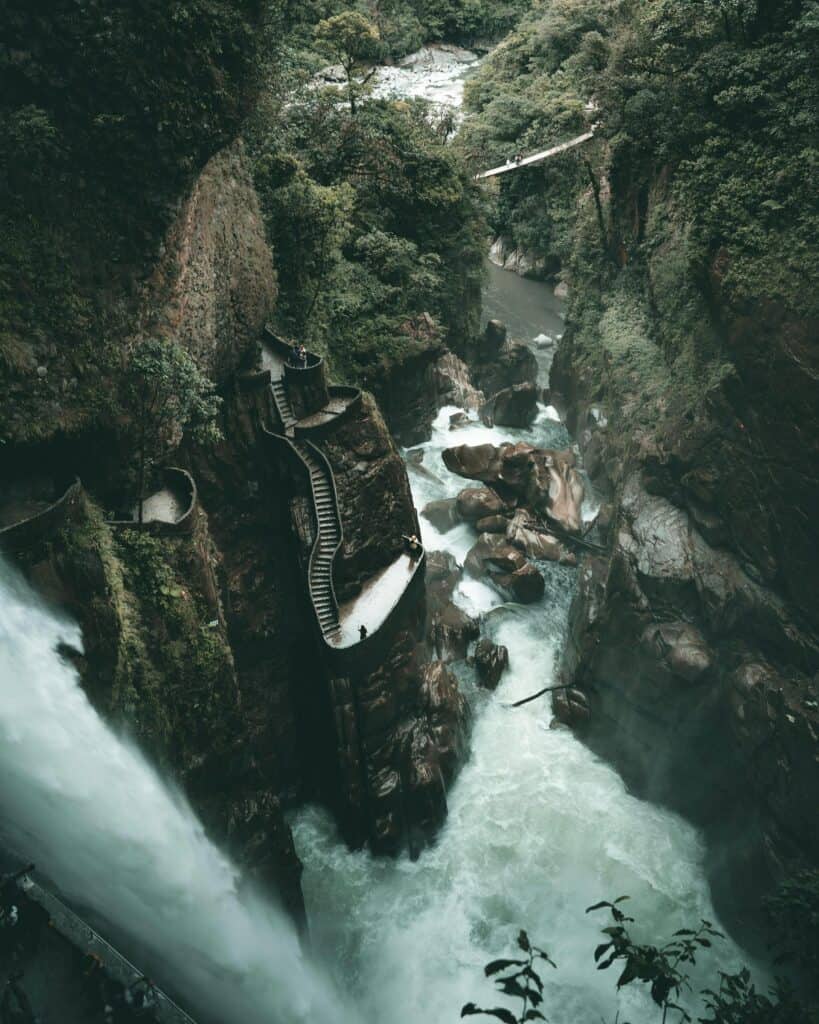
El Pailón del Diablo, which translates to “Devil’s Cauldron,” is Ecuador’s largest waterfall and one of the most visited natural attractions in the country. Located near the town of Río Verde, just 18 km from the adventure hub of Baños de Agua Santa, it drops 80 m in three steps into a narrow gorge on the Pastaza River.

I did this one about 10 years ago, and I still remember it clearly. The bike ride along the Ruta de las Cascadas to get there is an adventure in itself, one of those travel memories that sticks.

But what really stayed with me was the sound. Standing at the viewpoint, the noise is so intense you genuinely can’t stay long. The mist soaks you fast, the wind picks up, and the cold hits you before you even realize it. Still, it’s one of the most impressive South American waterfalls I’ve personally seen.

Which Waterfall Should You Visit?

Not every waterfall on this list requires the same level of commitment, and that’s the point. There’s a South America waterfall here for every type of traveler.

If you want iconic and easy, Iguazú Falls is the obvious answer. It’s the biggest waterfall system in the world, fully accessible, and worth every bit of the hype. Cascata do Caracol and Salto del Tequendama are solid picks too if you want drama without a full expedition.

If you’re after a proper trekking experience, Chapada Diamantina and Queulat National Park are the standouts. Both reward hikers with wild, remote landscapes that feel nothing like a tourist attraction.

For solitude and the feeling of being genuinely off the beaten path, Ángel FallsKaieteur FallsGocta Falls, and Cachoeira do El Dorado deliver. Fewer crowds, more raw nature, and the kind of experience you’ll struggle to find words for when you get home.

And if your goal is the best photo of your life, Iguazú’s catwalksKaieteur’s cliff-edge viewpoints, and the misty jungle compositions at Gocta and Queulat are your best bets.

This post is also available in :

Picture of Hugo Mathieu
I'm Hugo, a traveler driven by curiosity and a passion for discovering the world's hidden corners. After exploring over 30 countries across Latin America and Southeast Asia, I've learned that every adventure shapes who we become. I'm here to share those lessons and inspire your next great journey.

Subscribe to the Newsletter

Join our community and receive exclusive travel stories, guides, and special offers!

    What's on My Desk Right Now

    🗺️ Planning a Trip?

    Skip the research rabbit hole.

    I’ll build you a personalised day-by-day itinerary — or answer all your questions on a quick 60-min call.

    Let's Connect

    Affiliate Disclosure

    Some of my posts include affiliate links. If you choose to make a purchase through them, I may earn a small commission—at absolutely no extra cost to you.


    Using these links is the best way to support my work and say thank you, and I appreciate it so much! Of course, everything I share reflects my honest opinions and experiences.

    📸 Work With Me

    Brand, tourism board or hotel?

    Let’s create something together — content, reviews and campaigns that reach real travellers who are ready to book.

    Buy Me A Coffee

    Latest Posts

    HorizonHugo - Indonesia - Padar Island-12
    Planning one of the most iconic komodo island trips?...
    HorizonHugo - Indonesia - Pink Beach-4
    Pink Beach Komodo is one of the rarest beaches on Earth....
    Aerial view of Padar Island during the sunrise, during the komodo boat tour of 3 days
    Padar Island is unlike anything else in Indonesia....
    compressed view of houses of lencois in Bahia, Brazil. houses have red tiles and colorful walls. the city is surrounded by forest.
    Planning a Brazil itinerary is trickier than it looks....
    HorizonHugo - Brazil - Curitiba-05
    Curitiba is one of Brazil's hidden gems. The city feels...

    Get My Personal Map of 500 Must-See Places - FREE

    I’ve compiled 500 of the best places across my travels into one free Google Map.

    The kind of spots you won’t find in a guidebook.

      Table of Contents

      Share it with the person you to travel with !

      You might also like to read these articles

      Scroll to Top