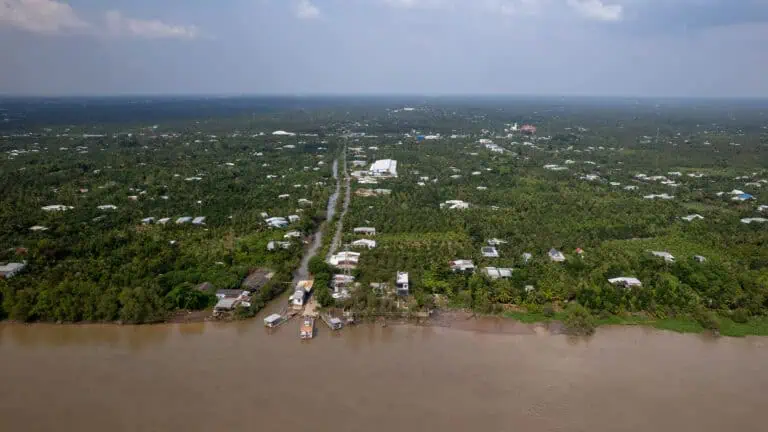
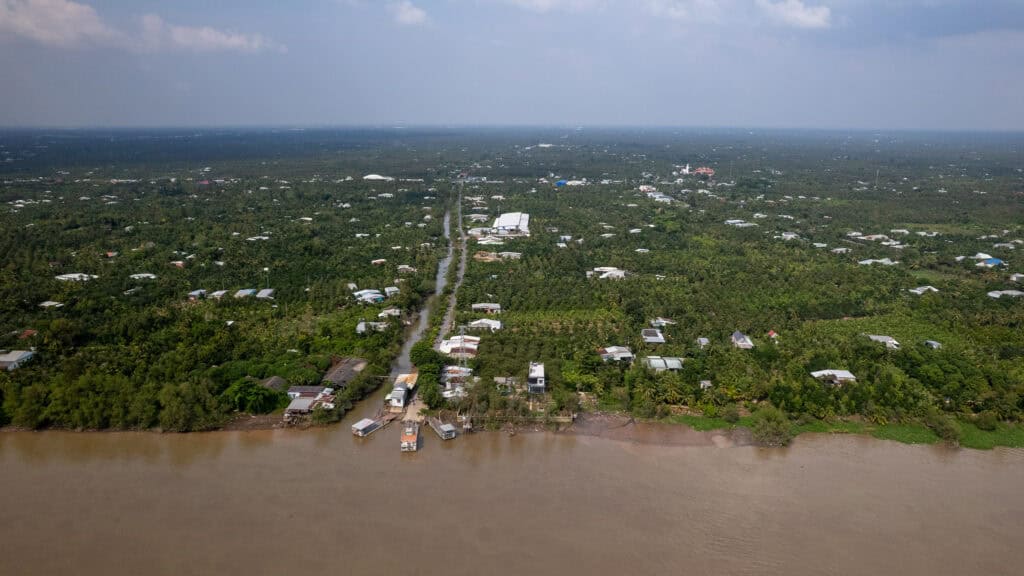
Aerial view of a river with muddy water bordered by green vegetation and scattered houses, a road extends from the river through a lush rural landscape under a cloudy sky—capturing scenes reminiscent of the picturesque routes you might experience on a Vietnam to Cambodia tour, such as traveling from Ho Chi Minh City to Phnom Penh.

Cu Chi Tunnels: Complete Tour Guide from Ho Chi Minh

This post is also available in :

If you’re spending a few days in Ho Chi Minh City and want to understand Vietnam beyond its street food and coffee shops, the Cu Chi Tunnels belong on your list. This is one of the most powerful historical sites in Southeast Asia, and it’s close enough to make a solid half-day or full-day trip from the city.

The tunnels aren’t a comfortable, polished museum experience. They’re tight, hot, and genuinely humbling. But that’s exactly why so many travelers come away feeling like it was one of the most memorable things they did in Vietnam.

This guide covers everything you need to decide whether to go, which tour to book, what the day actually looks like, and whether the shooting range is worth adding on ( yes you can shoot with real gun there).

Table of Contents

What Are the Cu Chi Tunnels and Why Should You Visit?

The Cu Chi Tunnels are a 250 km underground network built by Viet Cong and North Vietnamese forces during the Vietnam War. The tunnels were originally started in the 1940s as a resistance tool against French colonial forces, then massively expanded through the 1960s and into the 1970s.

At their peak, this network stretched from the outskirts of Saigon all the way to the Cambodian border. It functioned as a supply route, a hiding place, a field hospital, and a command center, all underground.

For anyone curious about the Vietnam War or about how ordinary people survive extraordinary conflict, this place delivers context that no book or documentary quite replicates. You’re not just reading about the war. You’re crouching inside it.

That said, this experience suits a specific type of traveler. If you’re drawn to history, willing to crawl through narrow, hot, dark tunnels, and open to sitting with some uncomfortable emotions, you’ll find the Cu Chi Tunnels genuinely rewarding. If you’re mainly looking for a relaxing day out, it’s probably not the right fit.

FREE Google Map - Best 500 Places in the World

Most travelers visit the same 20 places their whole life.

Here are 500 reasons to do better.A curated world map of 500 unforgettable destinations across every continent — open it in Google Maps and start planning.

    A world map with orange location markers highlighting the Best 500 Places in the World across various continents. The title appears at the top on a beige banner.

    Cu Chi Tunnels at a Glance: Key Facts Before You Book

    Location and Distance from Ho Chi Minh City

    Cu Chi District sits approximately 45 to 50 km northwest of Ho Chi Minh City. The drive takes between 1.5 and 2 hours depending on traffic and which entrance you visit. It’s not a quick hop, so plan your day accordingly.

    Opening Hours and Admission Fees

    The site is open daily from 7:00 AM to 5:00 PM. Admission for foreign visitors runs approximately 90,000 to 125,000 VND per person, which works out to roughly $3.50 to $5 USD. That fee is separate from any guided tour cost, which is typically included in your tour package.

    How Long Should You Spend There?

    Most visitors spend around 2 to 3 hours on-site. When you factor in the drive from Ho Chi Minh City and back, a morning tour will take up most of your day. Plan for a half-day at minimum, or a full day if you combine it with another stop.

    When I’m planning my trip, I always check flights on Skyscanner first, since it lets me compare prices and find the best deal, and most of the time I also go on Trip.com afterward, which is another great price comparison tool for flights and hotels.

    Ben Dinh vs. Ben Duoc: Which Entrance Should You Choose?

    There are two main entrances to the Cu Chi Tunnels, and they offer noticeably different experiences.

    Ben Dinh is 45 km from Ho Chi Minh City, covers 17 hectares, and is the default stop for most organized international tours. The tunnels here have been enlarged to accommodate a wider range of body types, and the facilities are better. The tradeoff is crowds. If you’re arriving on a popular tour bus in the morning, you’ll likely be sharing the space with several other groups.

    Ben Duoc is 57 km from the city and covers 100 hectares, making it five times larger than Ben Dinh. The tunnels are more original, the atmosphere is quieter, and the experience feels less packaged. The downside is that it’s harder to reach independently and has fewer facilities. Small group tours with a maximum of 10 people, like the HCM City: Cu Chi Ben Duoc Tunnels: Less Crowded Small Group tour, are available if you want to go this route without figuring out the logistics yourself.

    For first-time visitors on a standard tour, Ben Dinh is perfectly fine and more convenient. If you’ve already been to Ben Dinh, or if avoiding crowds matters more to you than convenience, Ben Duoc is worth the extra distance.

    Whenever I want to book a hotel, I always check both Booking.com and Agoda first, since they usually have the same options but sometimes one has a better price than the other, so it’s worth comparing both, but if I’m looking for something cheaper and I also want to meet other travelers, I go with Hostelworld instead.

    How to Get to Cu Chi Tunnels from Ho Chi Minh City

    Joining an Organized Tour (Recommended)

    For most travelers, joining a guided tour is the smartest option. Buses typically carry 15 to 20 people, depart in the morning or afternoon, and handle all the transport logistics for you. Prices range from around 400,000 VND to over 2,000,000 VND per person ($16 to $80 USD), depending on the operator, group size, and what’s included.

    I went with TNK Travel, and the experience was genuinely excellent. The guide was one of the best I came across during my time in Vietnam. He was funny, deeply knowledgeable about the history, and brought the whole visit to life in a way that felt personal rather than scripted.

    A few solid options to consider:

    If you want to book a tour or an activity without any hassle, Get Your Guide is honestly one of the easiest platforms I use, with a huge range of experiences, flexible cancellation on most bookings, and you can even get 5% off with my code HORIZONHUGO5.

    Getting There Independently

    You can reach Cu Chi by public bus or private taxi or Grab. It’s doable, and it gives you more flexibility over timing. The real cost, though, isn’t money. It’s the lack of a guide.

    A good guide adds historical depth that completely changes how you experience the site. If you go independently, at least hire a guide once you arrive.

    What to Expect on a Cu Chi Tunnels Tour: Step by Step

    First Stop: Handicraft Center

    Many tours make a stop at a handicraft center on the way to the tunnels.

    This center is run by disabled artisans who produce intricate mother-of-pearl artwork, including small decorative boxes, tableaux, and other pieces.

    You can watch the production process and buy items if something catches your eye. It’s a meaningful stop that supports the local community, and the craftsmanship is genuinely impressive.

    Orientation and Introductory Film

    Once you arrive at the Cu Chi Tunnels site, the tour typically begins with a short documentary film.

    It covers the history of the tunnels and provides context about the Vietnam War from the Vietnamese perspective. It sets the tone for everything that follows, so pay attention.

    Outdoor Exhibits: Booby Traps, Tanks, and Tunnel Entrances

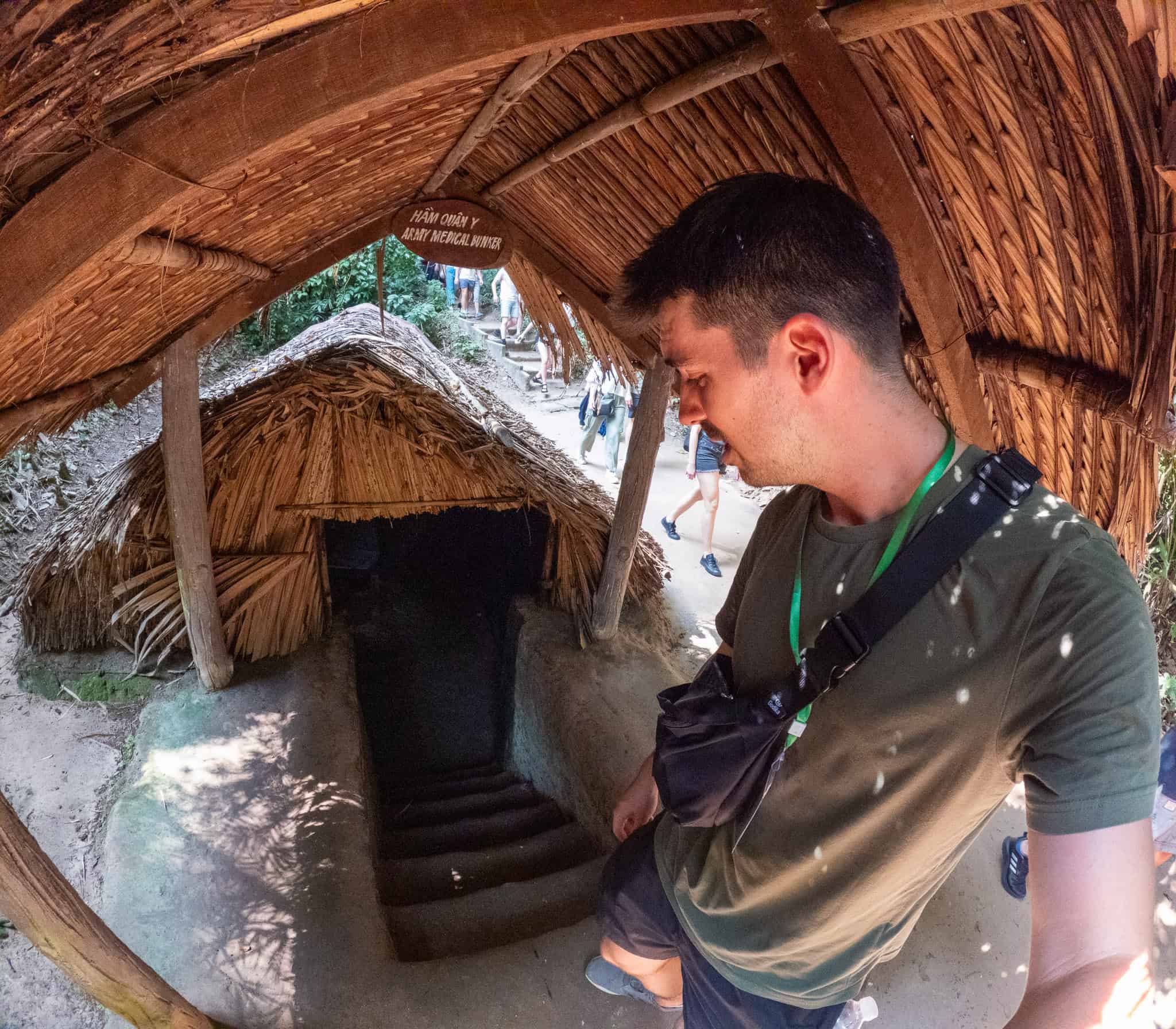
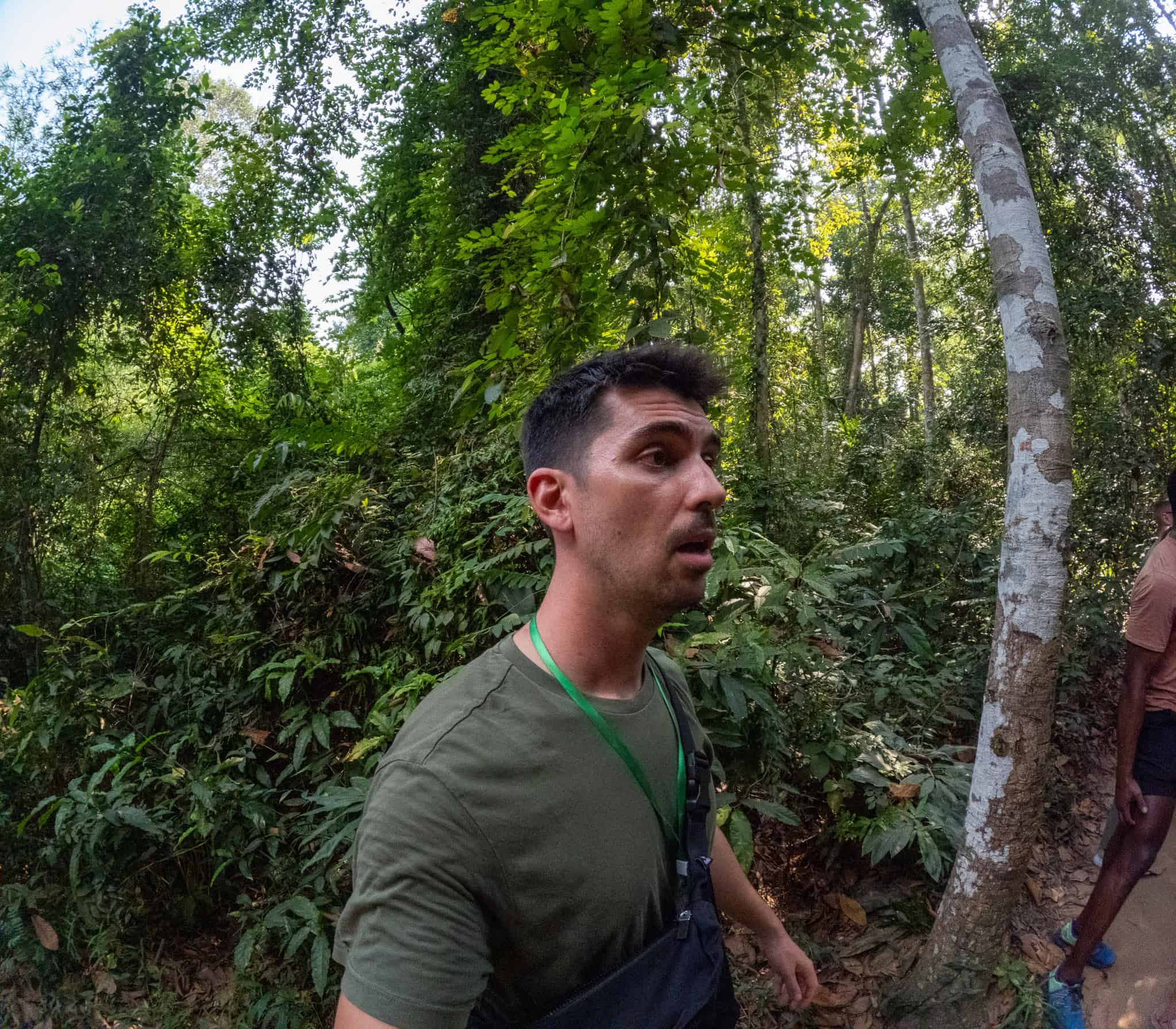
    The outdoor section of the site is set in a shaded, forested environment that feels almost peaceful until you start noticing what’s around you.

    There are mannequin displays of soldiers in wartime gear, original tanks, demonstrations of the spike traps used against troops, and camouflaged tunnel entrances disguised with fallen leaves. Some of the trapdoors are so well hidden you’d walk right past them.

    Breathing mounds used to ventilate the tunnels are scattered throughout the area. Your guide will point these out and explain how the tunnel dwellers survived underground for months at a time.

    Crawling Through the Tunnels

    This is the part people remember. Visitors can crawl through modified tunnel sections ranging from about 10 to 15 meters all the way up to 100 meters. The tunnels are hot, humid, and extremely tight.

    The tourist versions have been slightly enlarged from their original size, but they’re still a genuine test. The original tunnels were hand-dug and barely shoulder-width. Even the enlarged versions will have most people moving slowly on hands and knees with their head down.

    I’m not claustrophobic, but even I felt a wave of anxiety near the end of the longer section. The air gets thin, the space gets tighter, and your brain starts doing the math. It’s not dangerous, but it is genuinely uncomfortable.

    Tapioca and Pandan Tea Break

    After the crawl, many tours offer a small snack of tapioca and pandan tea. Tapioca was a staple food for the people living in the tunnels during the war, eaten because it was cheap and available. It’s a small cultural detail, but it adds something real to the experience.

    Optional Shooting Range Experience

    At the end of the tour, you’ll have the option to visit the on-site shooting range. Pricing is approximately 60,000 VND per bullet (around $2.40 USD), with a typical minimum of 10 bullets.

    Expect to spend around $24 to $28 USD for a standard session. This is almost never included in the base tour price, and payment is made directly at the range.

    The Shooting Range: Is It Worth Adding to Your Visit?

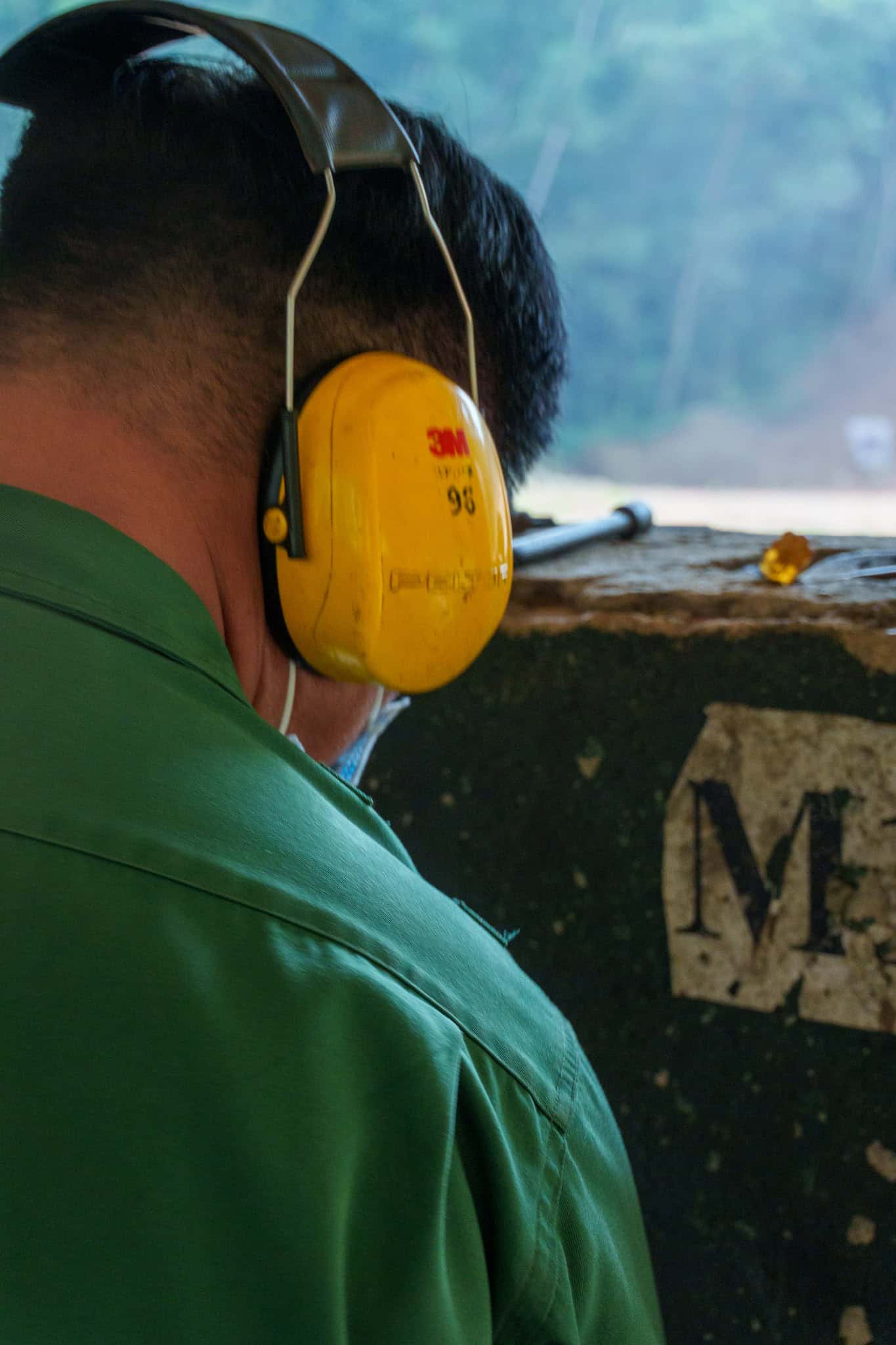
    The shooting range lets you fire weapons including AK-47s and M16s, the same rifles carried by opposing sides during the war. The experience is louder and more physically intense than most people expect. The recoil on an AK-47 is real, and if it’s your first time holding a firearm, the whole thing hits differently than you’d imagine.

    That was the case for me. It was the first time I’d ever fired a live weapon, and I chose the AK-47. The sound alone was startling. I’m glad I did it, as it was a unique and memorable moment, but it’s not something I’d seek out every weekend.

    The pricing is straightforward: 60,000 VND per bullet, minimum 10 rounds, totaling around $24 to $28 USD. You pay directly at the range, not through your tour operator.

    I did it with someone to lower the cost and still try to shoot. so we both shoot 5 bullets and it costed 12$, more affordable.

    Whether it’s worth it depends entirely on how you feel about it in context. Some travelers find it adds a visceral layer to understanding the war. Others feel uncomfortable firing weapons at a site that serves as a war memorial. Both reactions are completely valid.

    If you’re curious, go for it. If something about it doesn’t sit right with you, skip it without any guilt. The rest of the tour stands on its own.

    Before you book your next tour, don’t forget to use my code HORIZONHUGO5 on Get Your Guide, it only takes a second to apply and gets you 5% off, so it’s basically free money for something you were going to book anyway.

    The Historical Context You Need to Fully Appreciate the Visit

    The Cu Chi Tunnels started as a resistance network in the 1940s, dug by hand to help Vietnamese fighters move between villages without being seen by French colonial forces.

    During the Vietnam War (1955 to 1975), the network was massively expanded, eventually stretching over 250 km from the edge of Saigon toward the Cambodian border.

    An estimated 45,000 Vietnamese died defending these tunnels. That number is worth sitting with. It turns what could feel like a novelty attraction into something much heavier.

    My guide made all the difference in how I absorbed that weight. He shared that his grandfather had lived through the war and spoke about the conflict from a personal, human perspective.

    He didn’t frame it as Vietnamese versus American. He talked about the cost of war on all sides. That kind of guide, someone who brings lived family history into the narrative, transforms the visit from a walking tour into something you carry with you.

    A good guide is not a bonus. It’s arguably the most important part of the experience.

    Final Takes and What Else to Visit

    Visiting Cu Chi is, in my opinion, a must when traveling through Vietnam’s south.

    The Vietnam War is not a distant history lesson here. It’s part of the country’s identity, and for many people still alive today, it’s personal. Coming here gives you a grounded, human understanding of that.

    If you want to go deeper on the history back in Ho Chi Minh City, the War Remnants Museum at 28 Võ Văn Tần Street, District 3, is the ideal complement.

    It’s open daily from 7:30 AM to 5:30 PM, and admission is just 40,000 VND (about $1.60 USD). The museum covers three floors of photographs, artifacts, vehicles, and Agent Orange exhibits. Plan 1.5 to 2 hours.

    The nearby Independence Palace and Notre-Dame Cathedral are within walking distance, making it a full half-day in the city.

    If you only have one full day outside Ho Chi Minh City, some operators combine Cu Chi with a Mekong Delta visit, including a sampan boat ride, a local lunch, and a stop at a coconut village.

    The Cu Chi Tunnels & Mekong Delta with Coconut Village Tour packages all of this into one day and is a smart way to see two very different sides of the region without burning multiple days on transport.

    For travelers who want to go beyond the war narrative entirely, a less common but rewarding combination pairs Cu Chi with Black Lady Mountain and a Cao Dai religious ceremony at the temple in Tay Ninh.

    The Ho Chi Minh: Cu Chi, Black Lady Mountain, and Cao Dai Tour covers all three in a single full-day itinerary. It’s culturally rich and quite different from the typical tourist circuit around Ho Chi Minh City.

    This post is also available in :

    Subscribe to the Newsletter

    Join our community and receive exclusive travel stories, guides, and special offers!

      What's on My Desk Right Now

      The Brazilian flag with green and yellow brush strokes, a blue globe with stars and a white banner reading Ordem e Progresso in the center.

      🗺️ Planning a Trip?

      Skip the research rabbit hole.

      I’ll build you a personalised day-by-day itinerary — or answer all your questions on a quick 60-min call.

      Let's Connect

      Affiliate Disclosure

      Some of my posts include affiliate links. If you choose to make a purchase through them, I may earn a small commission—at absolutely no extra cost to you.


      Using these links is the best way to support my work and say thank you, and I appreciate it so much! Of course, everything I share reflects my honest opinions and experiences.

      📸 Work With Me

      Brand, tourism board or hotel?

      Let’s create something together — content, reviews and campaigns that reach real travellers who are ready to book.

      Buy Me A Coffee

      Latest Posts

      A man stands in a plaza at night in front of a brightly lit building covered in colorful signs and advertisements, evocative of scenes from the Ben Tan Market Saigon section of any Ho Chi Minh City travel guide. People sit and walk nearby, while trees frame the bustling scene.
      This Ho Chi Minh City travel guide covers District...
      Aerial view of a river with muddy water bordered by green vegetation and scattered houses, a road extends from the river through a lush rural landscape under a cloudy sky—capturing scenes reminiscent of the picturesque routes you might experience on a Vietnam to Cambodia tour, such as traveling from Ho Chi Minh City to Phnom Penh.
      Discover what to expect at the Cu Chi Tunnels, how...
      Aerial view of several boats sailing among limestone islands in calm blue water under a clear sky, with rocky green islets scattered across the horizon—an iconic scene near Cat Ba Island, home to some of the most beautiful beaches in Vietnam.
      Discover the key differences between Lan Ha Bay and...
      Floating houses and boats on calm water, surrounded by green limestone hills under a partly cloudy sky, create a tranquil scene reminiscent of Cat Ba Island in Vietnam.
      Discover Cat Ba Island, Vietnam's quieter alternative...
      A cityscape with tall buildings in the background, a body of water in the middle, and houses surrounded by trees and greenery in the foreground under a partly cloudy sky—this picturesque scene evokes some of the top things to visit in Hanoi.
      Discover how to travel to Hanoi with this comprehensive...

      Get My Personal Map of 500 Must-See Places - FREE

      I’ve compiled 500 of the best places across my travels into one free Google Map.

      The kind of spots you won’t find in a guidebook.

        A world map titled UNESCO World Heritage displays numerous brown, blue, and green icons marking heritage sites across all continents.

        Table of Contents

        Got Questions?

        Still figuring things out for your trip, or just want to double check something before you book? Send me a message and I’ll get back to you as soon as I can.

        Or hit me up on Instagram, I’m there anyway and always happy to chat about the trip.

          Share it with the person you to travel with !

          You might also like to read these articles

          Scroll to Top