Komodo Dragon in Indonesia: The Shocking Truth

This post is also available in :

The komodo dragon in Indonesia is a genuinely one-of-a-kind creature. Literally. This animal exists nowhere else on Earth. Sure, it looks a bit like the water monitors you can spot wandering around parks in Bangkok, Thailand, or similar spots across Southeast Asia. But size and raw power put them in a different league entirely. An Indonesian Komodo dragon would treat one of those Bangkok varans as a light snack.

I traveled to Komodo National Park to see a few things, but the real draw, the one everyone comes for, is spotting these famous “dragons” in person. Was it worth the hype? Here’s what you actually need to know about komodo dragons, how to plan your visit, and whether this bucket-list stop lives up to the reputation.

Table of Contents

What Are Komodo Dragons? Understanding the World’s Largest Lizard

Before jumping into the visit itself, it helps to understand what makes these animals so fascinating in the first place.

The Incredible Size and Physical Characteristics

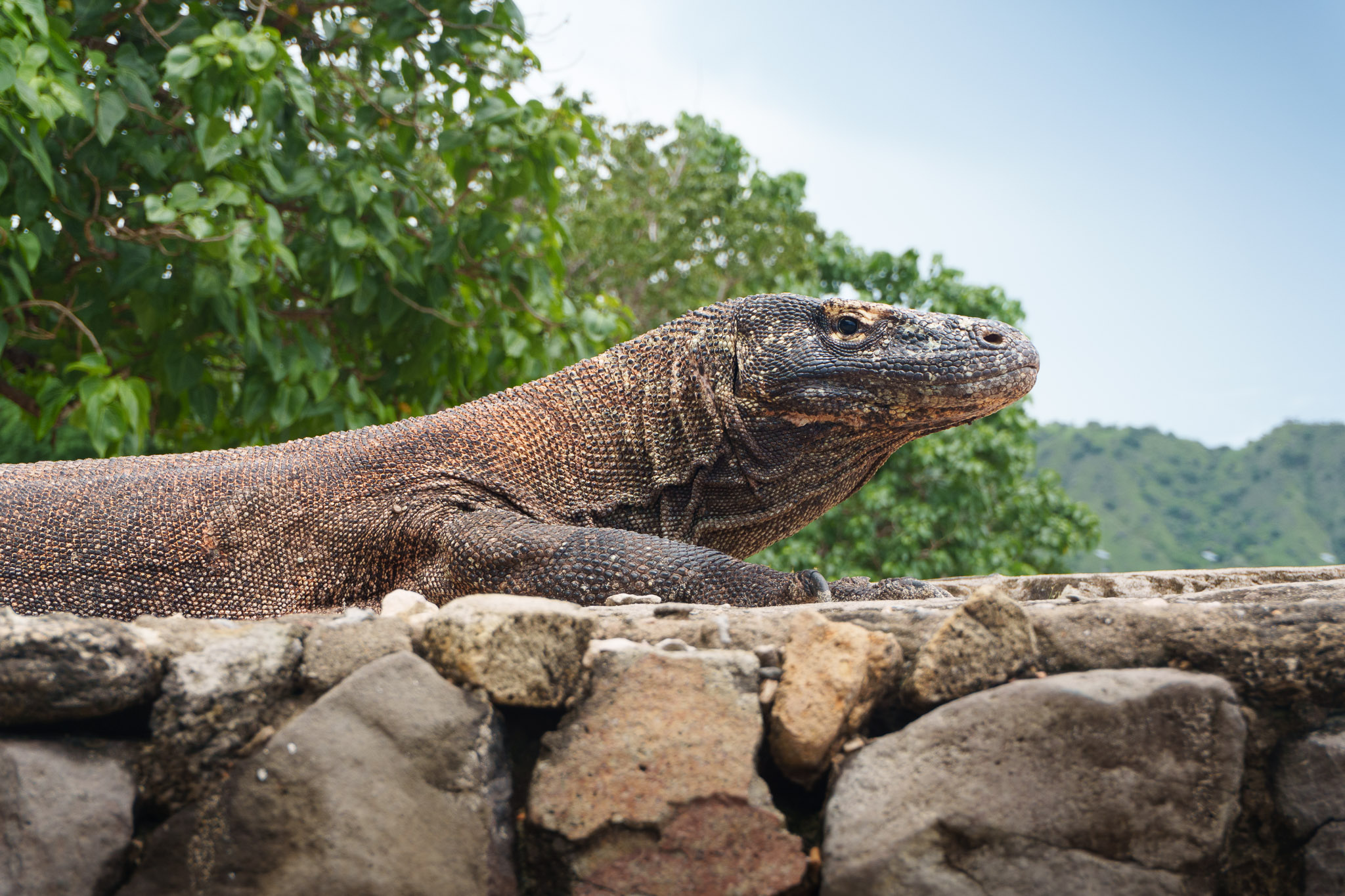
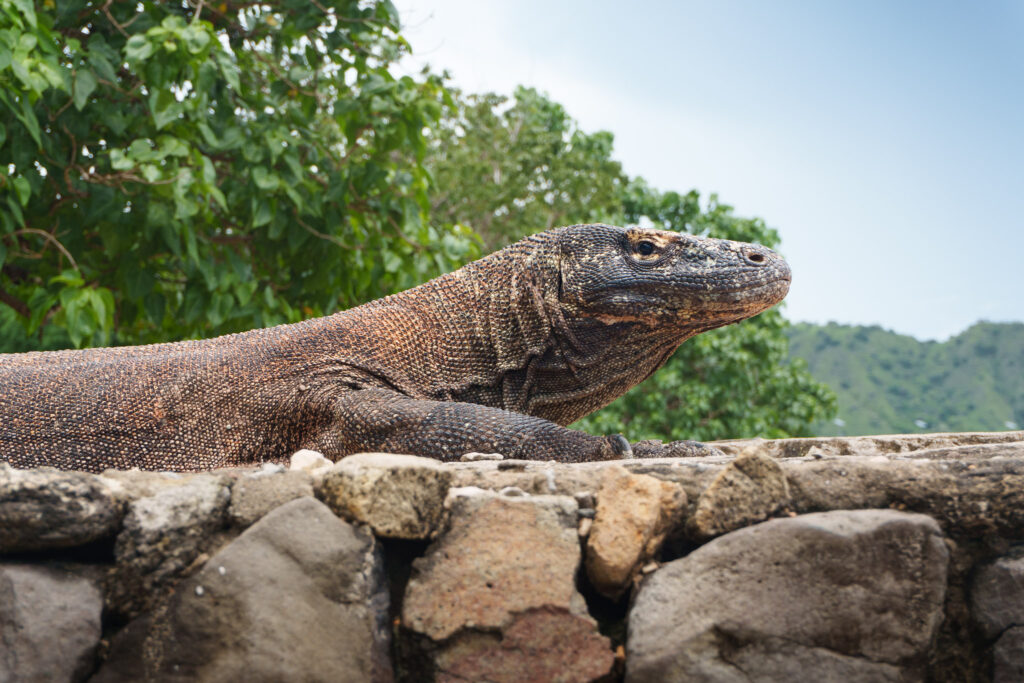
Komodo dragons rank as the largest living lizard species on the planet. Males can reach up to 3 meters (10 feet) in length, dwarfing almost anything else in the reptile world. Weight typically sits around 70 kg (154 pounds) for an average adult, though the largest verified specimen tipped the scale at 166 kg (366 pounds).

Unlike the slender monitor lizards you’ll find roaming temple grounds in Thailand, this indonesia komodo dragon has a powerful, muscular build that makes it a legitimate apex predator, not just an oversized lizard.

Komodo Dragon Teeth and Bite Force

Komodo dragon teeth are sharp, curved, and built specifically to tear and grip prey rather than chew it. What makes them even more dangerous is what comes with the bite.

Their saliva carries toxic compounds that trigger catastrophic blood loss and shock in whatever they’ve bitten. Combined with a sophisticated venom that lowers a victim’s blood pressure and stops blood from clotting, this allows a dragon to take down prey far larger than itself, simply by waiting for the wound to do the work. That bite force and venom combination is exactly why they’re capable of killing humans, and why guides take safety distance so seriously (more on that below).

Speed, Senses, and Hunting Abilities

Despite the bulk, komodo dragons can sprint up to 12 miles (19 kilometers) per hour in short bursts. Their sense of smell is extraordinary too, capable of detecting blood from nearly 6 miles away.

They hunt by ambush, using the terrain to close in on prey undetected before striking. Once they’ve fed, a dragon can eat up to 80 percent of its body weight in one sitting, then go without food for two months. That’s an efficient predator by any measure.

FREE Google Map - Best 500 Places in the World

Most travelers visit the same 20 places their whole life.

Here are 500 reasons to do better.A curated world map of 500 unforgettable destinations across every continent — open it in Google Maps and start planning.

    Where Are Komodo Dragons Found? Geographic Range and Habitat

    If you’re wondering where are komodo dragon found, the answer is refreshingly simple, there’s really only one place on Earth.

    Komodo National Park: The Only Home

    Komodo dragons exist exclusively within Komodo National Park in Eastern Indonesia, part of the Lesser Sunda Islands. The park covers three larger islands, Komodo, Rinca, and Padar, plus 26 smaller islands scattered around them. Interestingly, no dragons have been spotted on Padar since the 1970s, which leaves Komodo and Rinca as the real hotspots.

    The park was officially established in 1980 specifically to protect these animals, and UNESCO named it a World Heritage Site in 1991 for its ecological significance.

    The Islands Where Dragons Live

    Komodo Island itself stretches 22 miles (35 kilometers) and hosts the largest dragon population in the park. Rinca Island holds around 2,200 dragons and offers equally strong viewing chances. Between the two, you’ll find the bulk of the estimated 2,450 dragons left in the wild, making them the go-to destinations for an encounter.

    Smaller populations also live on Gili Motang and parts of Flores, tucked into coastal regions and protected reserves. The volcanic terrain and dry, tropical climate across these islands create exactly the conditions this species needs to survive.

    Conservation Status and Protection Efforts

    The IUCN Red List classifies komodo dragons as Endangered, and Indonesian law backs that up with legal protections for both the animals and their habitat. Protecting the species is the entire reason Komodo National Park exists.

    On Flores Island, the Wae Wuul and Wolo Tado Reserves were set up specifically for dragon conservation, and international partnerships like the Komodo Survival Program continue supporting these efforts.

    Planning Your Komodo Dragon Adventure: How to Visit

    Gateway and Access Information

    Labuan Bajo, on the western tip of Flores Island, is your entry point into the park. It sits about 50 kilometers (31 miles) from Komodo Island. From there, a ferry to Komodo Island takes roughly 2.5 hours, while Rinca is faster, just over an hour by speedboat. International flights connect directly to Labuan Bajo, so getting here isn’t the hard part.

    If you’re building out a broader Indonesia trip, I covered the full route in my One Month in Indonesia itinerary, which includes where Komodo fits alongside Sumatra, Java, and Bali. If Bali is part of your plan too, check out where to stay in Bali for accommodation picks.

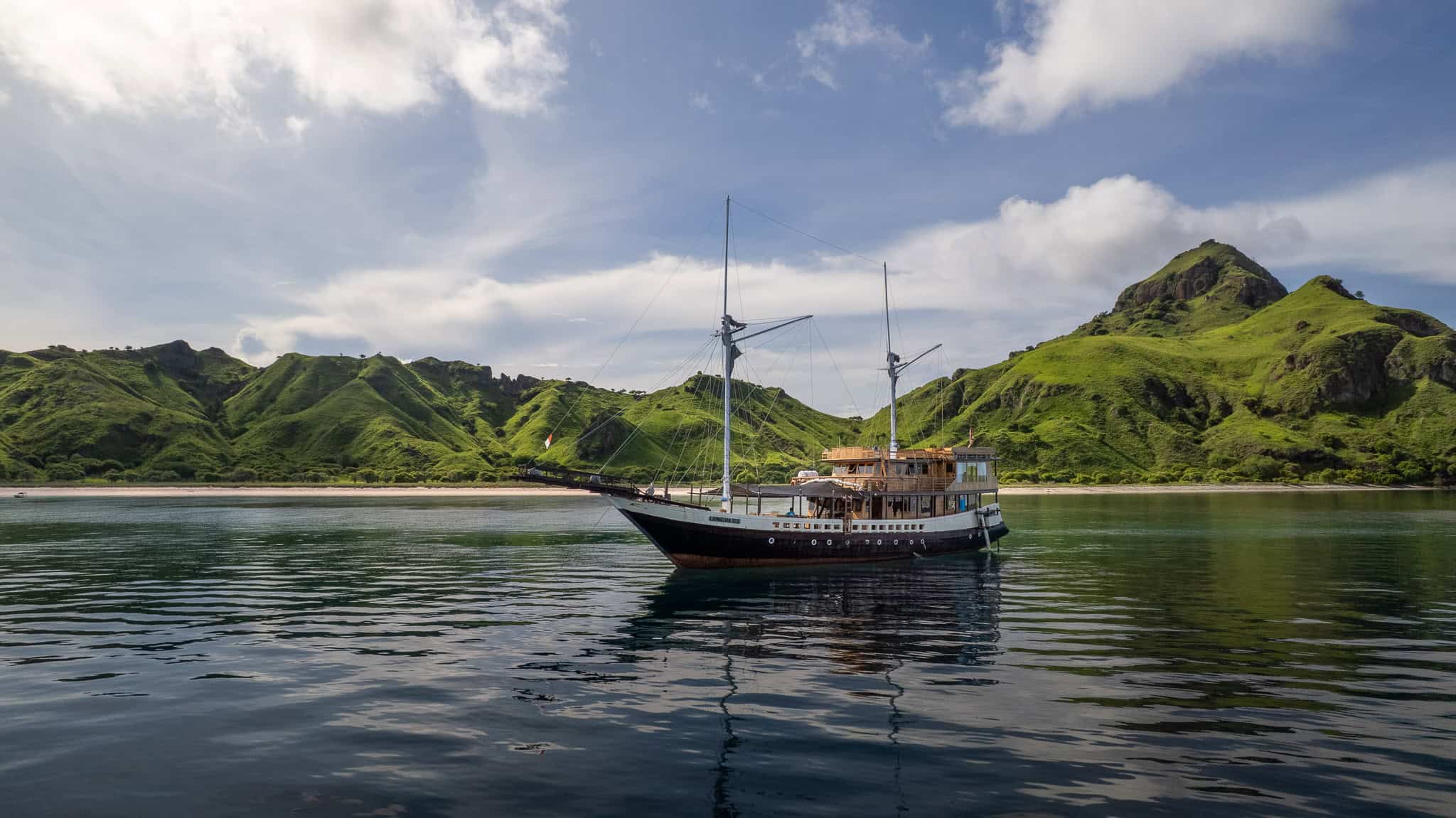
    I’d recommend you do a multi-day boat tour adventure in the National Park of Komodo. I did it and it was actually insane! You see amazing things like the komodo dragon, pink beach, susnet on Padar Island, and manta rays, all at once!

    Guided Tours and Safety Protocols

    You won’t be wandering these islands alone. Visitors must stay with an official guide at all times, and for good reason given what we covered above about bite force and venom. Tour companies run group visits to both Komodo and Rinca with varying difficulty levels, and park staff enforce strict protocols to protect tourists and dragons alike.

    Best Time to Visit and Seasonal Considerations

    The dry season is the sweet spot for this trip. Dragons are more active and easier to spot because water sources concentrate their movement, and marine life visibility for diving or snorkeling improves as well.

    I did my boat tour in January, right in the middle of rainy season, the lowest point for good conditions. We still saw dragons, but I’d bet good money the dry season makes for easier, more frequent sightings.

    The Visit to Komodo Island: More Industrial Than Expected

    The Island Felt Less “Wild” Than I Imagined

    Here’s something nobody really tells you going in. Komodo Island itself feels a bit industrial. Keep in mind my visit was during rainy season, the quietest stretch of the year, and it still felt busy.

    You arrive at what feels like a remote island, but instead of untouched wilderness, you’re greeted by concrete buildings and wooden restaurants, a setup I hadn’t seen at that scale on other Indonesian islands. Rangers and local guides stand ready, waiting to sort groups into their tours. Honestly, it felt closer to an attraction park than the National Geographic-style remote encounter I’d pictured.

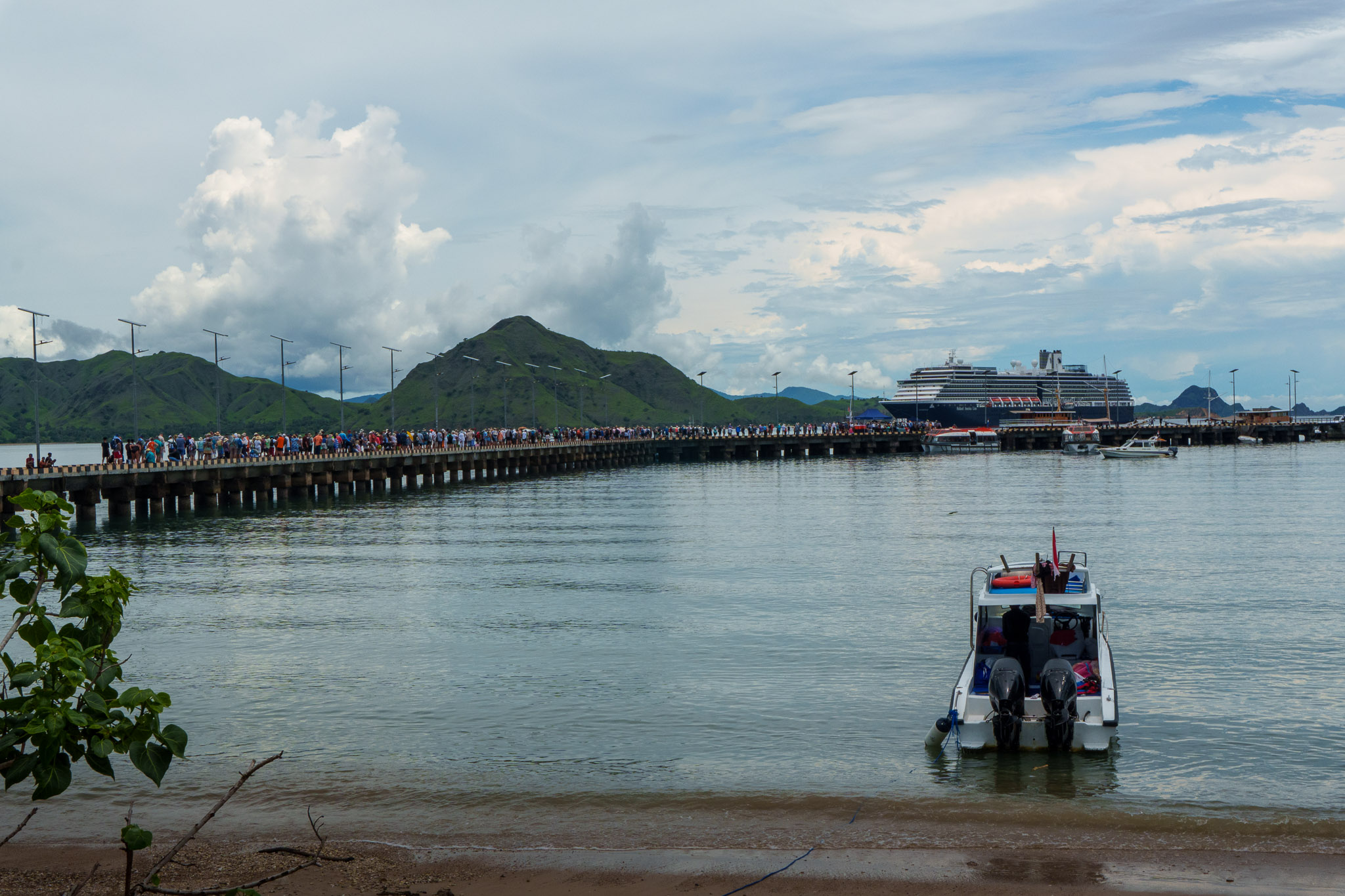
    The biggest surprise? A massive cruise ship packed with Dutch tourists anchored right in the bay.

    The Tour: Seeing a Wild Komodo Dragon (Sort Of)

    We took a small boat from our larger vessel over to Komodo Island, and the crowds were immediately obvious. Groups everywhere, shuttle boats running back and forth, all against the backdrop of that huge Dutch cruise ship. I kept wondering if this was unusual or just how it always is, even in low season.

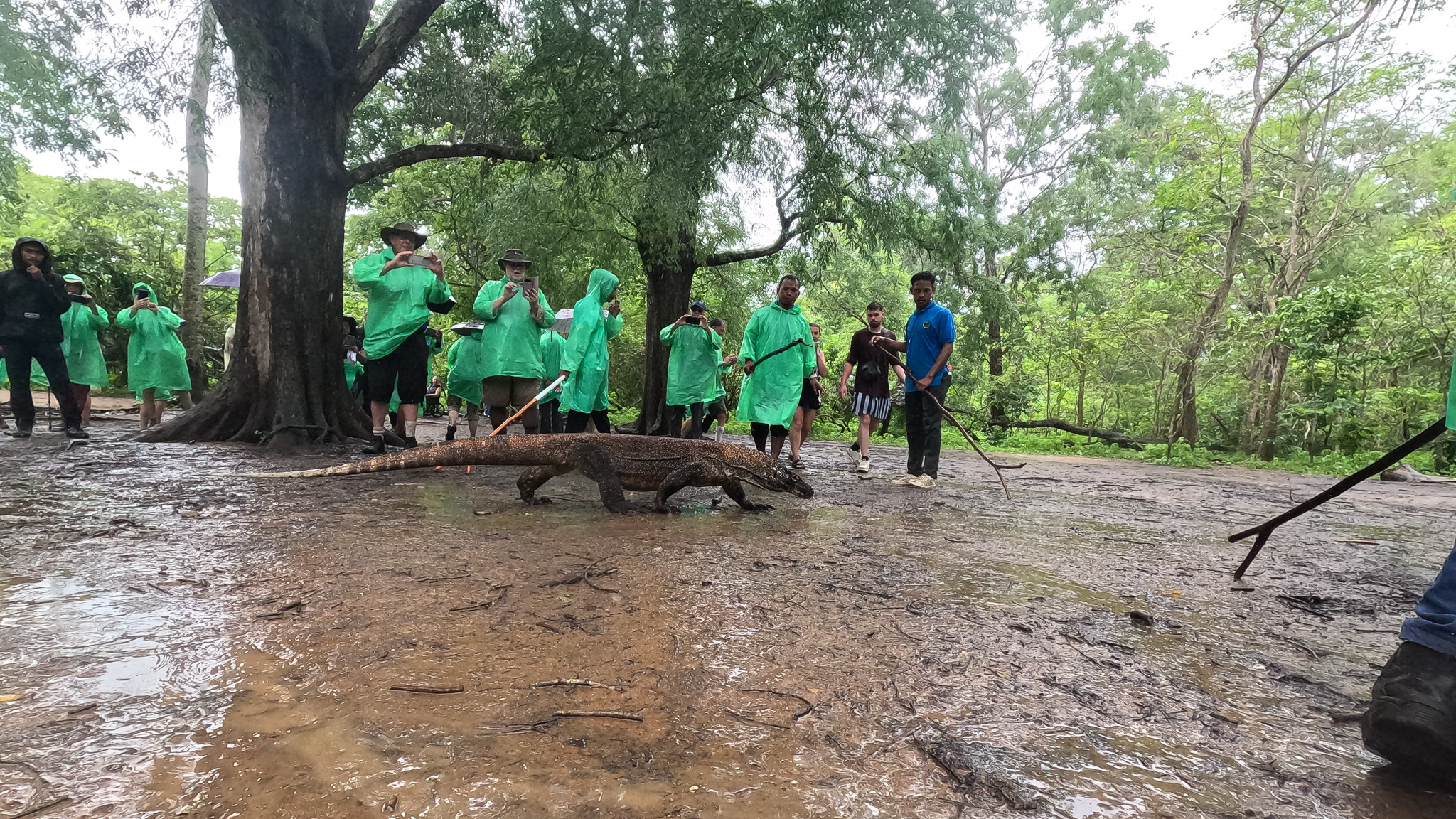
    After a delay for heavy rain that nearly canceled the whole tour, we set off with our assigned ranger, about ten of us in the group. Five or ten minutes of walking later, we reached a small clearing where other groups were already waiting with their own rangers. Then another ranger emerged from the woods alone, tapping a stick through the grass, and there it was, a wild komodo dragon moving through the brush.

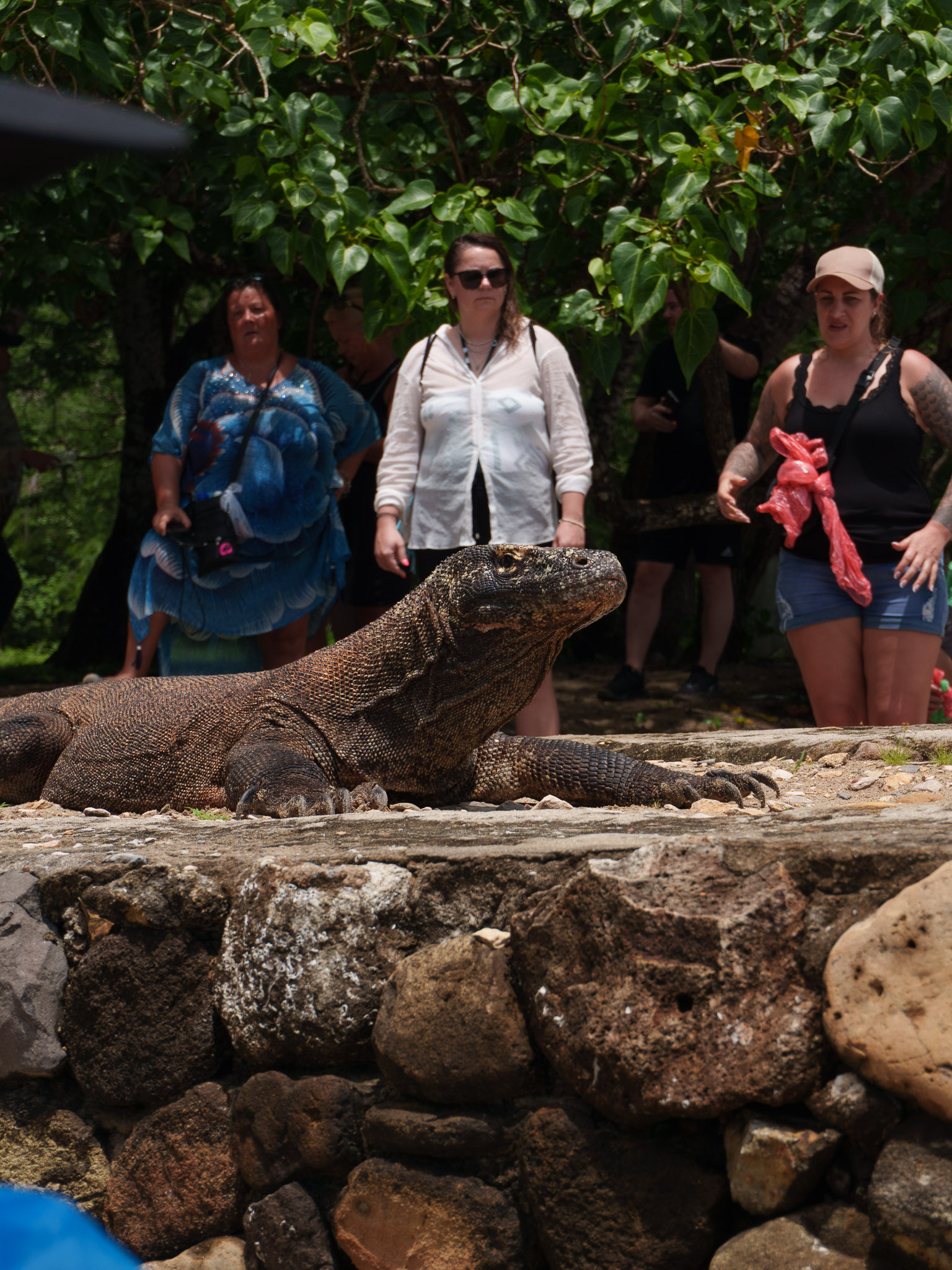
    Every ranger immediately pushed us back, insisting on distance. Not for dramatic effect either, you could tell they were genuinely on edge, even with all their experience. The dragon crossed the clearing quickly, tongue flicking out to sense the air, and it was undeniably impressive, far larger and heavier-looking than any Bangkok varan I’d seen before. It stuck around for less than five minutes before slipping back into the grass.

    We continued walking along the bay through jungle terrain, scenic but dragon-free, until we reached the beach. That’s where things got a little strange.

    The “Photo Op” Dragon

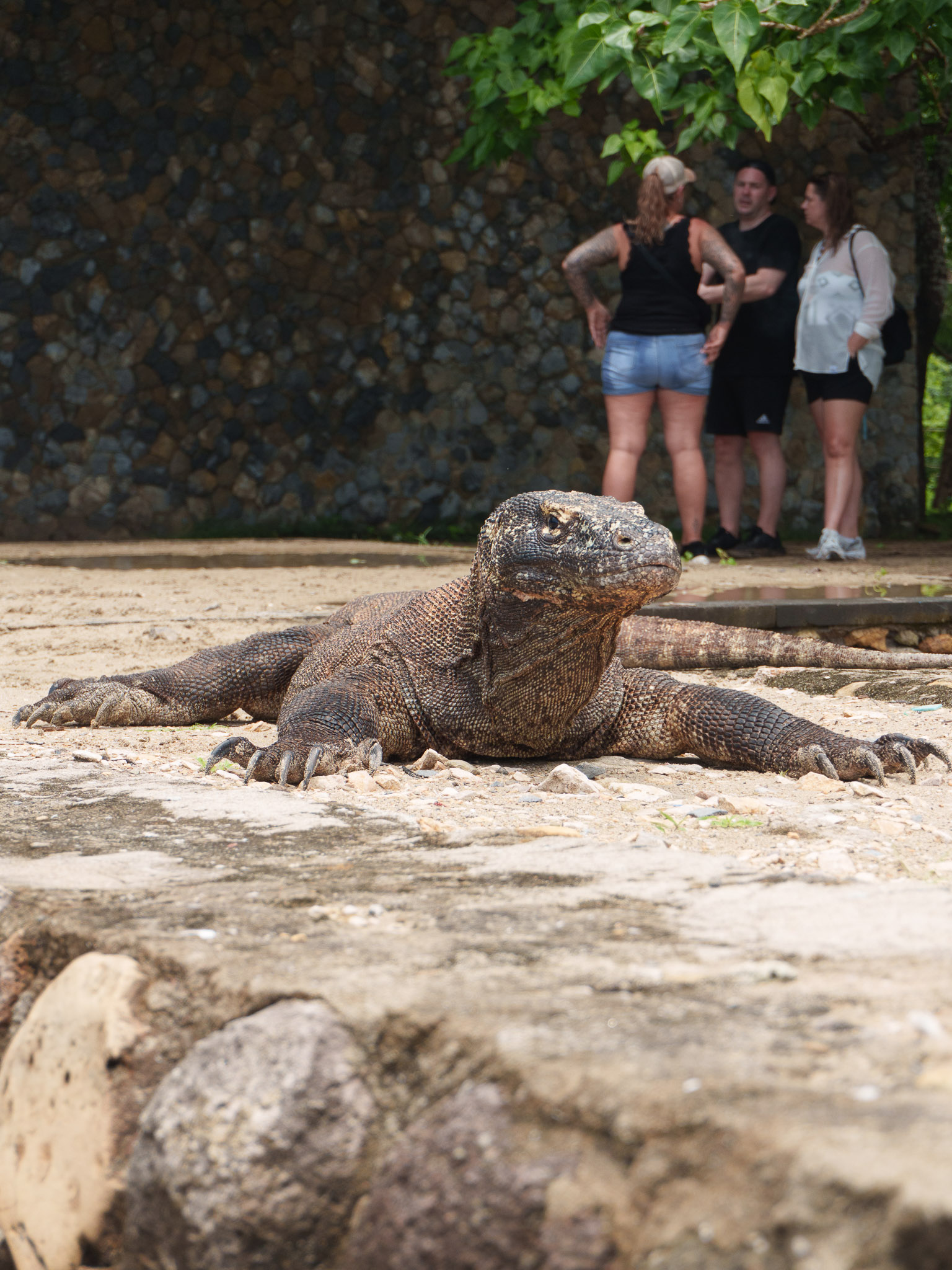
    At the beach, a stage-like setup waited with what I assume was the park’s logo on a wall behind it. And there, sitting completely motionless, was another komodo dragon. This one was even bigger than the one we’d seen in the jungle, but it didn’t move at all beyond an occasional head tilt or blink.

    A guide stood in front of it taking photos for visitors, camera in hand, while we lined up behind the dragon at a distance far closer than what we’d kept in the jungle. I got my photo too, but let’s be honest about what was happening. That dragon was almost certainly sedated.

    It’s the same trick used with tiger photo ops in Thailand, where the animals are recently fed and drugged so they won’t react to a line of tourists. I’d seen this claim before on Instagram and travel blogs, and seeing it in person confirmed it. If you’ve read my honest take on Thailand’s tourist attractions, you’ll know this isn’t the first time I’ve flagged this kind of setup.

    Is visiting Komodo National Park still worth it?

    Yes, for the wild encounter in the jungle alone. But go in with realistic expectations. This isn’t an untouched wilderness experience, it’s a well-run tourist operation with some genuinely wild moments mixed in with some staged ones.

    This post is also available in :

    Picture of Hugo Mathieu
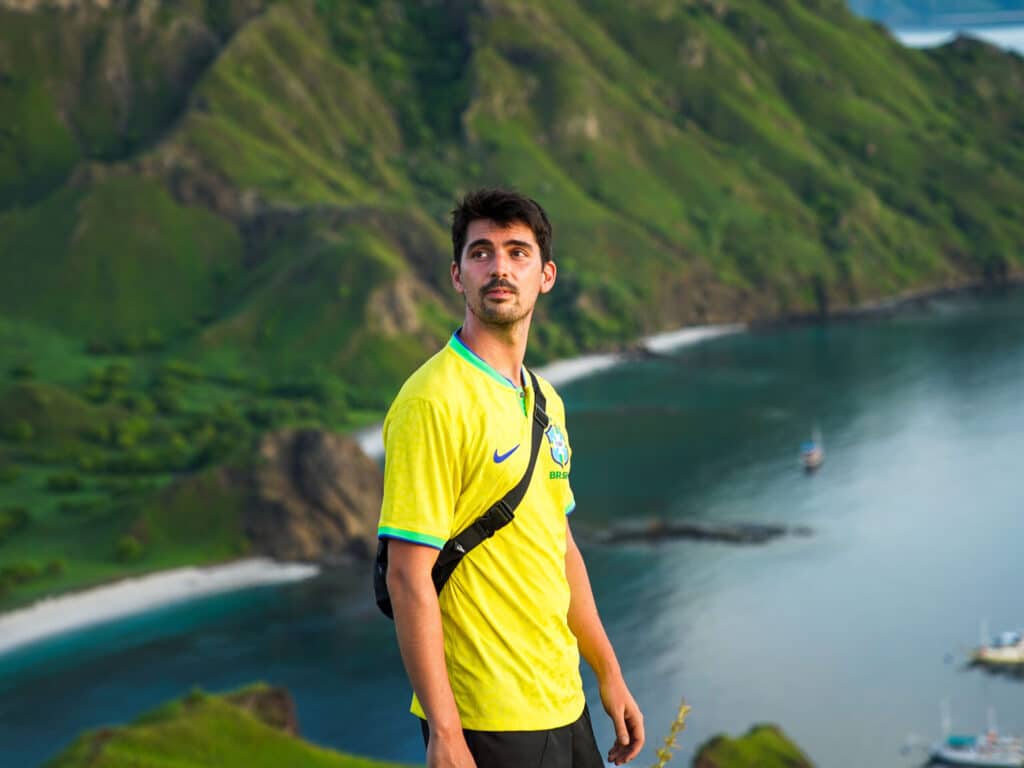
    I'm Hugo, a traveler driven by curiosity and a passion for discovering the world's hidden corners. After exploring over 30 countries across Latin America and Southeast Asia, I've learned that every adventure shapes who we become. I'm here to share those lessons and inspire your next great journey.

    Subscribe to the Newsletter

    Join our community and receive exclusive travel stories, guides, and special offers!

      What's on My Desk Right Now

      🗺️ Planning a Trip?

      Skip the research rabbit hole.

      I’ll build you a personalised day-by-day itinerary — or answer all your questions on a quick 60-min call.

      Let's Connect

      Affiliate Disclosure

      Some of my posts include affiliate links. If you choose to make a purchase through them, I may earn a small commission—at absolutely no extra cost to you.


      Using these links is the best way to support my work and say thank you, and I appreciate it so much! Of course, everything I share reflects my honest opinions and experiences.

      📸 Work With Me

      Brand, tourism board or hotel?

      Let’s create something together — content, reviews and campaigns that reach real travellers who are ready to book.

      Buy Me A Coffee

      Latest Posts

      HorizonHugo - Indonesia - Padar Island-12
      Planning one of the most iconic komodo island trips?...
      HorizonHugo - Indonesia - Pink Beach-4
      Pink Beach Komodo is one of the rarest beaches on Earth....

      Get My Personal Map of 500 Must-See Places - FREE

      I’ve compiled 500 of the best places across my travels into one free Google Map.

      The kind of spots you won’t find in a guidebook.

        Table of Contents

        Share it with the person you to travel with !

        You might also like to read these articles

        Scroll to Top