Ilha do Mel: How to Escape to Paraná’s Wild Island
This post is also available in :
Ilha do Mel is one of those places in Brazil that really feels like you are stepping out of the modern world for a while. Tucked in Paraná state, just a short boat ride from the mainland, this tiny island is all clean beaches, wild nature, and quiet sandy paths.
Almost the entire island is protected land. Only a small part is open for people to live and stay, and there is a strict daily limit on visitors. That keeps Ilha do Mel Parana calm even in the middle of summer holidays and makes the whole experience feel more like a nature retreat than a party spot.
There are no cars on Ilha do Mel. No motorbikes either. You walk, hike, or take a small boat. It sounds like work, but the slower pace is exactly what makes the island special. In this guide, I will walk you through what Ilha do Mel is, how to get there from Curitiba and the coast, where to stay, and what to see so you can plan your own escape to Ilha do Mel Brasil.
Table of Contents
What is Ilha do Mel
A protected island in Paraná state
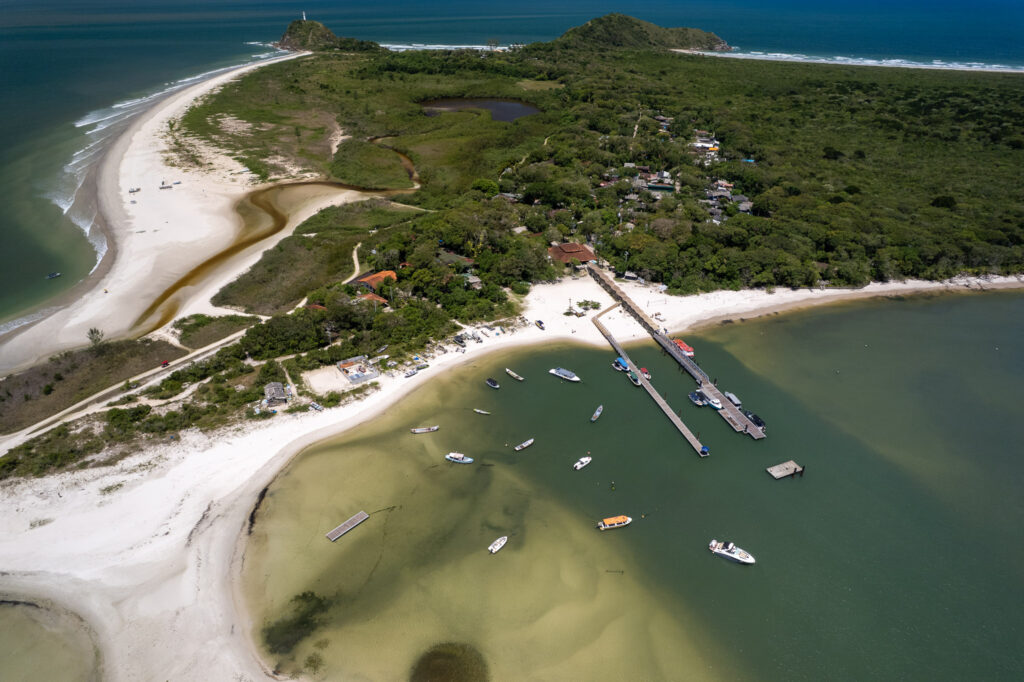
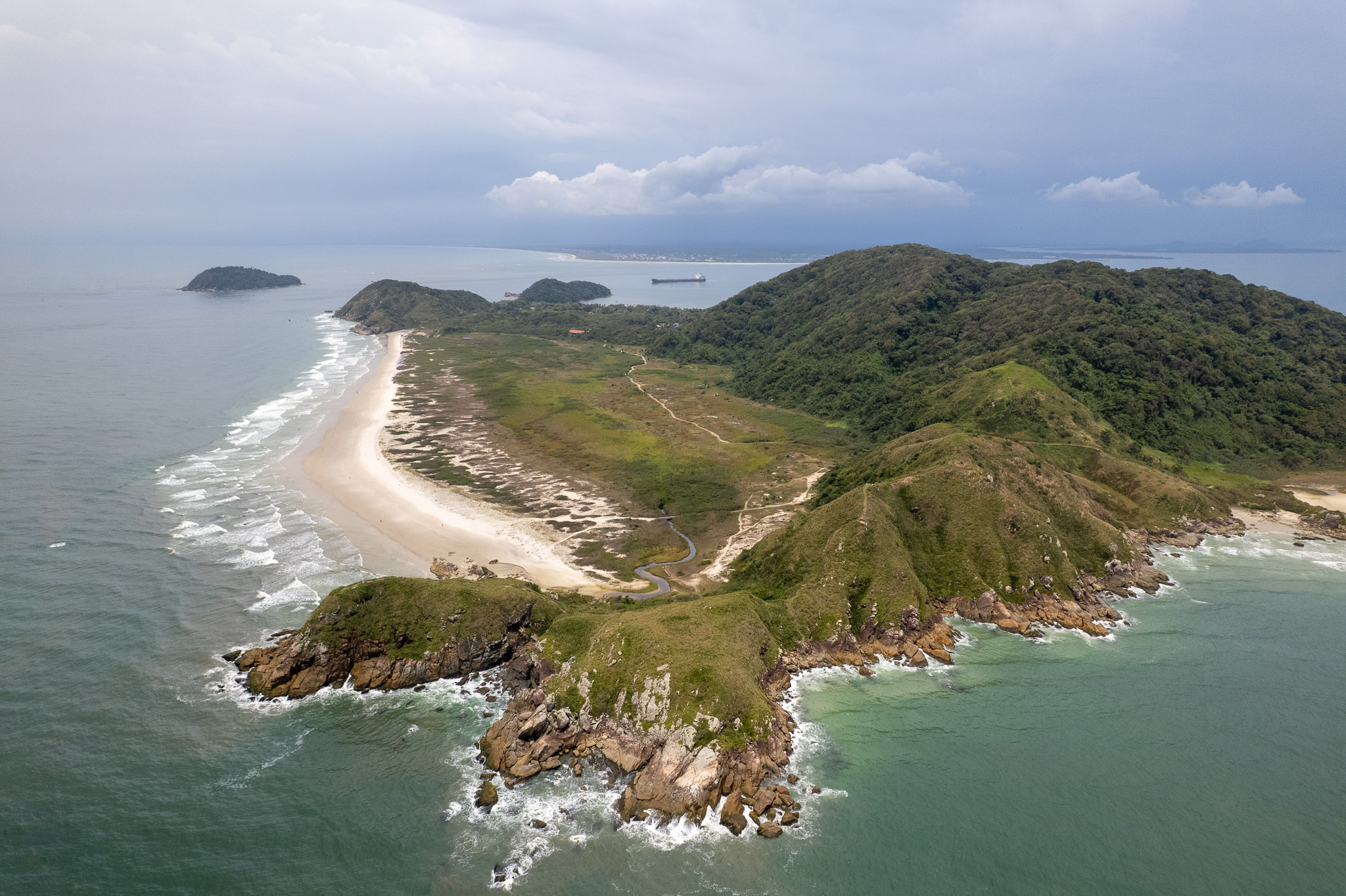
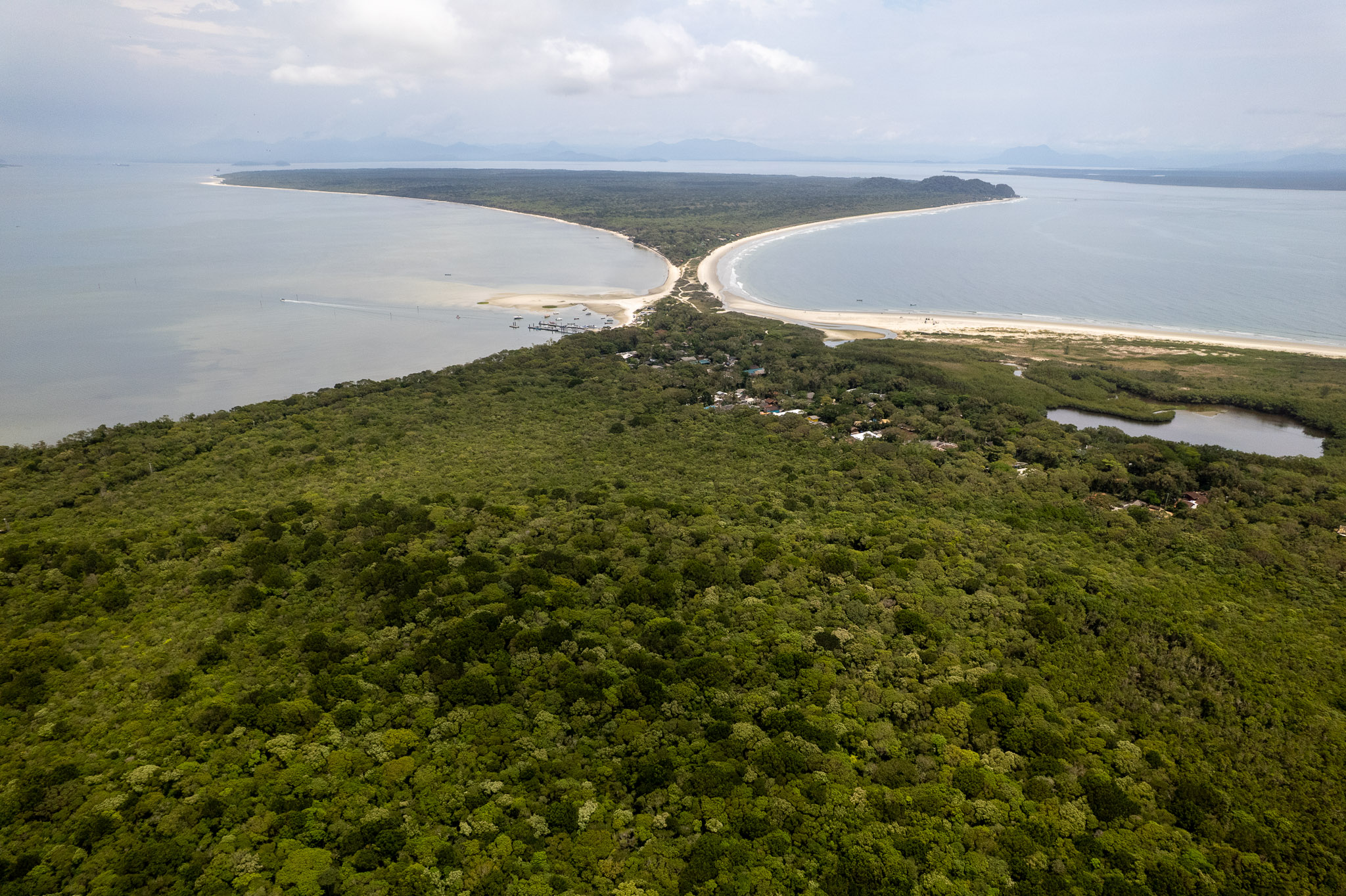
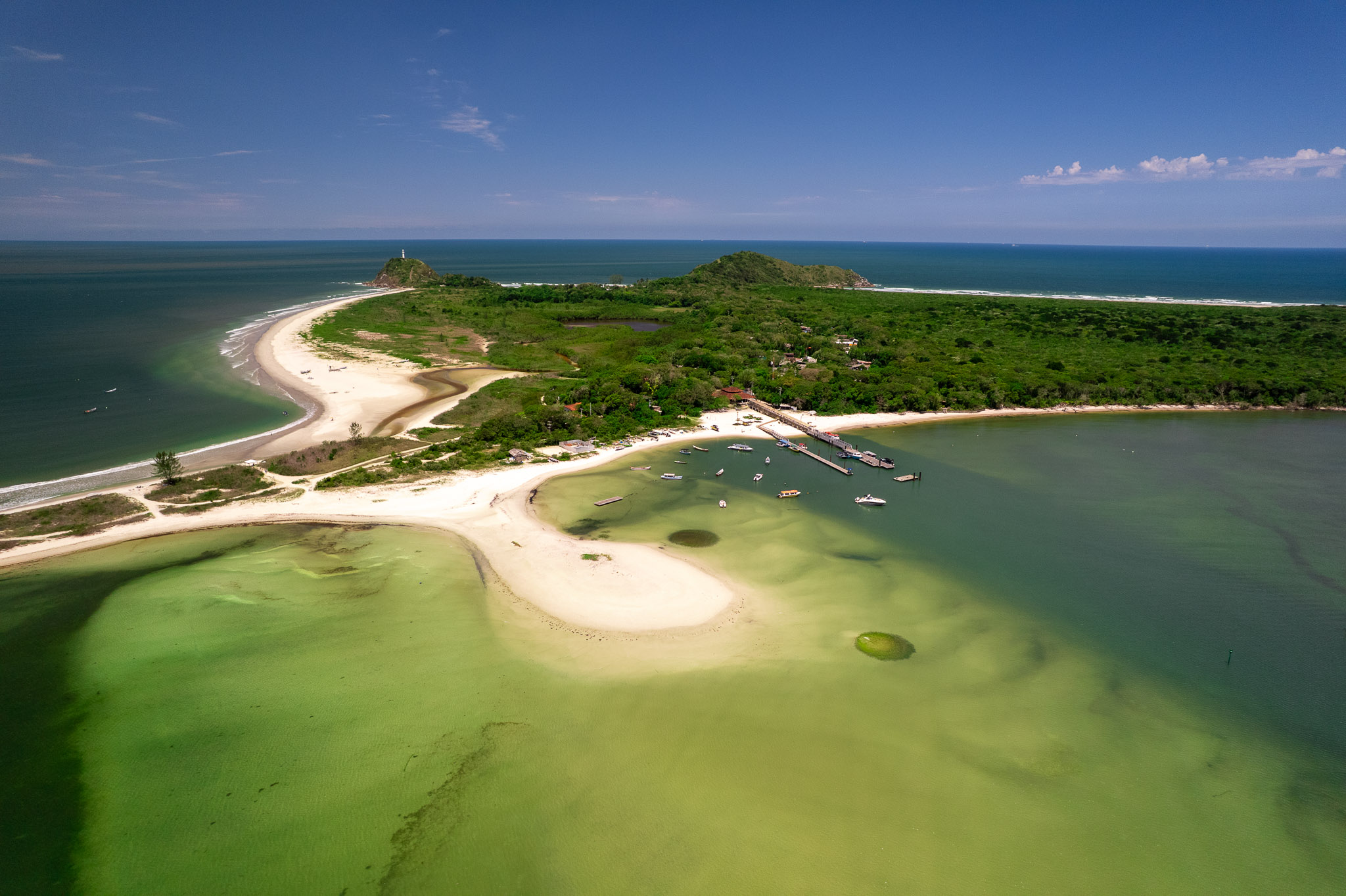
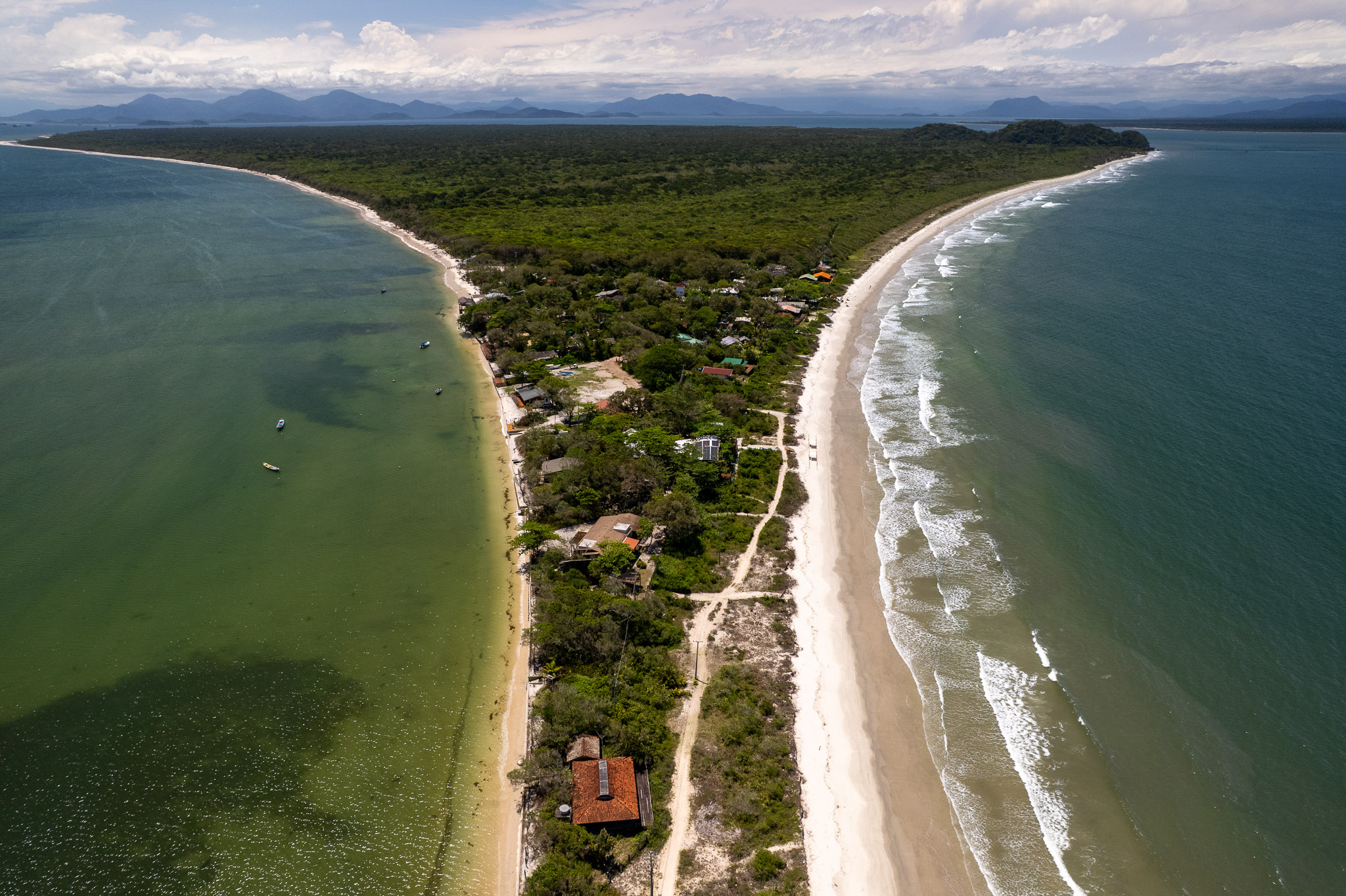
Ilha do Mel sits inside Paranaguá Bay and has a distinctive figure eight shape when you look at it on the map. Most of the surface is covered in Atlantic Forest, mangroves, and sandy restinga vegetation, with more than thirty kilometers of beaches wrapped around the coastline.
Only a small area of the island is open for human use. The rest is reserved for wildlife and native plants, which is why the place feels so untouched when you walk a few minutes away from the villages. Trails take you through forest, along dunes, and onto long open beaches where you might not see anyone for a while.
Since the eighties, Ilha do Mel has been officially protected and managed as a conservation area. Visitor numbers are capped each day, and there are rules about where you can walk, sleep, and camp. It can feel strict at first, but those rules are the main reason the island still looks so raw and green instead of crowded and overbuilt.
Why there are no cars or motor vehicles
The first surprise when you step onto the pier is the silence. No engines, no honking, no taxi drivers shouting for clients.
Motor vehicles are banned on Ilha do Mel to protect the fragile soil and vegetation, and to keep wildlife disturbance as low as possible. Tires compact the sand, erode trails, and push animals away from their feeding areas, so the island simply chose to say no.
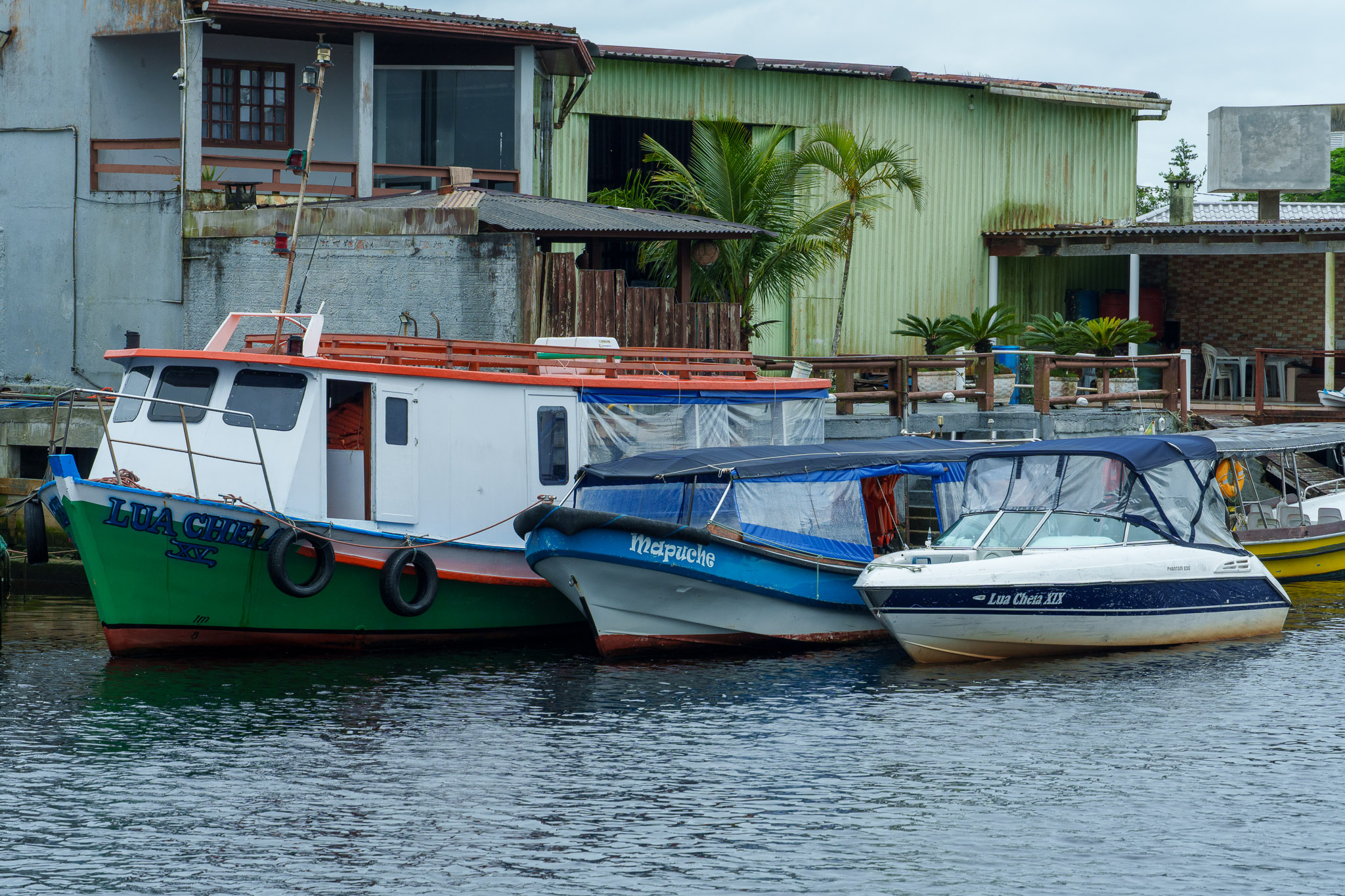
Instead you get around on foot. Some short boat transfers link the main settlements if you do not feel like walking a full trail. Most travelers end up enjoying this rhythm. You slow down, notice tiny crabs on the path, hear birds in the forest, and arrive at viewpoints already feeling grounded rather than stressed.
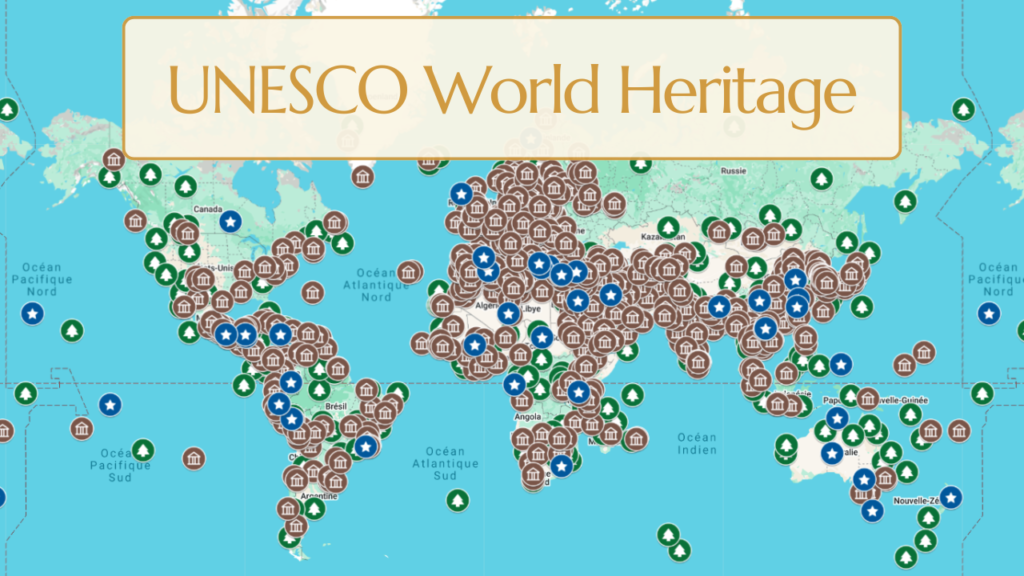
Get My Personal Map of 500 Must-See Places
I’ve compiled 500 of the best places across my travels into one free Google Map.
The kind of spots you won’t find in a guidebook.
How to get to Ilha do Mel
Getting to Ilha do Mel takes two steps. First you reach the coast in Paraná, then you take a boat to the island.
From Pontal do Sul
Pontal do Sul is the closest access point and the one most travelers use for Ilha do Mel PR. It sits almost in front of the island, with a short crossing across the bay.
Fast passenger boats make the trip in around half an hour. In the Brazilian summer season there are many departures across the day.
During quieter months, the schedule is reduced, so I recommend checking times the day before you travel. You can usually buy tickets at the pier, and booking your ferry in advance through 12Go is a good way to secure your spot during busy periods.
To reach Pontal do Sul, you can rent a car through DiscoverCars, take a regional bus, or arrange a transfer or taxi from Curitiba or Paranaguá. The road passes through classic coastal scenery with forested hills and glimpses of the bay, so try to travel during daylight if you can.
From Paranaguá
Paranaguá is a bigger port city with more transport connections from the rest of Paraná. If you prefer a larger town with more hotel options for the night before, this is a good base.
The boat from Paranaguá to Ilha do Mel takes around one and a half hours. It is slower than the Pontal route, yet more scenic, since you move through the bay and see the coast from different angles. There are several departures per day in high season and fewer in the cooler months.
Getting to Paranaguá is easy by bus via Busbud or rental car, especially if you are coming from Curitiba. Some travelers spend a night here to explore the historic center before heading to the island the next morning.
From Curitiba
Curitiba, the capital of Paraná, is the main starting point for most visitors coming from other parts of Brazil or abroad. The distance to the coast is roughly one hundred kilometers, so a day trip to Ilha do Mel is possible but a bit rushed.
Many people rent a car in Curitiba and drive to Pontal do Sul or Paranaguá, which usually takes between one and two hours depending on traffic and weather. There are also regular buses from the main station in Curitiba to both departure towns.
If you prefer something easy, look for organized tours from Curitiba through GetYourGuide (use code HORIZONHUGO5 for 5% off) that include transport to the pier, boat tickets, and sometimes a local guide on the island.
You can search for flights into Afonso Pena International Airport on Skyscanner, spend a night in Curitiba, then head to Ilha do Mel the following morning.
Where to stay on Ilha do Mel
Accommodation on Ilha do Mel is limited and spreads across two main zones. Because the island has strict environmental rules, you will not find giant resorts or tower hotels, and that is a good thing in the long run.
Encantadas or Brasília
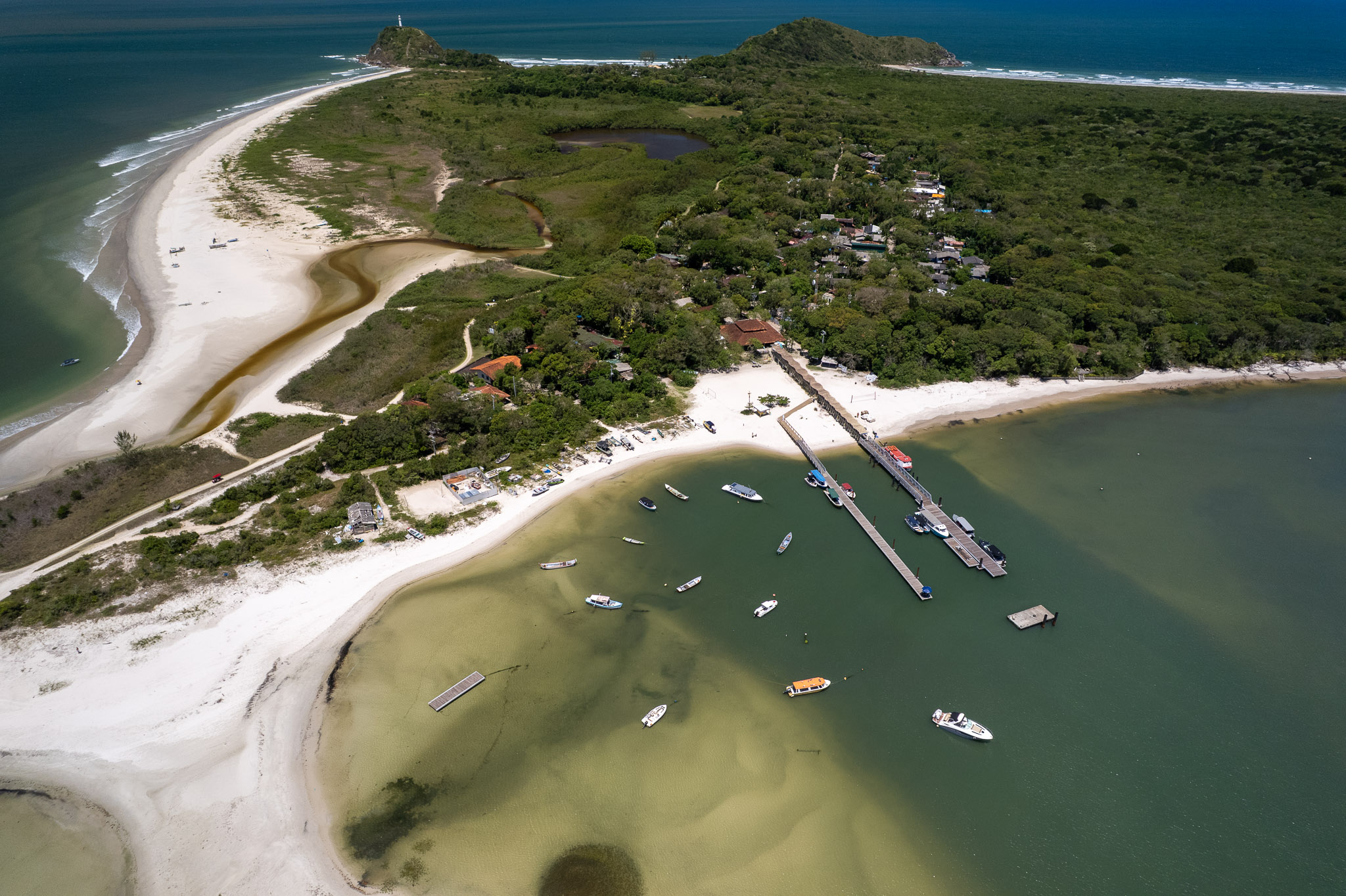
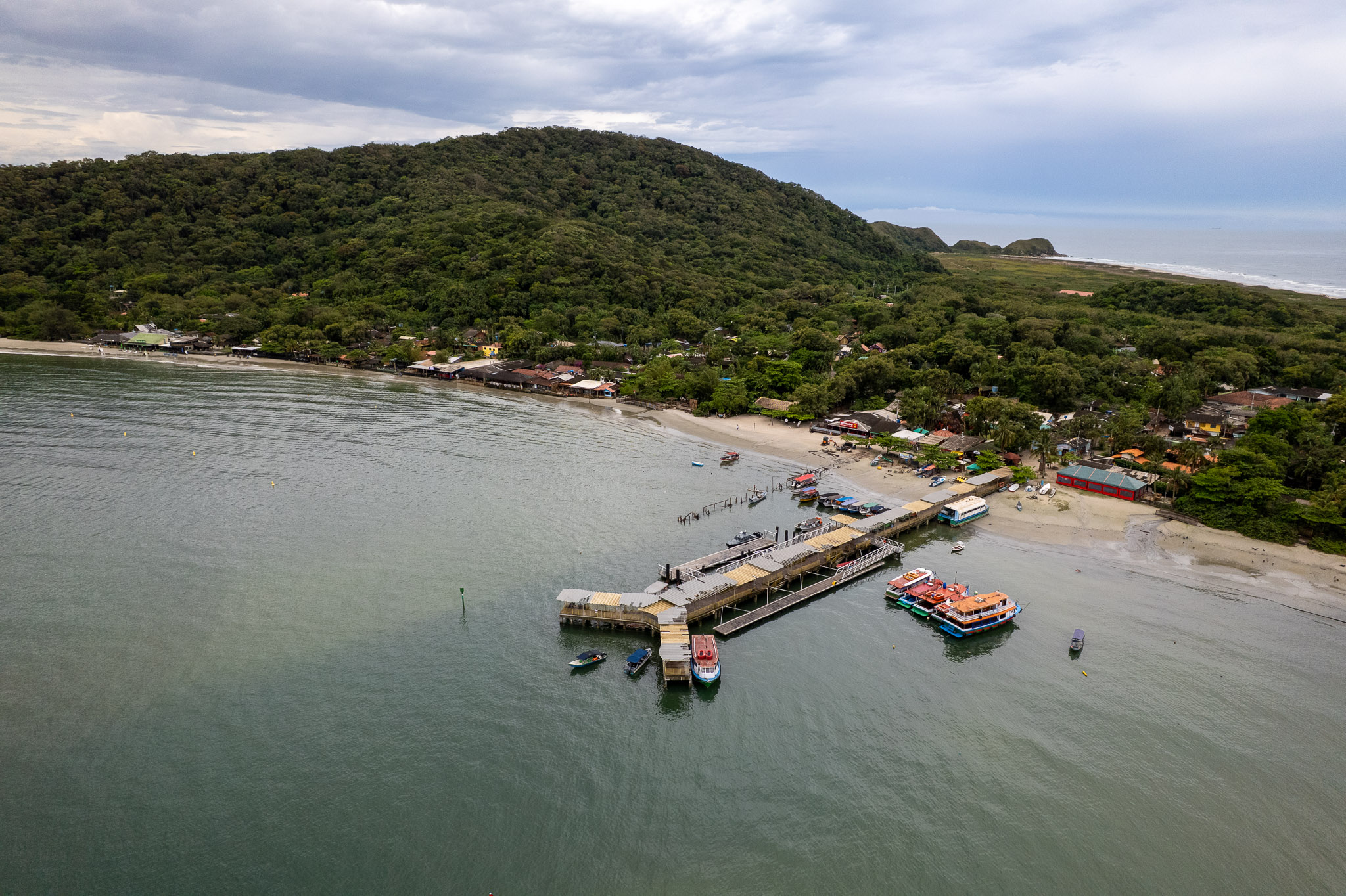
There are two main piers for passengers and two main areas where you will likely stay on Ilha do Mel. One is Encantadas at the southern tip. The other is Nova Brasília in the central part of the island.
I stayed in the Brasília area and was happy with that choice. Being near the middle of Ilha do Mel made it easier to hike in both directions without having to backtrack too much. Trails to the lighthouse, fort, and wilder beaches all felt within reach for a day walk.
Brasília still feels a bit more raw and quiet compared to Encantadas. You get fewer restaurants and pousadas, yet more of that small village atmosphere where you walk on sand streets in the dark with just your headlamp and stars.
Encantadas, on the other hand, has more services, more nightlife in high season, and quicker access to the Enchanted Cave. Both are great. The best choice depends on whether you prefer convenience or a slightly quieter base.
Pousadas and small inns
Most people who look for a hotel Ilha do Mel actually end up in pousadas, which are simple, family run guesthouses rather than classic chain hotels. You can browse available pousadas and guesthouses on Booking.com to compare prices and read reviews before you book.
Rooms are basic yet usually comfortable, with fans, a good bed, and sometimes air conditioning. Some budget options have shared bathrooms, while midrange spots offer private bathrooms and small balconies or hammocks. Breakfast is often included and can be generous, with fresh fruit, bread, coffee, and cake.
Prices change a lot between low and high season. Around New Year and carnival, expect the higher end of the local range, and book several months ahead.
Airbnb and vacation rentals
If you search for airbnb Ilha do Mel, you will find a smaller selection than on the mainland, but it can be a great option, especially for couples or groups.
Most listings are small houses, chalets, or private rooms on the property of a local family. Budget places can start around the price of a simple pousada room, while nicer houses go much higher in summer and on long weekends.
Internet on Ilha do Mel is not always stable. Some hosts offer wifi, yet the quality can shift a lot between areas and days. If you need reliable mobile data, picking up an eSIM before your trip through Yesim is a smart move.
Camping on the island
If you like traveling light and you are prepared for a bit of discomfort, camping on Ilha do Mel is a fun and very local way to stay. Budget travelers can also check Hostelworld for any dormitory options on the mainland before or after the island leg of the trip.
There are designated areas where camping is allowed, sometimes connected to simple campgrounds run by residents. In some parts of the island you need a permit from the park management, so always ask before setting up your tent.
Nights can feel humid, and even in summer temperatures drop a little once the wind picks up, so bring proper gear and a good mat.
Waking up in a tent on the island is special. You hear waves, birds, and the wind in the trees instead of traffic.
Best of Latin America - The Ultimate Travel Map
The only travel map you need before your trip
Hand-picked beaches, hikes, waterfalls, national parks, monuments, cities and hidden gems.
I’ve pinned them from my own travel in Latin America.
Opens directly on Google Map on your phone, and I updated them regurlarly.
Main attractions on Ilha do Mel
You can spend days just walking between beaches, yet there are a few classic landmarks that almost everyone visits during a trip to Ilha do Mel in Brazil.
Fortaleza de Nossa Senhora dos Prazeres
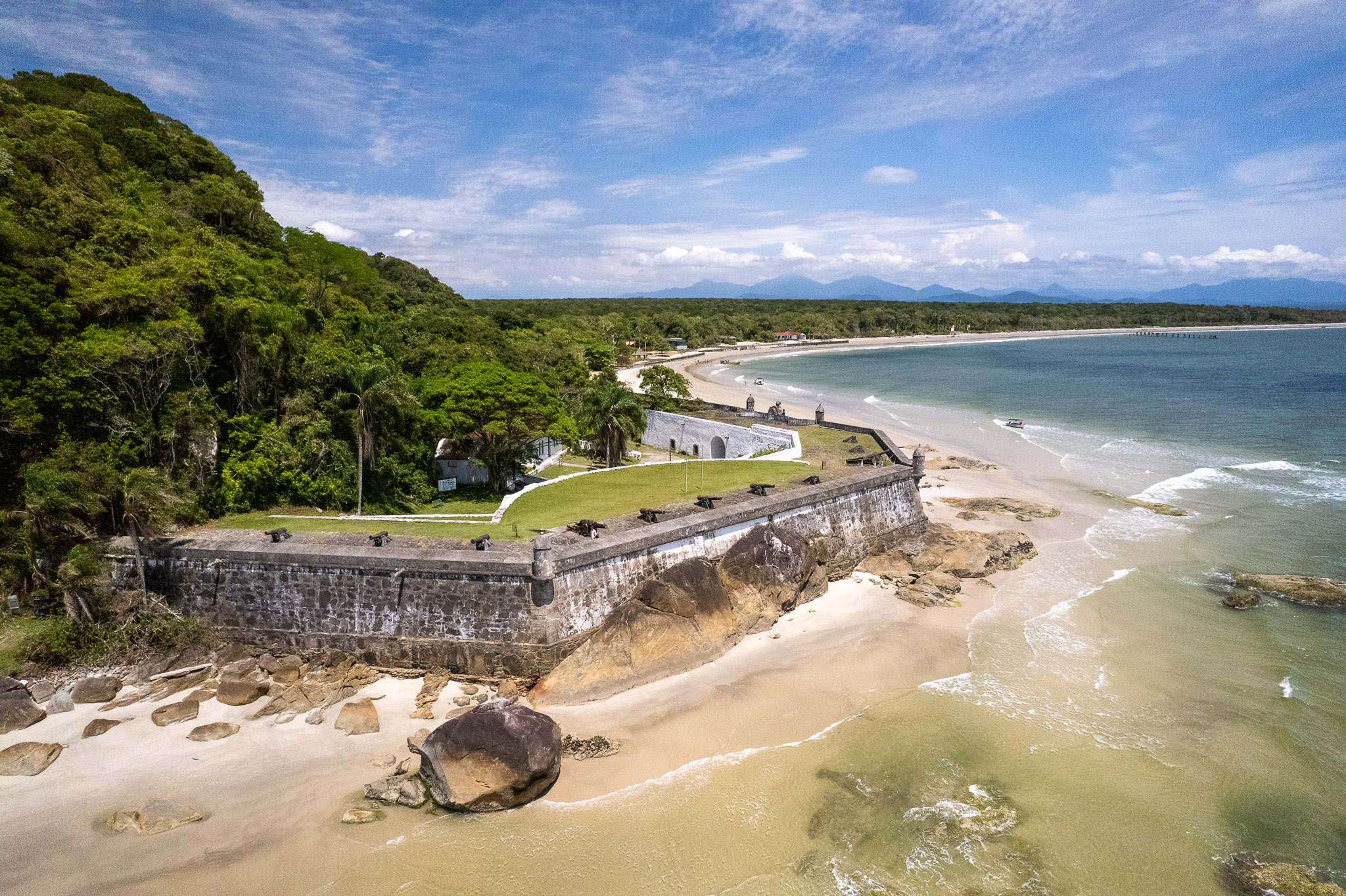
This historic fort guards the entrance to Paranaguá Bay and is one of the most interesting cultural stops on Ilha do Mel.
The structure dates back to the eighteenth century, when Portuguese authorities wanted to protect the coast from enemy ships. Thick stone walls, old cannons, and small buildings still stand on the hill overlooking the water.
Although it never saw intense battle, the fort remained important for coastal defense and was even used again during the Second World War.
Today you reach the fort via a scenic hiking trail from Nova Brasília. The walk is roughly four kilometers one way and moves through forest and along the coast.
Gruta das Encantadas
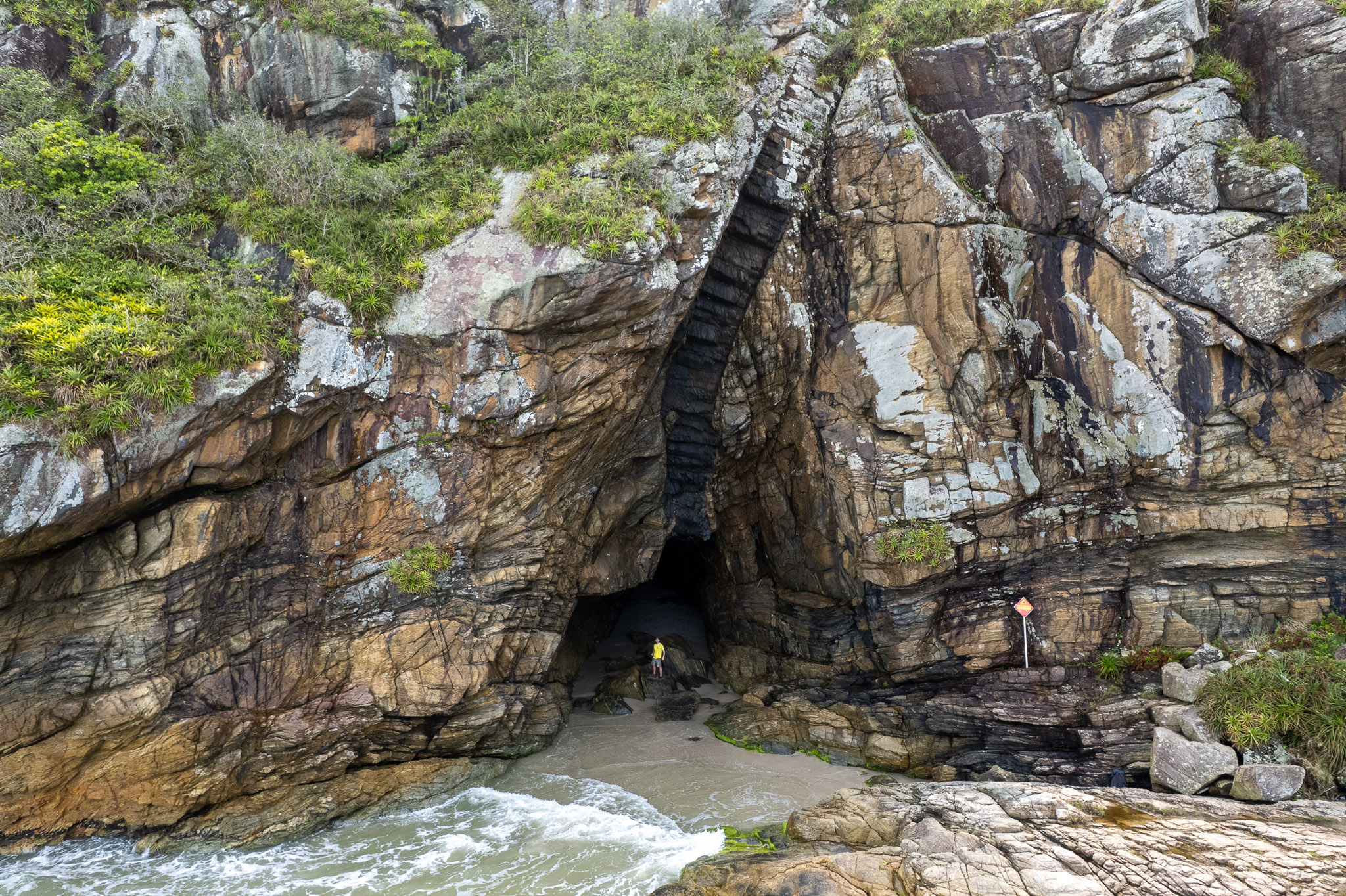
Gruta das Encantadas, the Enchanted Cave, is one of the most famous natural spots on Ilha do Mel.
The cave sits at the base of a rocky hill facing the ocean near Encantadas village. Over thousands of years, waves carved the entrance into the rock, which is made of layered stones with darker veins that look dramatic in the right light.
A wooden walkway takes you almost all the way to the opening, so you do not need to scramble on wet rocks.
From Encantadas center, the walk to the cave is short and easy, around fifteen minutes on a clear path.
I highly recommend going in the morning, when the light enters the cave from the sea and creates reflections on the water and walls.
Farol das Conchas
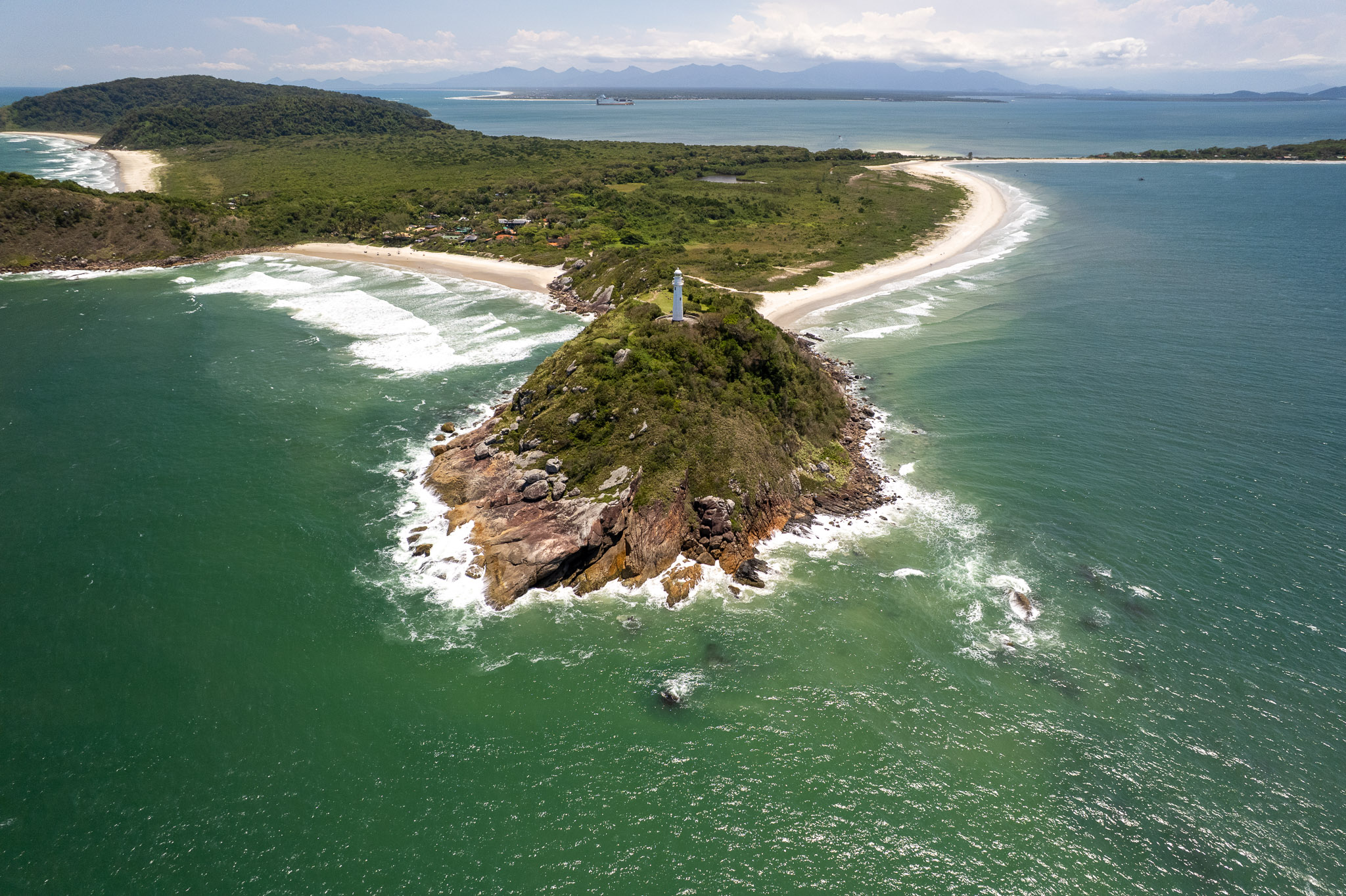
Farol das Conchas is the iconic white lighthouse on Ilha do Mel and one of the best viewpoints on the island.
It sits on top of Morro das Conchas, a hill between the beaches near Nova Brasília. To reach the lighthouse, you climb a staircase of about one hundred and fifty steps.
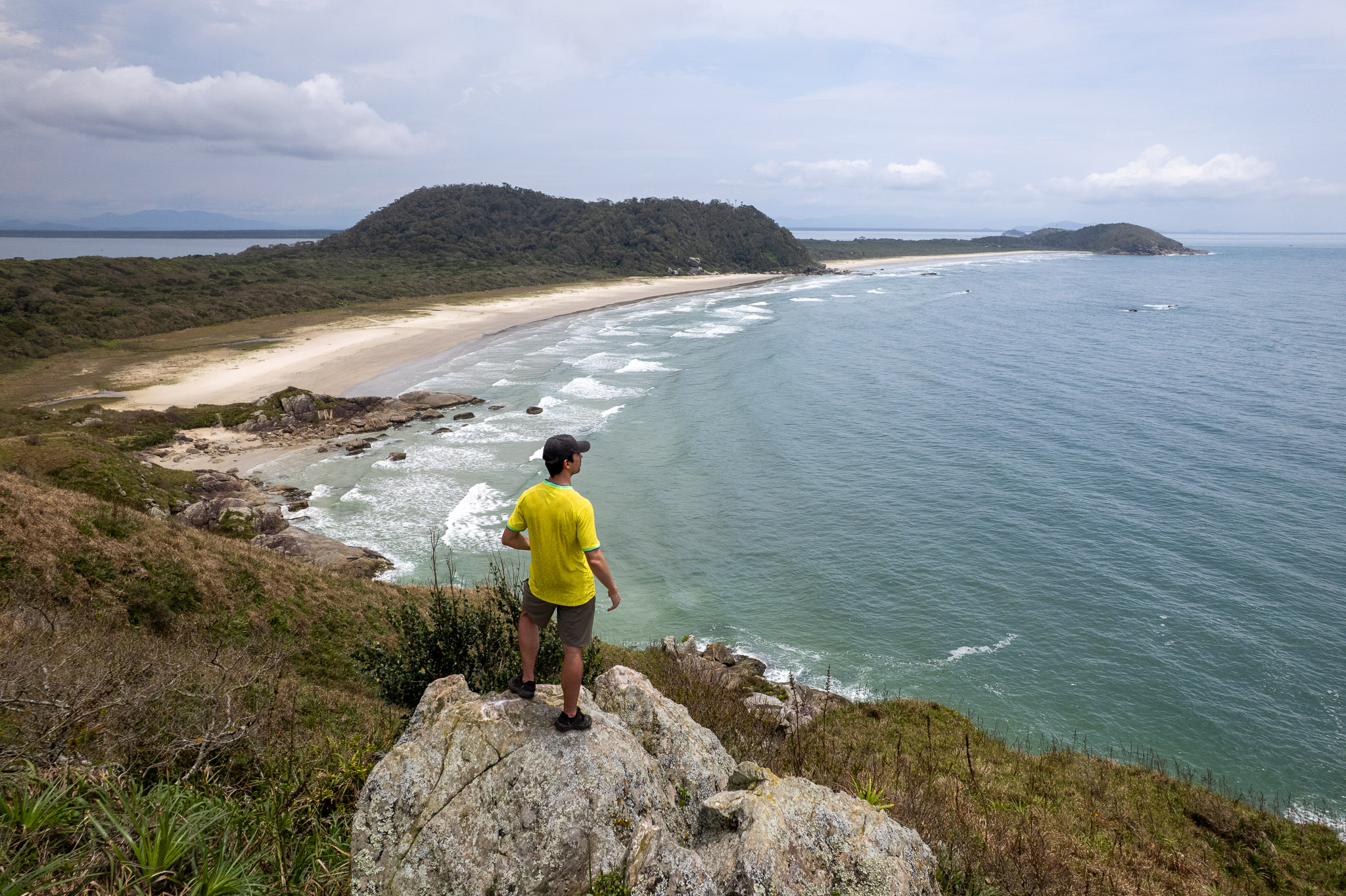
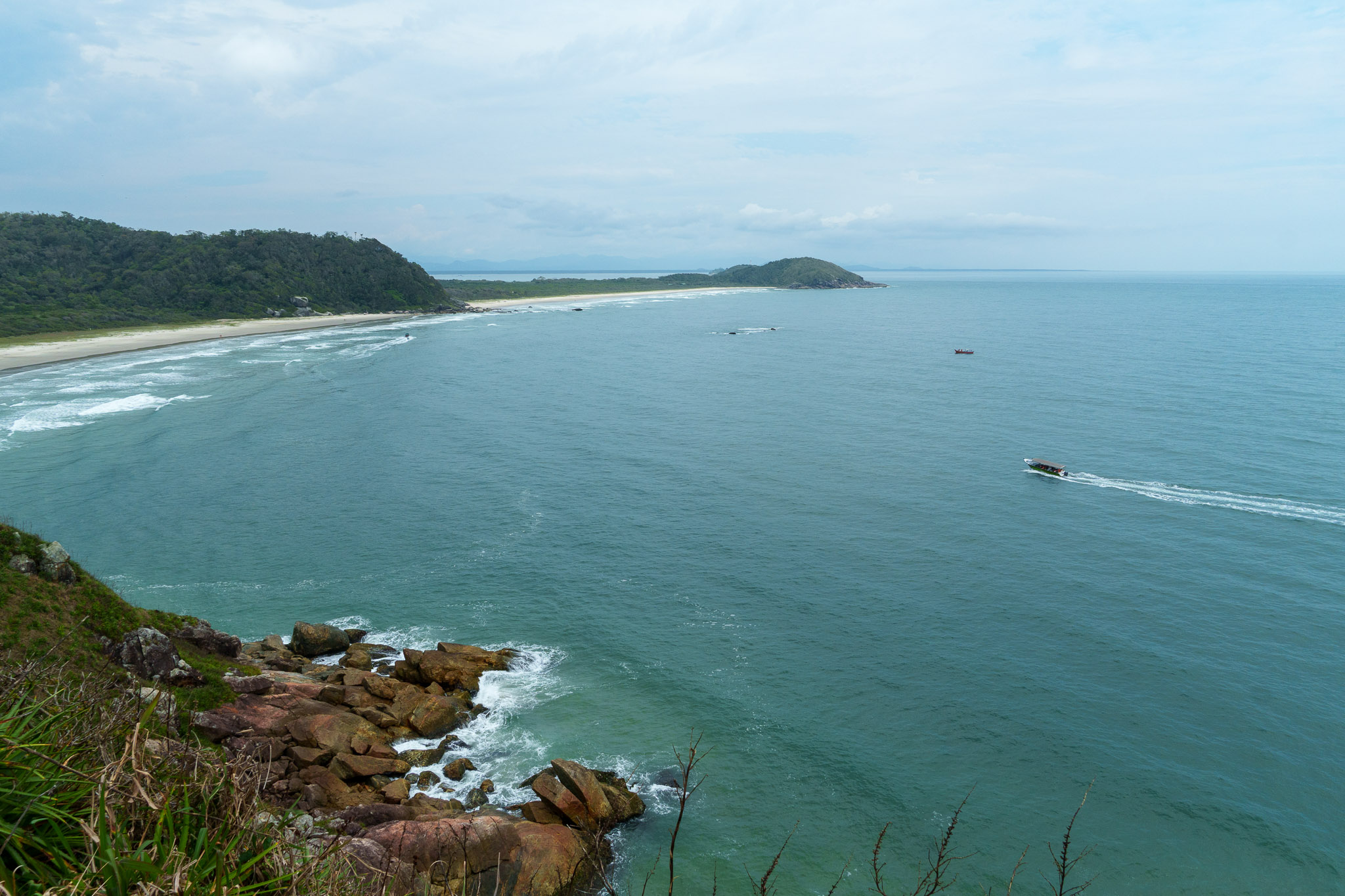
From the top, the panorama is worth every step. On a clear day, you can see beaches stretching away in both directions, the green of the Atlantic Forest inland, and the blue of the bay and open sea.
Many people come here for sunset when the light turns warm and the sky glows behind the water.
Morro do Miguel
Morro do Miguel is the highest point on Ilha do Mel and a great choice if you want a hike with a real summit feeling.
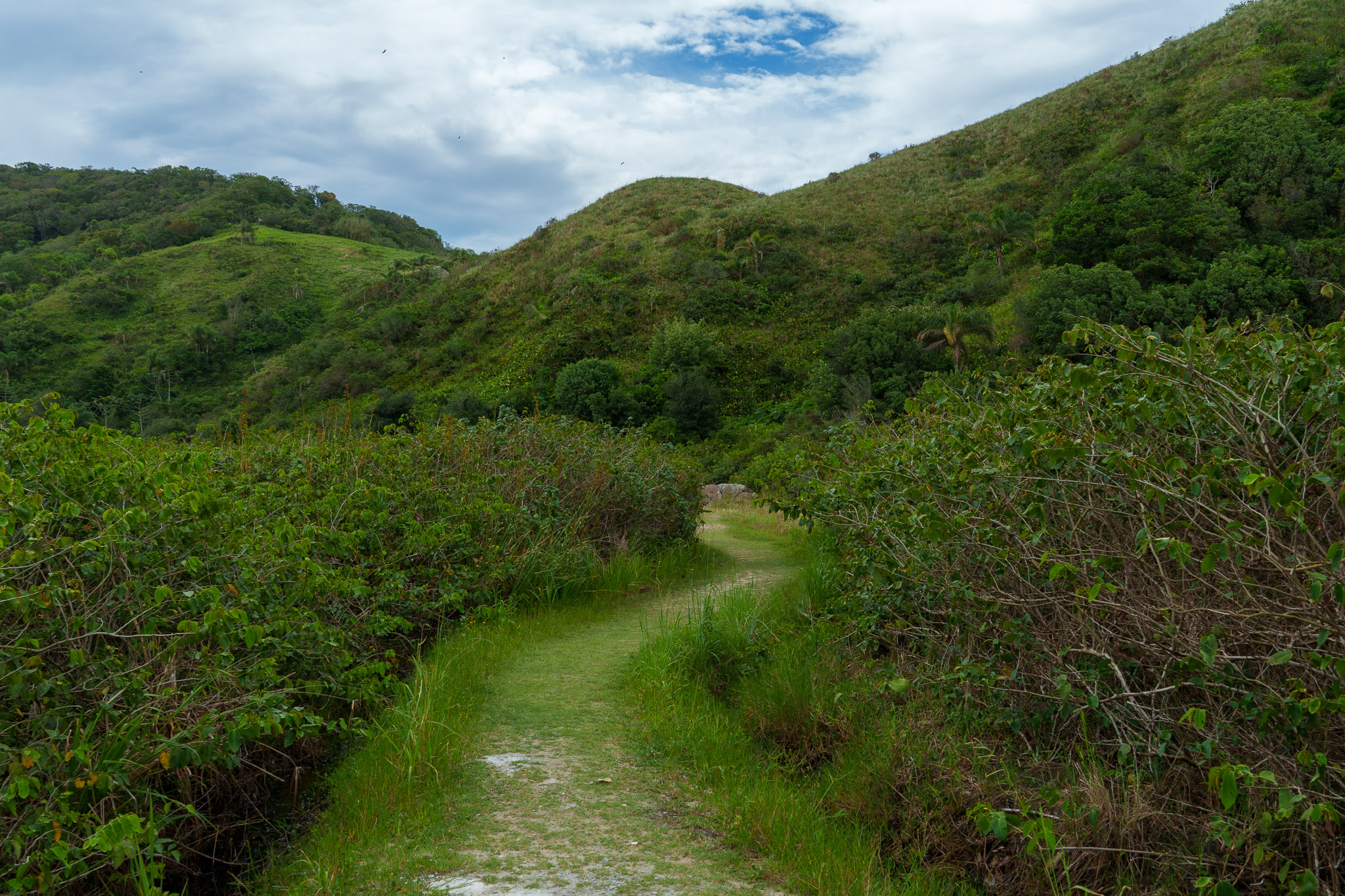
The trail starts near the central part of the island and climbs gradually up through the forest. Along the way, you pass different types of vegetation and get occasional glimpses of the coast through the trees. The total hiking time is about an hour for most reasonably fit travelers, including a break at the top.
From the summit, you get wide views over both the bay and the open ocean on clear days.
It is a good place to understand how compact the island really is and how much of it is still covered in forest. Wear good shoes, since the ground can be muddy after rain, and bring enough water, because there are no shops or kiosks on the trail.
Activities and things to do
Beyond the landmark spots, Ilha do Mel is all about slow outdoor days. Here is what to expect.
Hiking and nature trails
Hiking is the number one activity on Ilha do Mel. Paths link the villages, beaches, and viewpoints, and you will probably walk several hours per day without even trying.
There are easy routes that follow the coastline and more demanding trails that climb into the hills. You can walk completely on your own or book a guided hike through GetYourGuide if you prefer more structure and information.
Good shoes are essential. Some sections get muddy or rocky, especially after heavy rain.
Carry water, snacks, and sun protection, and try to start longer walks in the morning when temperatures are softer.
Beach days and swimming
Beaches are the second big reason people come to Ilha do Mel. You will find everything from family friendly swimming spots to more exposed surf breaks.
Praia do Farol near the lighthouse is one of the more popular beaches, with brownish sand due to organic material and calm water that is usually good for a relaxed swim.
Praia das Encantadas, close to the village of the same name, has a chilled social vibe and more bars and restaurants, so it is a nice place to spend the afternoon after visiting the cave.
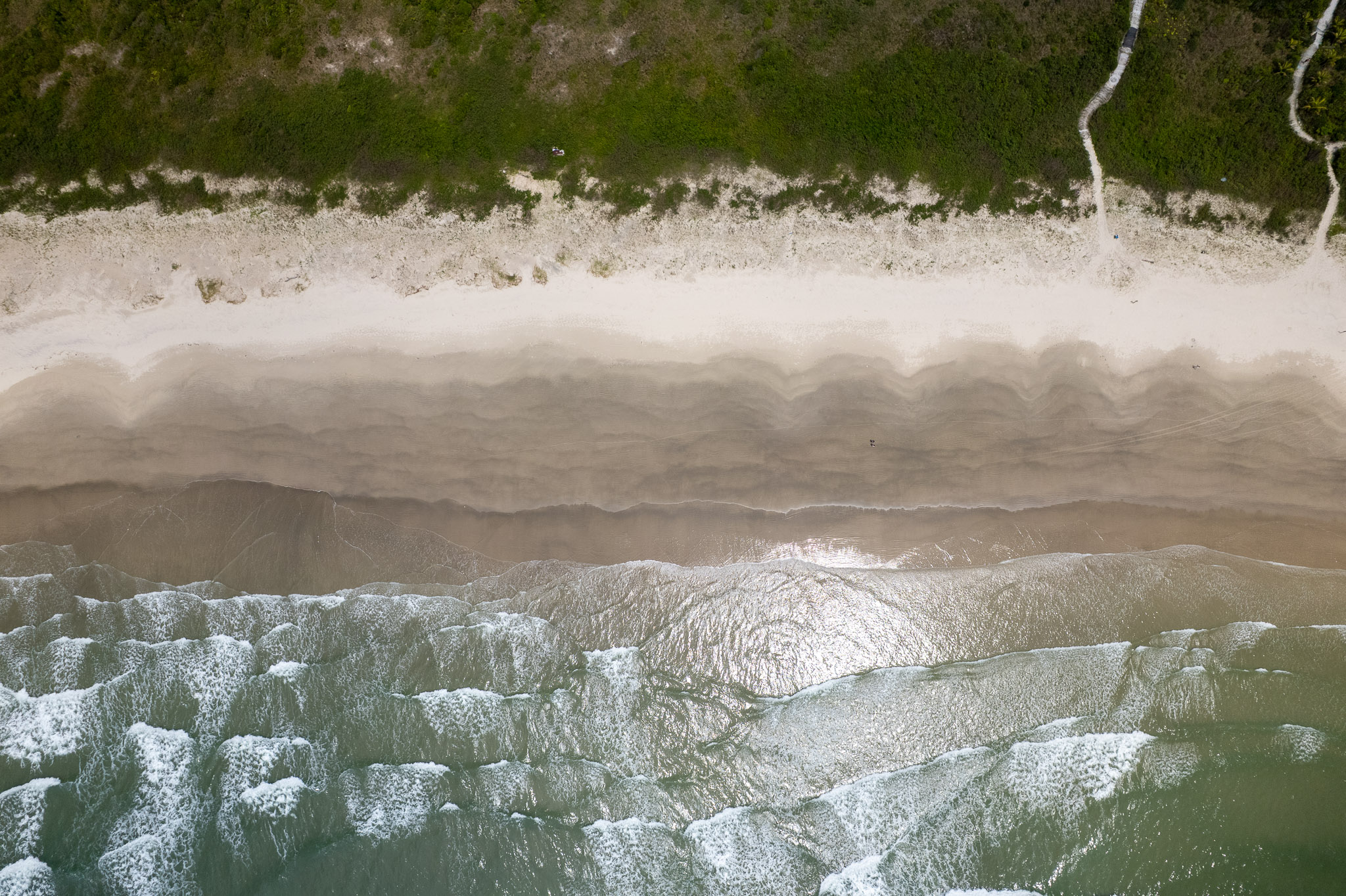
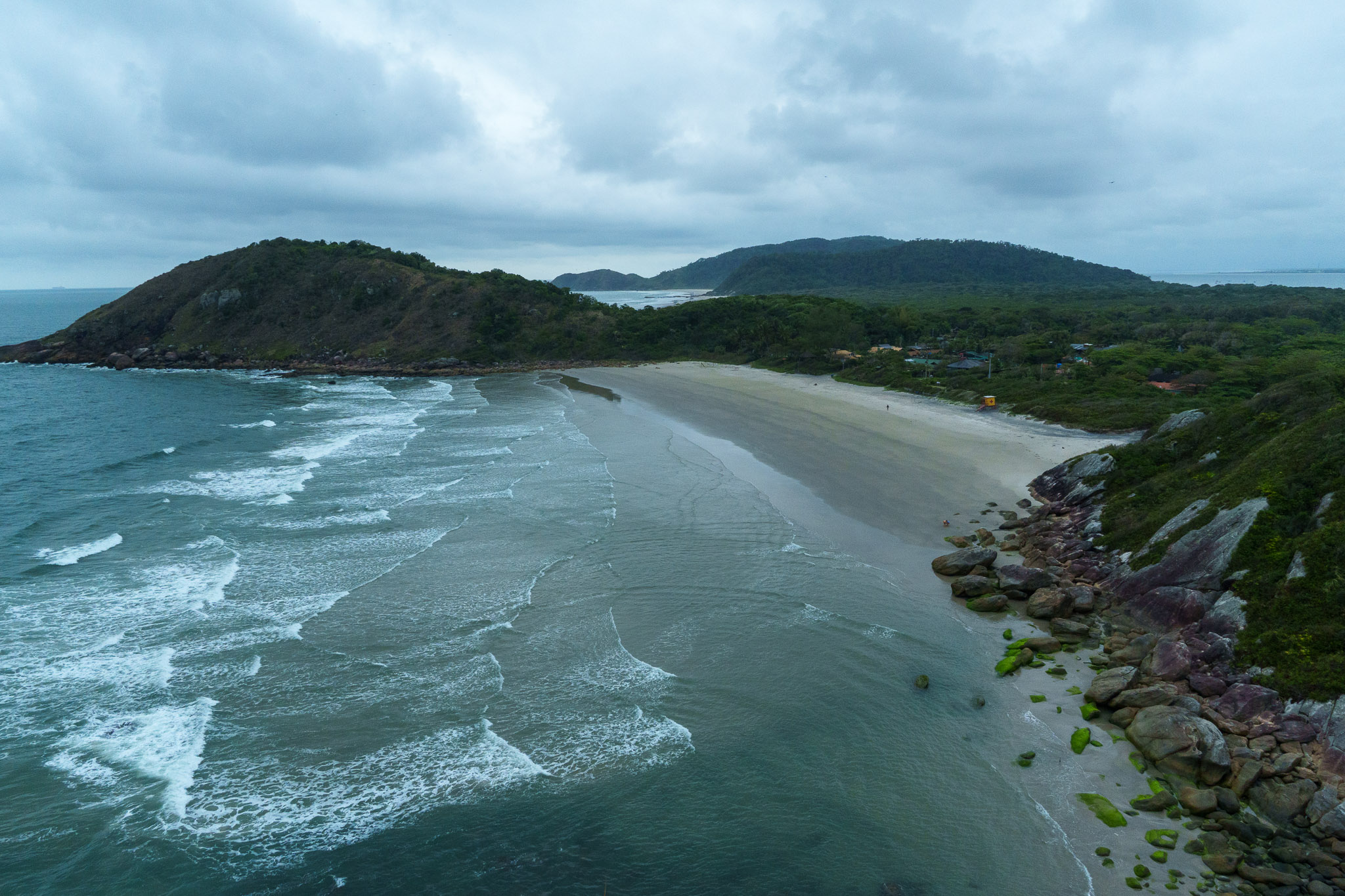
If you prefer something wilder, Praia de Fora and other open ocean beaches have stronger waves and fewer people. They are great for walking, photography, and watching surfers.
Always ask locals or your pousada about current conditions before swimming, since currents and tides change and certain sections can have strong undertows.
Water sports and adventures
On the more active side, Ilha do Mel offers several water and adventure sports when conditions are right.
Surfing is the most common. Experienced surfers head to the more exposed beaches where waves break stronger, while beginners sometimes find softer conditions closer to the bay.
If you already surf, bring your board or rent one from local operators if available during the season.
Snorkeling is possible around calm rocky sections when the water is clear. You will not see huge coral reefs, yet you can spot small fish and marine life close to shore.
Some operators also offer scuba diving trips — if you are not yet certified, it is worth checking out PADI to find courses before your trip.
Kayaking along the coast is another beautiful way to experience the island from the water on a calm day.
For travelers seeking a stronger adrenaline rush, you may find paragliding options in the wider region, although this is less common than hiking and surfing.
Wildlife watching and nature
Because Ilha do Mel sits inside a protected area, wildlife is never far away.
Bird lovers will enjoy watching different species in the forest, near the mangroves, and even around the villages. Bringing a small pair of binoculars makes a big difference.
In the bay, there are chances to see dolphins on boat trips, especially early in the morning or late in the afternoon when the water is calmer.
On the beaches, small crabs and other coastal animals appear and disappear with the tides.
The vegetation itself is a highlight. Ilha do Mel is part of the Atlantic Forest, one of the most threatened ecosystems on the planet.
Many plants are rare or endemic, which means they only live in this part of the world. Walk slowly, take photos, yet avoid touching or picking anything. Think of your visit as a privilege and a chance to support conservation by traveling respectfully.

Best time to visit Ilha do Mel
You can visit Ilha do Mel at any time of year, yet the weather, prices, and crowds change a lot across the seasons.
Summer from December to February
Summer in southern Brazil runs roughly from December to February and brings warm temperatures, lots of sun, and the biggest crowds.
Daytime temperatures often sit close to thirty degrees, the water is warm, and this is the best time of year for classic beach days.
It is also when Brazilians travel for holidays, so Ilha do Mel gets busy, especially around New Year and carnival — check out the ultimate Rio Carnival guide if you are planning to combine both experiences.
Prices for pousadas and boat tickets rise, and you need to book early if you want the best selection.
Short tropical showers can happen, yet they usually pass quickly, leaving clear skies again.
If you love lively evenings, full restaurants, and a more social atmosphere, this is your season. Just do not forget strong sunscreen and a hat because the sun at this latitude is intense.
Winter from June to August
Winter is cooler and much quieter. Temperatures tend to stay between the mid teens and around twenty degrees during the day, with colder evenings when the wind picks up.
You will find far fewer visitors on the trails and beaches. Some restaurants and pousadas may even close for rest, especially midweek, yet that can add to the deserted island feeling. Accommodation prices drop, and last minute deals are easier to find.
Rainy stretches are more common in winter, yet after the showers, the forest looks even greener and fresher. Hiking is comfortable because you sweat less, and this can be a great time for people who care more about nature and solitude than about sunbathing.
Shoulder seasons March to May and September to November
The shoulder months are often the sweet spot for Ilha do Mel.
From March to May and from September to November, you usually get mild, pleasant weather with fewer extreme heat waves. The island is calmer than in high summer, yet more places are open compared to the deep low season. Prices sit somewhere between the two, which is ideal if you travel on a medium budget.
Humidity is lower than in the peak of the southern summer, and there can be long runs of dry, sunny days that are perfect for hiking and exploring. If your dates are flexible and you prefer a balanced experience, aim for these months.
Practical rules and tips
Before you start planning every detail, it helps to understand the basic rules and logistics of Ilha do Mel.
Island rules and regulations
Because Ilha do Mel is a protected area, there are several rules you really do need to follow.
Motorized vehicles are not allowed for visitors, which means no cars, no motorbikes, and no quad bikes on the trails or beaches. You move on foot or by authorized boats. Construction is also tightly regulated.
New large buildings are not permitted, and existing structures have to follow environmental rules when they are renovated.
Camping is limited to specific areas, and in some zones, you need a permit from park staff. You should stay on marked trails, respect signs that indicate restricted areas, and never feed or disturb wildlife.
There is a daily limit on how many people can be on the island, so in the absolute peak season, boats may stop carrying passengers once the cap is reached. Arrive early if you are traveling in a very busy holiday period.
What to pack for Ilha do Mel
Packing smart makes your life much easier on Ilha do Mel, because you will carry your bag from the pier to your accommodation on sand paths.
Sturdy walking shoes or trail sandals help with the rocky and muddy sections of the trails. Light, breathable clothes are ideal for the humid coastal climate, and a compact rain jacket is useful in any season because weather moves quickly over the bay.
Bring strong sunscreen, a hat, and sunglasses, since you will spend many hours in the open.
You should also carry a refillable water bottle with a capacity of at least a couple of liters per day when you hike, plus snacks for longer walks.
Insect repellent can be a lifesaver during humid evenings or near mangroves. Cash is handy because not every small bar or pousada accepts cards, and ATMs are scarce — WanderWallet is a great option for managing your travel money across South America without extra fees.
A quick dry towel and your swimsuit are obvious additions. If possible, choose reef safe sunscreen to reduce your impact on the ocean.
It is also worth sorting out travel insurance before you leave — EKTA Travel Insurance is a solid option that covers outdoor activities.
Language and getting around
Portuguese is the main language on Ilha do Mel, and many locals speak little or no English.
Learning a few simple phrases before you go helps a lot. Some staff in pousadas and tour companies speak basic English, especially in summer, yet you should not expect fluent conversations everywhere.
People on the island are generally patient and friendly with visitors who try to communicate. Smiles, gestures, and a translation app on your phone usually solve most situations.
If you want deeper insight into local culture or nature, consider hiring a guide for a day walk through Viator. Guides often speak English and can explain the history of the fort, the plants in the forest, and the stories behind place names.
Conclusion
Ilha do Mel is not the easiest place to reach in Brazil, yet that difficulty is exactly why it still feels special once you are there. The absence of cars, the quiet sandy paths, and the strict visitor limit combine to create a rare kind of coastal escape.
Days here follow a simple rhythm. You walk to a lighthouse or a fort in the morning, swim and nap on the beach in the afternoon, then eat fresh fish with your feet in the sand after dark. You notice the sound of the waves more. You check your phone less.
If you are planning a longer trip through Brazil, Ilha do Mel pairs well with other coastal and nature destinations, such as Iguazu Falls, Jericoacoara, or the wild beaches of Barra Grande in Bahia and Itacaré — all covered in detail on the site.
Traveling on a tighter budget? Check out 17 cheap places to travel in South America for more inspiration.
When you feel ready, pick your dates, book that pousada on Booking.com or search for an airbnb Ilha do Mel, and make space in your schedule for a few slow days on this little protected island in Paraná.
If you want to dive into even more routes and ideas in Latin America, the broader style and structure of this guide follow the same approach I use across HorizonHugo travel content, focused on practical details and honest impressions.
This post is also available in :

Subscribe to the Newsletter
Join our community and receive exclusive travel stories, guides, and special offers!
🗺️ Planning a Trip?
Skip the research rabbit hole.
I’ll build you a personalised day-by-day itinerary — or answer all your questions on a quick 60-min call.
Affiliate Disclosure
Some of my posts include affiliate links. If you choose to make a purchase through them, I may earn a small commission—at absolutely no extra cost to you.
Using these links is the best way to support my work and say thank you, and I appreciate it so much! Of course, everything I share reflects my honest opinions and experiences.
📸 Work With Me
Brand, tourism board or hotel?
Let’s create something together — content, reviews and campaigns that reach real travellers who are ready to book.
Latest Posts
Get My Personal Map of 500 Must-See Places
I’ve compiled 500 of the best places across my travels into one free Google Map.
The kind of spots you won’t find in a guidebook.
Table of Contents
You might also like to read these articles