

Spotting wildlife is one of my favorite activities, whether traveling or at home.
If you’re reading this post, it’s probably one of your favorite activities too—and you’re about to (or really want to!) spot the monkeys of the Amazon rainforest.
Monkeys are incredibly cute, and they are among the best animals to observe in the jungle. They usually linger a bit longer than birds, sometimes getting curious about visitors and sticking around to watch you and your actions.
Sometimes, you don’t even need to venture deep into the jungle to encounter these Amazon monkeys. For example, the marmoset in Rio, Brazil, is quite famous, as are the tamarins in Cartagena, Colombia.
But if you’re interested in an adventure to see a wide variety of monkeys in the Amazon, this article is for you. Here, you’ll find the best tips for preparing and successfully spotting monkeys in the Amazon rainforest, along with a list of monkey rainforest species you can find across South America (and many are found in Central America, too).
Let’s go monkey spotting!
Table of Contents
Tips to Spot Monkeys in the Amazon Rainforest
Learn the Monkey Calls, Faces, Colors, and Behavior
It’s much easier to spot monkeys in the Amazon rainforest if you’ve done some homework. Start by learning their calls—each Amazon monkey species has distinctive sounds that can help you locate them.
Get familiar with their faces, colors, and behaviors too. Knowing how spider monkeys swing or how capuchin monkeys move through the trees sharpens your chances of spotting these forest monkeys in the dense foliage.
Plus, this is kind of cool knowledge, and you’ll be able to impress your friends with cool monkey rainforest facts!


When to Spot Monkeys in the Amazon Rainforest
Timing and location are everything when it comes to spotting monkeys in the Amazon rainforest.
Early mornings and late afternoons are prime times, as many Amazon monkey species are most active during these hours. That’s why most tours are scheduled early in the morning or around evening.
If your tour is between 11 a.m. and 3 p.m., something might be off—or there’s a very good reason for it. Find out why before booking, or you risk seeing nothing!
Unlike other wildlife spotting, monkey spotting happens all year long in the Amazon rainforest, making it a reliable activity whenever you visit.
Monkey Behavior: What Makes Amazon Monkeys Tick
Monkeys in the Amazon rainforest aren’t just entertaining—they are highly social, intelligent, and often surprisingly complex animals.
Many Amazon monkey species live in tight-knit groups, with intricate hierarchies and sophisticated communication systems. Some, like the capuchin monkey, are known for their problem-solving skills, while others, like the howler monkey, are famous for their deafening calls that can be heard for miles.
Understanding their social dynamics and daily routines makes spotting these unique Amazon rainforest animals even more rewarding.
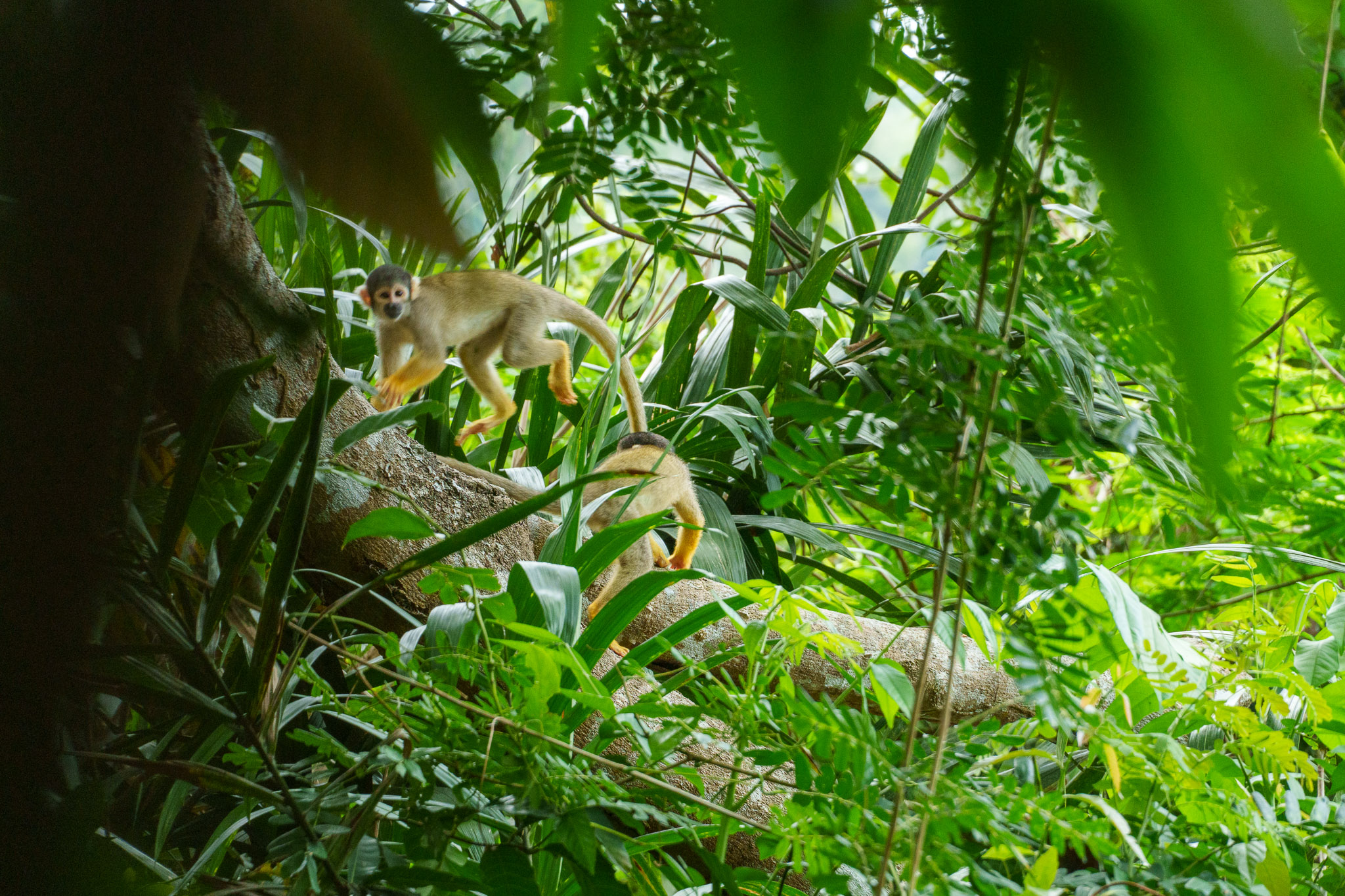
Monkeys Are Where Food Trees Are
Just like humans, monkeys live and chill around food trees.
To increase your chances of spotting Amazon rainforest monkeys, focus your adventure on parts of the forest rich with the fruits and nuts that these monkeys eat.
Finding these food trees will naturally lead you to where many Amazon monkey species hang out.

Wear Dark Clothes and Skip Perfume
Flashy colors like yellow or orange will scare off monkeys because these bright hues are uncommon in the Amazon rainforest.
Also, skip strong perfumes or deodorants—seriously! We’re not in Paris, London, or New York; nobody cares if you smell like Dior here.
Monkeys have an excellent sense of smell and can detect strong scents from hundreds of meters away, which could make these Amazon jungle monkeys disappear before you even see them.
Chit Chat Is for Later
Silence is key if you want to see the maximum number of monkeys.
While some species are less shy around humans, most monkeys in the Amazon jungle are timid and will flee if they hear loud noises or chatter.
Keeping quiet greatly increases your chances of spotting more Amazon jungle monkeys in their natural habitat.
When you travel abroad for holidays, you’re always exposed to risks like food poisoning, injuries, or even lost luggage. By booking insurance with EKTA, you’ll have peace of mind knowing you’re covered, so you can focus on enjoying your trip stress-free.
Take a Guided “Monkey Walk” in the Amazon Rainforest
Nearly every country in South America has areas of the Amazon rainforest where you can book guided tours specifically for monkey spotting.
It's quite difficult to do a successful one-day tour on your own and spot rare Amazon monkey species.
So, first, it’s better to opt for a multi-day tour—this way, you’ll have a higher chance to spot monkeys, as the tour will venture deeper into the jungle. Avoid booking tours that just stay near the city; try to go deeper into the Amazon rainforest.
Secondly, learn about the tour you’re booking—some are only general jungle tours, while others focus more on animal spotting.
To be honest, it’s challenging to find tours exclusively for Amazon monkey spotting. Most tours include a variety of animals, such as caimans, capybaras, and various Amazon monkey species.
When you travel abroad, your phone current plan often doesn’t include internet. Buying a local SIM card can be expensive and takes time at the store. With Yesim, you can purchase an eSIM in advance (just make sure your phone supports it) and get connected instantly upon arrival. That way, you can book your Uber straight from the airport instead of paying for an overpriced taxi.
When you travel abroad, your phone current plan often doesn’t include internet. Buying a local SIM card can be expensive and takes time at the store. With Yesim, you can purchase an eSIM in advance (just make sure your phone supports it) and get connected instantly upon arrival. That way, you can book your Uber straight from the airport instead of paying for an overpriced taxi.


Where to Do Monkey Tours in South America
For example, in Peru, you can take famous jungle tours from Puerto Maldonado. Deeper in the jungle, there is Iquitos, another excellent base for Amazon rainforest tours.
In Bolivia, you can visit Rurrenabaque, Trinidad, or Riberalta, with Rurrenabaque being the most popular city for jungle tours in the country.
In Colombia, as well as Brazil and Peru (which share a triple border), there are many jungle tours available where you can spot Amazon monkey species.
In Brazil, Manaus is a well-known gateway for exploring the Amazon rainforest and its unique animals, including various Amazon monkeys.
Monkeys of the Amazon Rainforest
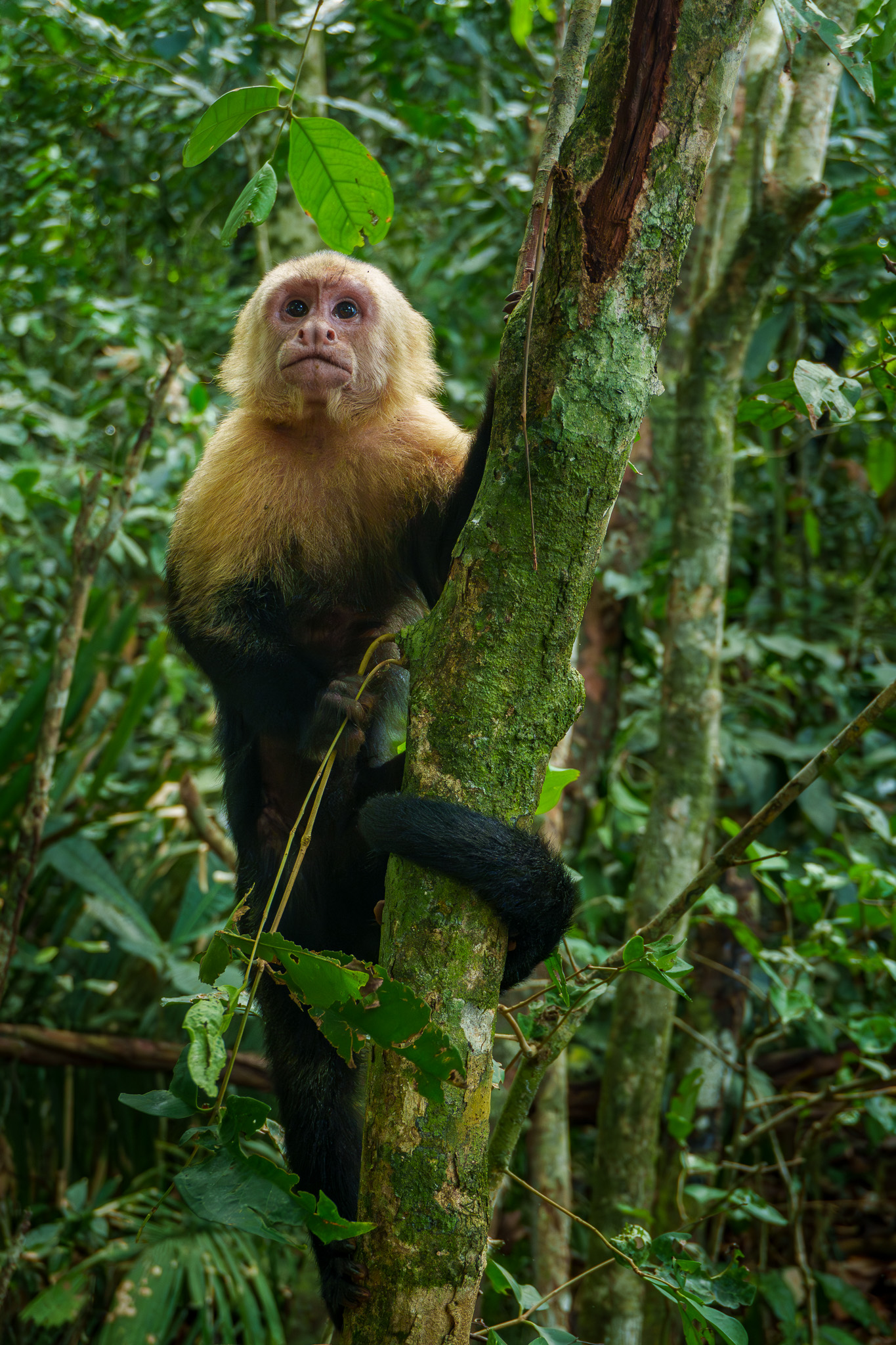
Capuchin monkeys (genus Cebus and Sapajus)
Description
Capuchin monkeys typically have a stocky body with a prehensile tail as long as their body, which aids in balance and climbing through the trees. They are usually dark brown with cream or white coloring around their faces, necks, and shoulders.
These monkeys weigh between 1.4 to 4 kg (3 to 9 pounds) and can live up to 25 years in the wild. Highly social, they live in groups of 10 to 35 individuals and are well known for using tools and solving complex problems—demonstrating remarkable intelligence among Amazon rainforest unique animals.
Where to See Capuchin Monkeys
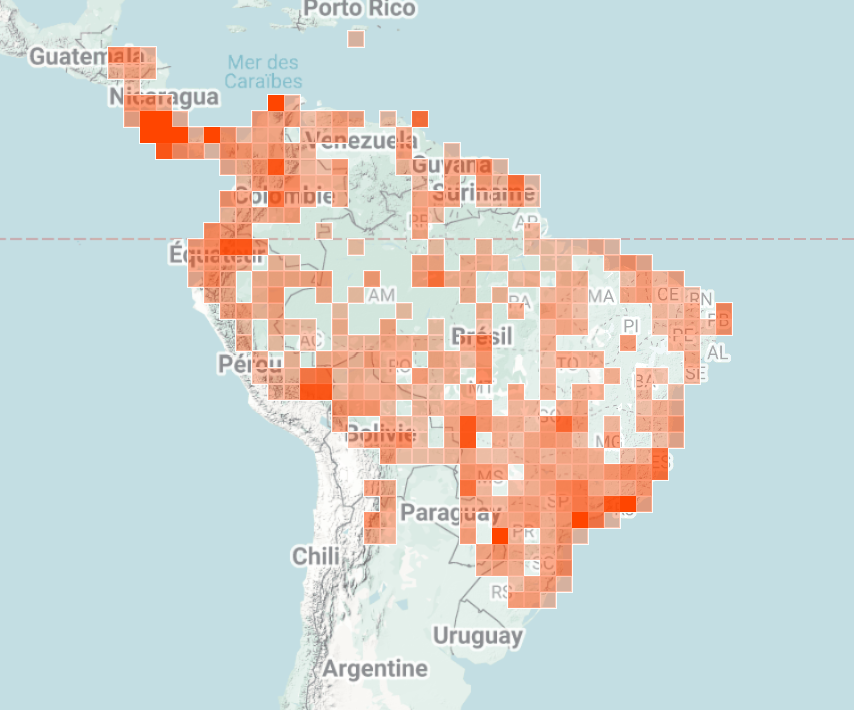
Capuchins inhabit tropical rainforests, dry deciduous forests, and mountain forests across Central and South America.
They are common in countries like Costa Rica, Panama, Honduras, Brazil, Peru, Argentina, and Paraguay. Capuchin monkeys are often found in the forest canopy 15–20 meters above the ground and adapt well to various forested environments up to 2,000 meters in elevation.
I have personally seen them multiple times in Costa Rica—in La Fortuna and Manuel Antonio Park on the Pacific Coast—as well as in Colombia’s Caribbean coast, particularly in Tayrona Park.
Species and Varieties Across South and Central America
Capuchins are mainly divided into two genera: robust tufted capuchins (Sapajus) and gracile capuchins (Cebus).
Varieties include the white-faced capuchin (Cebus capucinus), commonly seen in Central America; Spix’s white-fronted capuchin (Cebus unicolor) in the Amazon basin; and the Peruvian white-fronted capuchin (Cebus yuracus).
Other species, such as the varied white-fronted capuchin (Cebus versicolor) and shock-headed capuchin (Cebus cuscinus), inhabit regions in Colombia, Peru, and Bolivia.
Fun Facts About Capuchin Monkeys
Capuchin monkeys are among the most intelligent New World primates and have been observed using tools for thousands of years. For example, in Panama, some capuchins use stones to crack open coconuts and hermit crab shells.
They also display complex social behaviors, including passing around tufts of hair and even playfully “shoving fingers in eyes” as interaction among group members.
In Costa Rica’s Manuel Antonio Park, I’ve seen capuchins opening tourists’ bags to find food! Be careful—they’re not attacking but will retreat quickly if they see you approaching.
Howler monkeys (genus Alouatta)
Description
They are stoutly built primates with thick fur and long, prehensile tails that help them move through the trees.
They are known for their large throat sacs and vocal cords, which enable them to produce loud howling calls that can be heard up to 3 to 5 kilometers away.
Their fur color varies by species and can be black, brown, red, or golden.
Howler monkeys have a hunched appearance with protruding jaws and broad faces. They are primarily folivores, feeding mostly on leaves but also consuming fruits and nuts.
Where it can be seen
Howler monkeys live in tropical and subtropical forests across Central and South America, from southern Mexico through Central America down to northern Argentina.
They are commonly found in the canopy layers of rainforests, dry deciduous forests, cloud forests, and riverine woodlands. Countries with notable howler monkey populations include Brazil, Peru, Colombia, Costa Rica, Panama, Belize, and Guatemala.
I have seen or heard them in many places in Belize and Guatemala, in Colombia, and in Bolivia. Their howling call is quite something, even frightening at night!
Species and its variety around South and Central America
There are about 15 recognized species of howler monkeys. These include groups like the mantled howler (Alouatta palliata), black howler (Alouatta caraya), brown howler (Alouatta guariba), red-handed howler (Alouatta belzebul), and Venezuelan red howler (Alouatta seniculus). Species vary in color and regional distribution, with some found mainly in Amazonian rainforests while others inhabit more northern Central American forests.
Fun Fact about Howler Monkeys
Howler monkeys are the loudest land animals in the Americas and among the loudest primates globally.
Their howling can carry up to 5 kilometers through dense jungle, serving as territory markers to warn other groups to stay away.
Interestingly, only male howler monkeys produce the loud howls, while females remain quieter.
Their large hyoid bone acts like a natural amplifier for these impressive vocalizations.


Squirrel monkeys (genus Saimiri)
Description
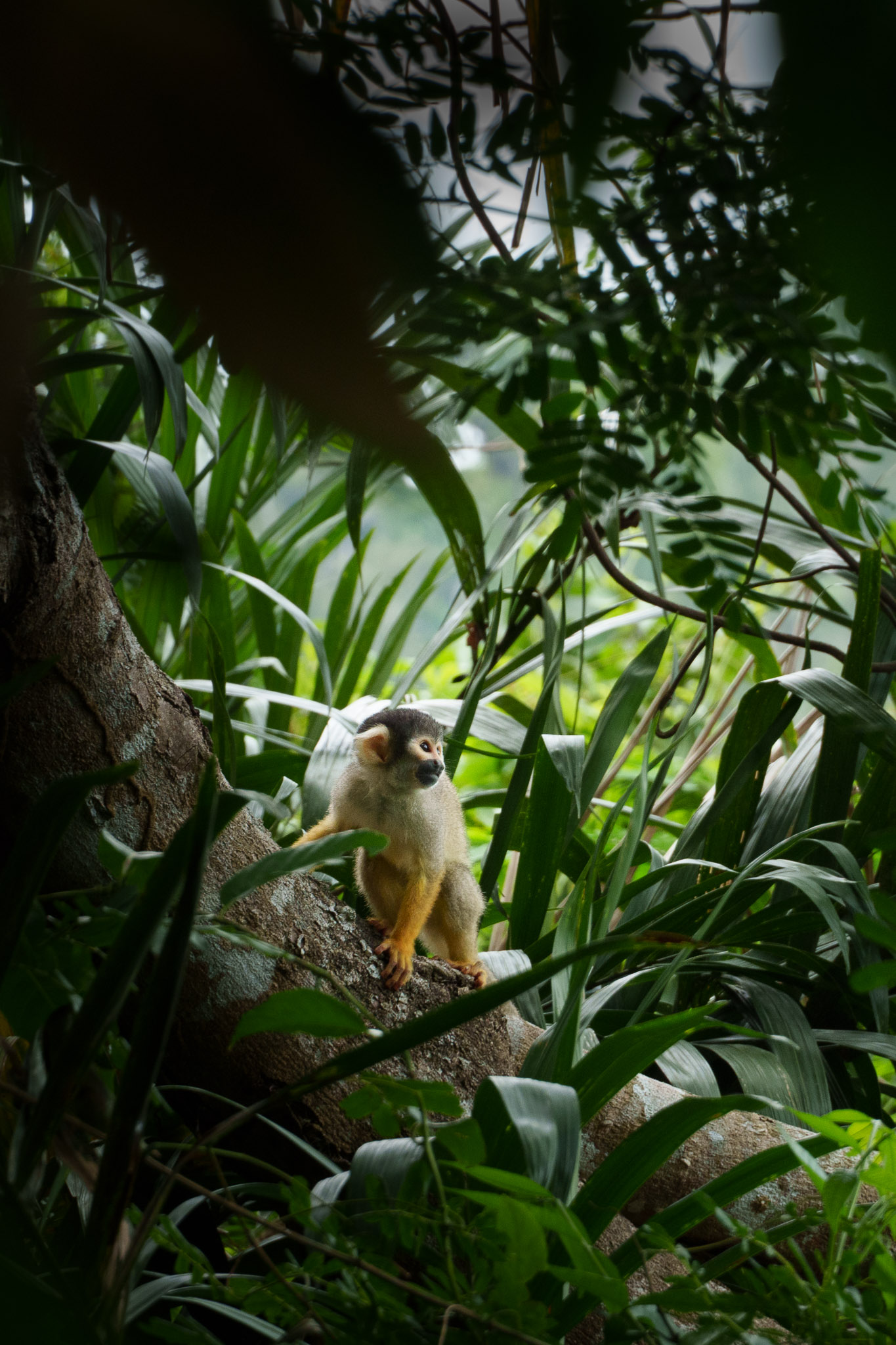
They are small, agile primates with short, close fur colored olive or grayish-brown on their back, yellowish-orange on their limbs and tail, and white on their face, throat, and ears. Their face features a distinct black mouth and nostrils, and strikingly large eyes.
These monkeys typically weigh 0.5 to 2 kilos and measure about 25 centimeters in body length, with tails longer than their bodies, used mainly for balance rather than grasping.
They are very intelligent and social, living in large groups that can number from 20 up to 500 individuals.
Where it can be seen
Squirrel monkeys inhabit tropical rainforests in Central and South America, especially in countries like Brazil, Peru, Colombia, Bolivia, Panama, and Costa Rica. They prefer the lower and middle canopy layers of primary and secondary forests, often near riverbanks and forest edges.
Their habitat ranges from humid lowland forests to flooded and swampy areas in the Amazon basin.
I have seen them in Manuel Antonio National Park in Costa Rica and in Riberalta in Bolivia during my volunteering, always in a big group of 20 or so individuals.
Species and its variety around South and Central America
There are five recognized species of squirrel monkeys, including the Common Squirrel Monkey (Saimiri sciureus), Black-Capped Squirrel Monkey (Saimiri boliviensis), Central American Squirrel Monkey (Saimiri oerstedii), Humboldt's Squirrel Monkey (Saimiri cassiquiarensis), and Collins’ Squirrel Monkey (Saimiri collinsi).
Each species varies slightly in coloring and regional distribution, from widespread populations in the Amazon to more restricted ranges in Central America.
Fun Fact about Squirrel Monkeys
Squirrel monkeys have the largest brain-to-body mass ratio of any primate species, nearly twice that of humans.
They also use urine-washing behavior to mark their territory, spreading urine on their hands and feet as they move through the forest.
Their excellent color vision enables them to spot ripe fruits and insects easily among dense foliage, aiding their omnivorous diet.
Spider monkeys (genus Ateles)
Description
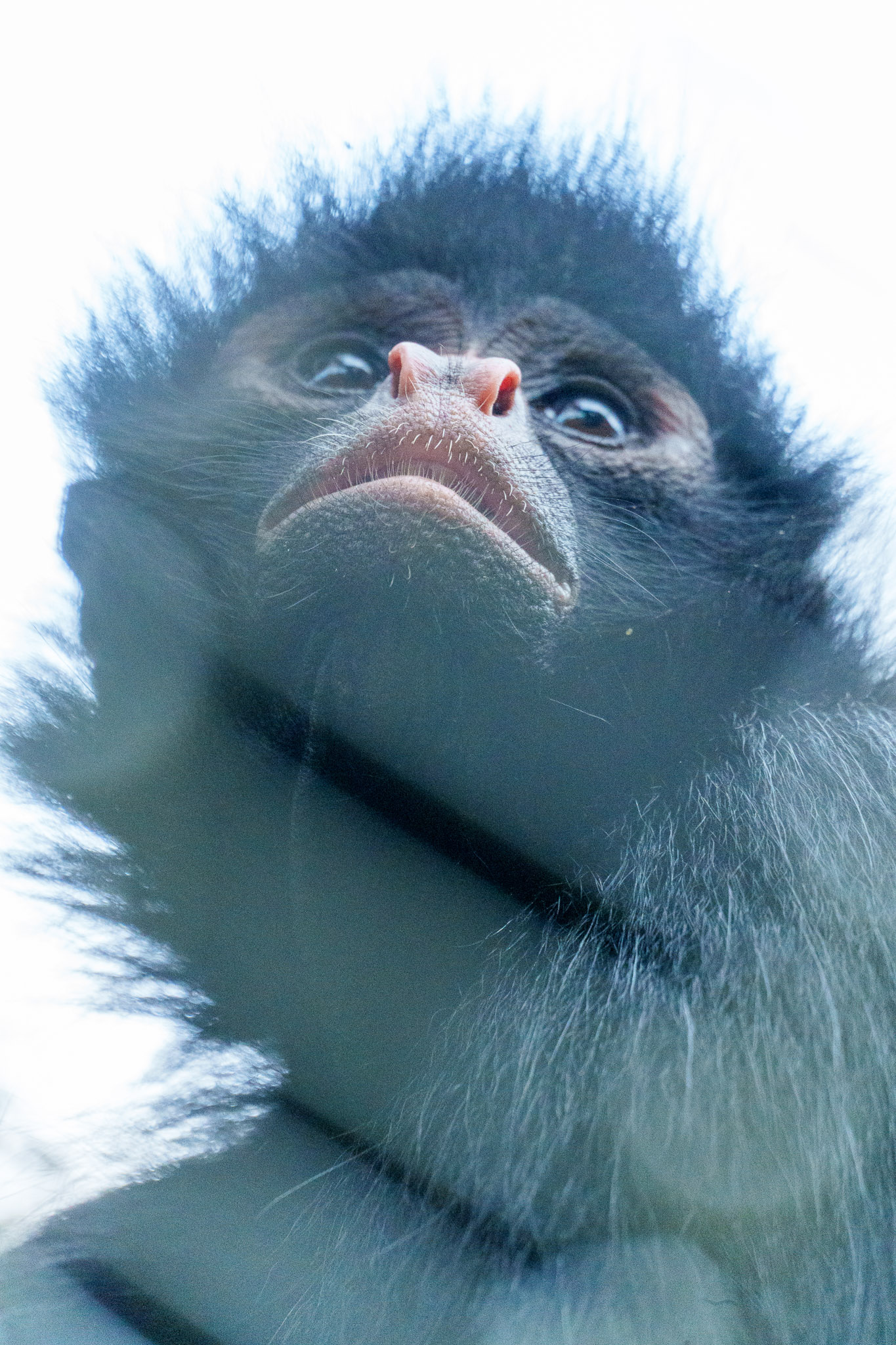
They are large New World monkeys characterized by their disproportionately long limbs and prehensile tails that act like a fifth limb.
Their hook-like hands lack thumbs, which helps them swing effortlessly through the upper tropical rainforest canopy, sometimes up to 30 meters above the ground. Their coat colors range from black, brown, reddish, to golden hues, often with distinctive facial markings like black faces and white eye rings.
Spider monkeys are highly agile and intelligent, moving by brachiation—swinging hand-over-hand between branches—and have strong social bonds within their groups.
Where it can be seen
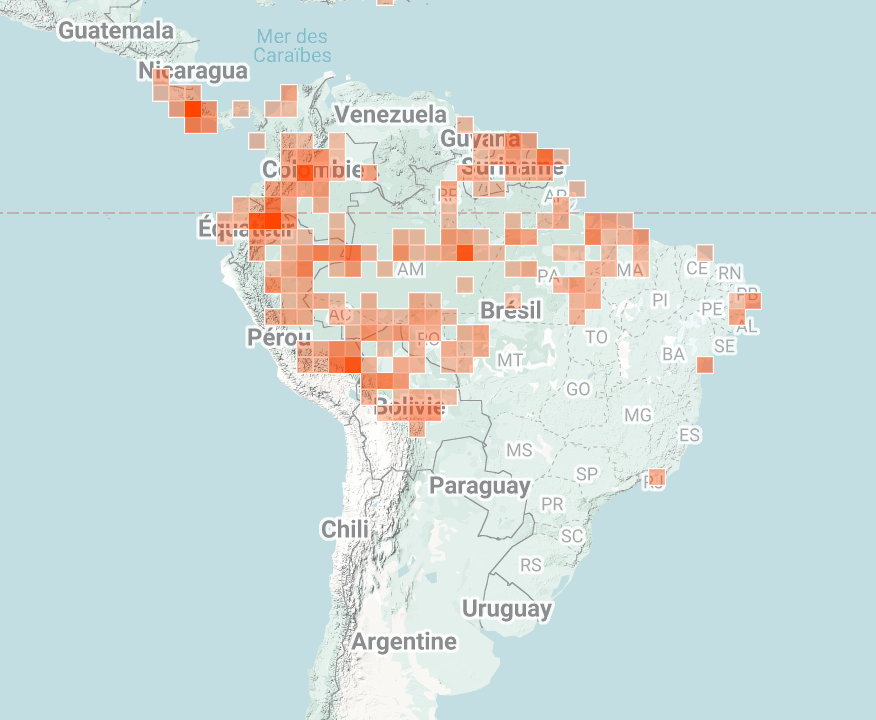
Spider monkeys inhabit tropical rainforests from southern Mexico through Central America and into northern and central South America, including countries like Brazil, Colombia, Peru, Costa Rica, and Panama.
They prefer large tracts of undisturbed primary rainforest, foraging in the high canopy, feeding mostly on fruits but also on leaves, flowers, nuts, and insects.
I have seen them in the North of Guatemala, near Flores, and in the Yungas in Bolivia. This is a very interesting Amazon monkey due to its limb proportion.
Species and its variety around South and Central America
There are seven recognized species of spider monkeys, including well-known ones such as Geoffroy’s spider monkey (Ateles geoffroyi), black spider monkey (Ateles paniscus), brown spider monkey (Ateles hybridus), Peruvian spider monkey (Ateles chamek), and white-cheeked spider monkey (Ateles marginatus).
Each species varies slightly in color and is distributed in different regions ranging from Central America down to the Amazon basin and Atlantic forests.
Fun Fact about Spider Monkeys
Spider monkeys use their strong prehensile tails not just for swinging but also for holding and manipulating food, making their tails almost like extra hands.
Unlike most monkeys, they have no thumbs, which makes their hook-like fingers incredibly flexible and perfect for fast, precise movement through the treetops.
They communicate with a variety of loud whoops, barks, and squeals to keep in contact with their troop while moving through dense forests.
Mothers carry and care for their babies for nearly three years, teaching them essential survival skills.
Titi monkeys (subfamily Callicebinae)
Description
They are small, arboreal primates known for their soft, often colorful fur which can be reddish, brownish, grayish, or blackish, with lighter or reddish undersides.
They have long furry tails, though unlike other monkeys, their tails are not prehensile and are mainly used for balance. Titis typically measure between 9 to 18 inches in body length, with tails longer than their bodies.
These diurnal monkeys live in family groups consisting of parents and offspring, exhibiting strong pair bonds and social grooming behaviors.
They communicate through vocal duets, often heard at dawn, to defend their territory.
Where it can be seen
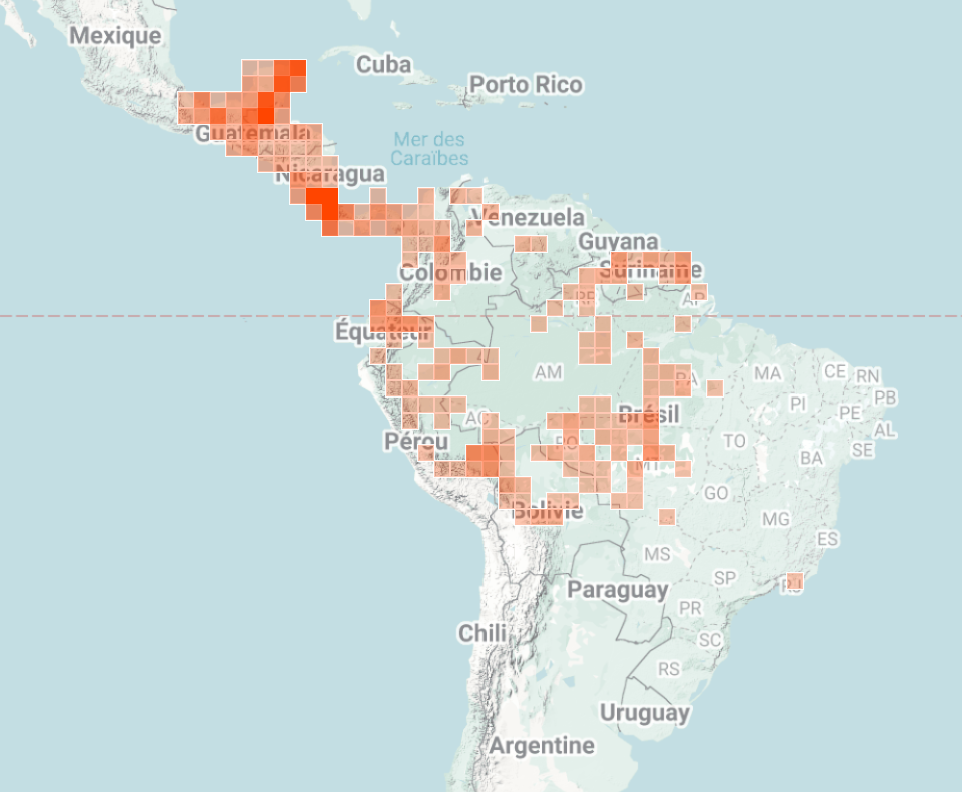
Titi monkeys inhabit dense tropical rainforests and forests near water throughout South America, including Brazil, Peru, Ecuador, Colombia, Bolivia, and northern Paraguay.
They occupy the upper and middle forest canopies but may also be seen in dense undergrowth. Each species has a specific range, often near river basins and protected forested areas within the Amazon rainforest and adjacent regions.
Species and its variety around South and Central America
There are around 40 species of titi monkeys divided into three genera: Cheracebus, Callicebus, and Plecturocebus. Notable species include the coppery titi (Callicebus cupreus), red titi, white-coated titi (Callicebus pallescens), and the critically endangered Vieira’s titi monkey.
These species vary in color, size, and geographic distribution but share similar social behaviors and habitats within the tropical rainforests of South America.
Fun Fact about Titi Monkeys
Titi monkeys are known for their strong monogamous bonds, often mating for life and spending much of their time grooming and sitting close together, sometimes sleeping with their tails intertwined.
They produce coordinated duets at dawn as a form of communication to mark territory. Another interesting behavior is their jealousy over mate fidelity—if a partner notices attention paid to another titi, it can cause distress and aggressive behavior.

Tamarins
Description
Tamarins are small New World monkeys typically about the size of a squirrel, with long tails that often exceed their body length.
They have varied fur colors and patterns depending on the species, ranging from reddish-brown to black and white. Tamarins have sharp claws instead of nails (except on the big toe), which help them cling to tree bark and move quickly in the canopy.
They are highly agile and social, living in family groups. Their diet is omnivorous, including fruits, insects, small vertebrates, and plant exudates like tree sap.
Where it can be seen
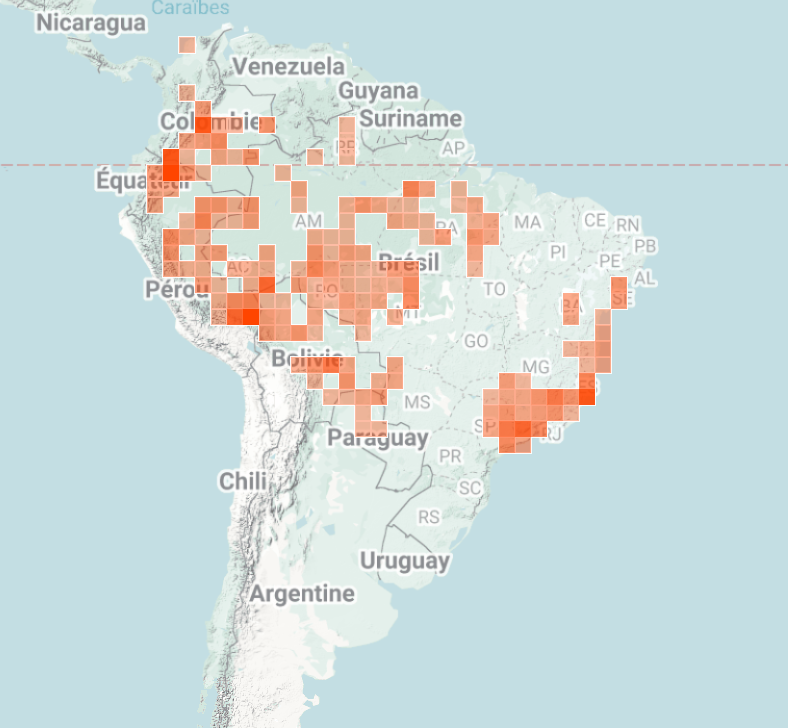
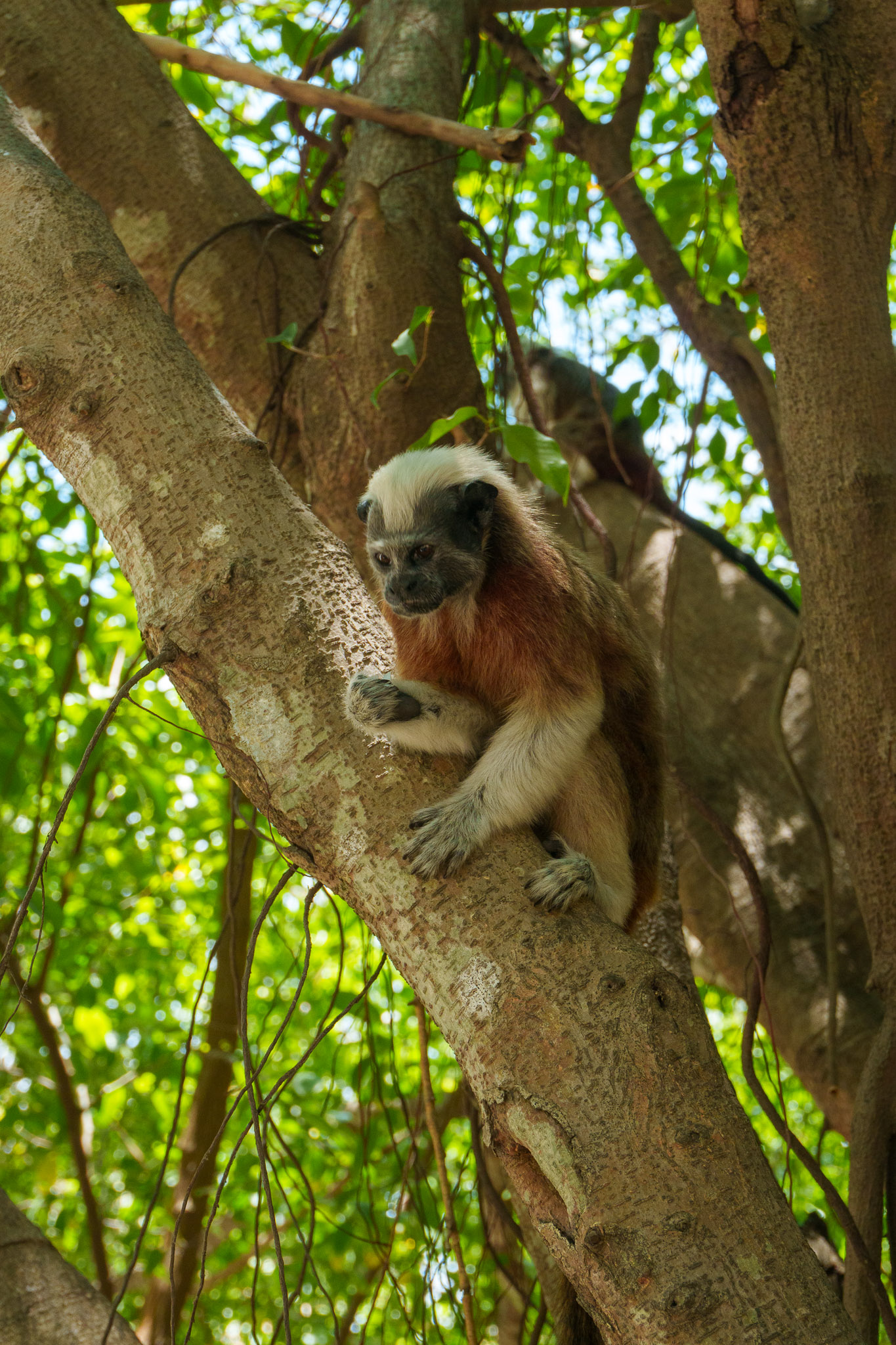
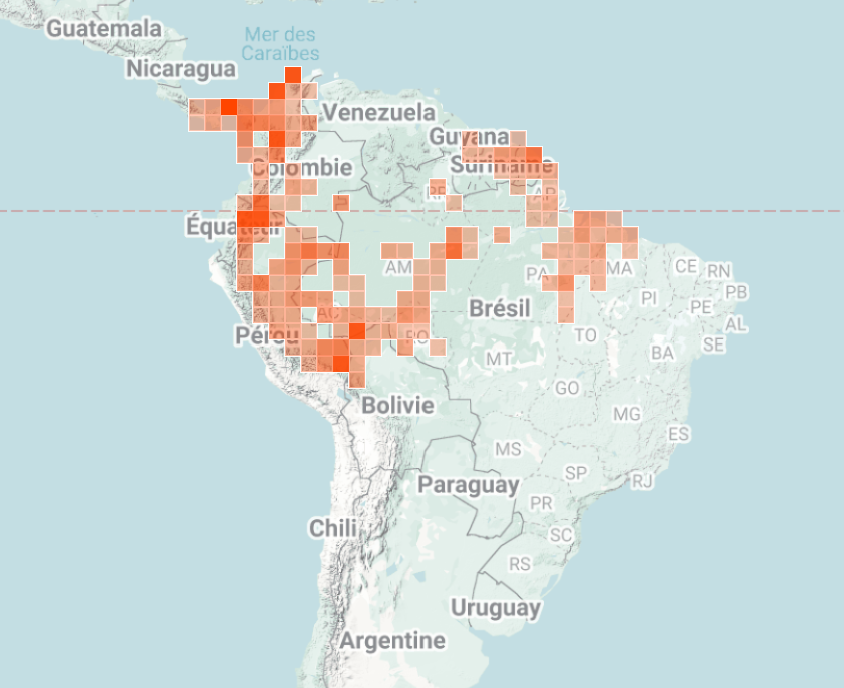
Tamarins are native to the tropical rainforests of Central and South America, especially in the Amazon basin.
They are found in countries such as Brazil, Peru, Colombia, Bolivia, Panama, and Costa Rica. They prefer dense forest habitats, often in the middle to lower canopy layers, sometimes near water sources. Different species inhabit distinct ranges within the broader Amazon and rainforest regions.
If you pass by Cartagena, go to the main park and you’ll see plenty of them in the trees. They accept coconut, and you can feed them from your hand.
Species and its variety around South and Central America
There are over 40 species of tamarins, classified mainly in genera Saguinus, Leontopithecus (lion tamarins), and Leontocebus (saddle-back tamarins). Popular species include the red-handed tamarin (Saguinus midas), golden lion tamarin (Leontopithecus rosalia), emperor tamarin (Saguinus imperator), and Geoffroy’s tamarin (Saguinus geoffroyi).
The golden lion tamarin is one of the most famous and endangered species, known for its striking reddish-orange fur resembling a lion’s mane.
Fun Fact about Tamarins
Tamarins often give birth to twins, a rare trait among primates, and the entire family group helps care for the young.
Emperor tamarins have distinctive long white mustaches, earning them the nickname “mustache monkeys.”
Tamarins communicate with a variety of vocalizations and scent markings, and they use their sharp claws to move swiftly and cling to vertical tree trunks.
Marmoset
Description
Marmosets are small New World monkeys belonging to four genera—Callithrix, Cebuella, Callibella, and Mico—with about 22 recognized species.
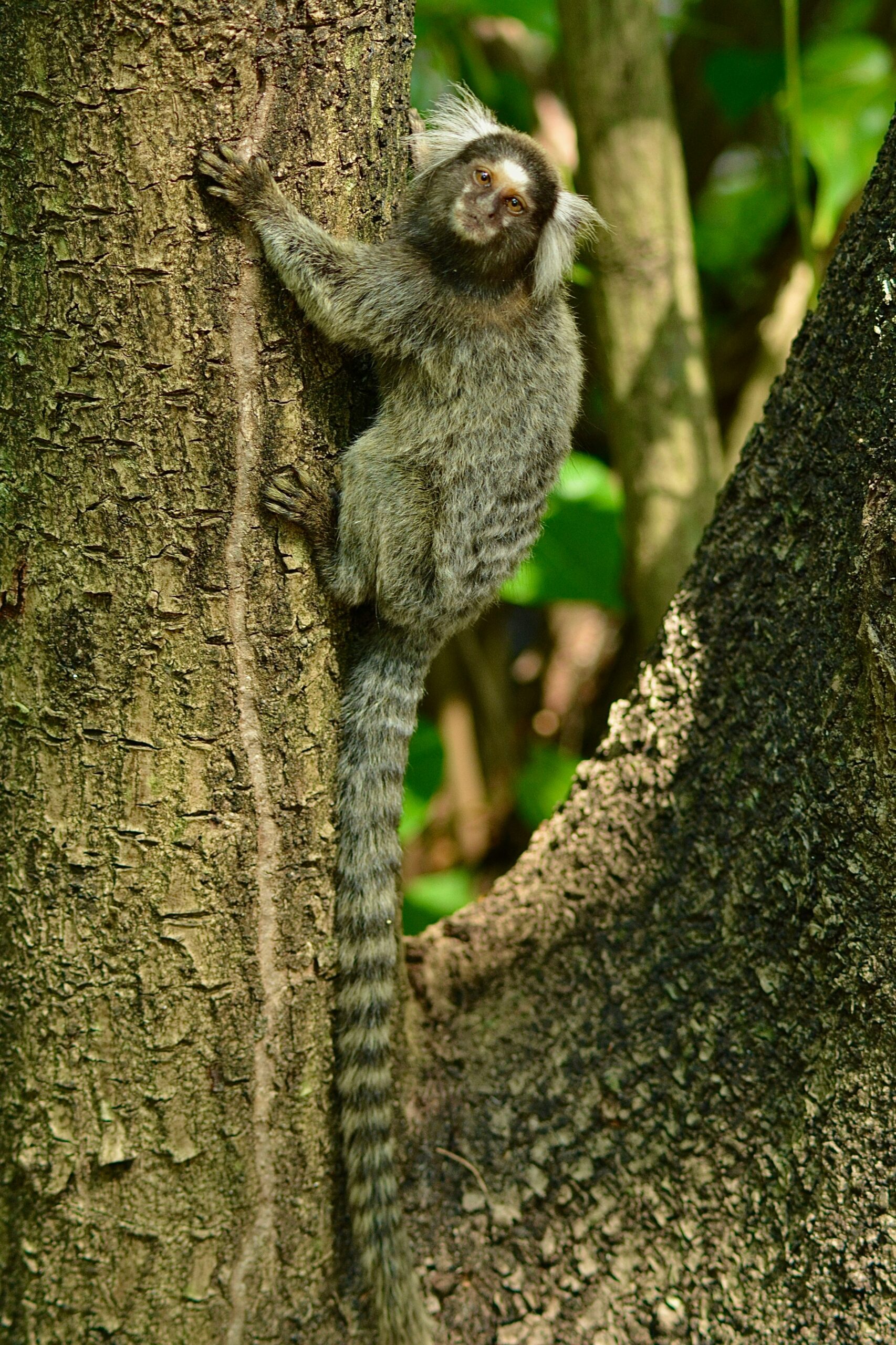
They have a distinctive appearance with soft fur, often mottled brown, gray, or yellowish, and characteristic tufts of hair around their ears.
Adult marmosets are small, measuring around 14 to 19 cm in body length with tails often longer than their bodies.
They have sharp claw-like nails (except on their big toes) that help them cling to and scamper quickly along tree branches. Their strong, chisel-like lower incisors enable them to gnaw into tree bark to access sap and gum, a key part of their diet.
Where it can be seen
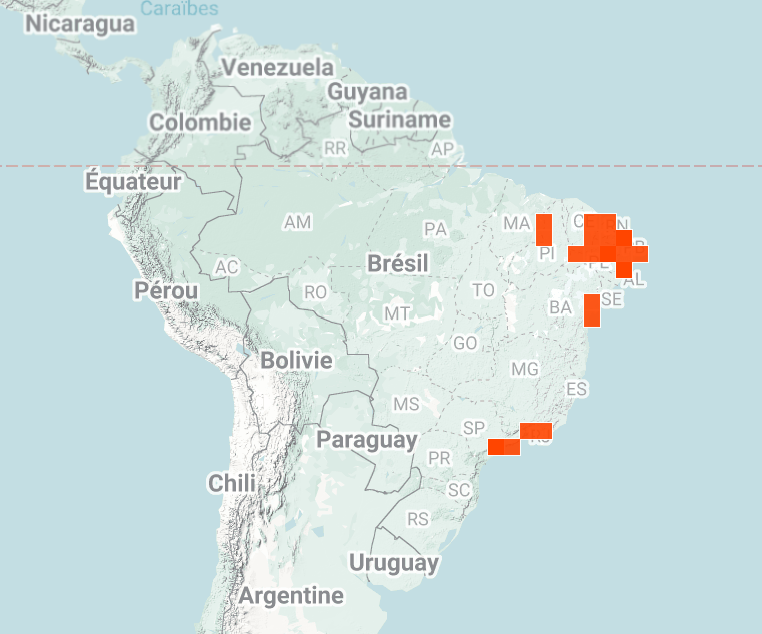
Marmosets inhabit tropical and subtropical forests throughout South America, especially in Brazil, but also found in parts of Colombia, Peru, Ecuador, and Bolivia.
They prefer dense forest canopies and understories, often living in family groups and relying on sap-producing trees within their home ranges.
The pygmy marmoset, the smallest marmoset species, lives in the upper Amazon tributaries and bamboo thickets near rivers.
The ‘Mico’ marmoset can be seen quite easily in Rio de Janeiro in Brazil, or in Ilha Grande. If you climb the ‘Pao de Açucar,’ a classic tourist viewpoint, you’ll find many of them hanging around trying to get your food. They are not aggressive but can nip if they mistake your fingers for food—so be careful!
Species and its variety around South and Central America
There are about 22 species of marmosets split among four genera. The genus Callithrix includes common marmosets like the white-tufted marmoset and black-tufted marmoset.
Cebuella includes the two pygmy marmoset subspecies (western and eastern). The other genera, Mico and Callibella, contain several lesser-known species such as the black-tailed and Roosmalen's dwarf marmosets.
These species vary in coloration and distribution but share arboreal lifestyles and gum-feeding behaviors.
Fun Fact about Marmosets
Marmosets are known for their dental adaptations that let them gouge trees to access tree sap, making them unique among primates.
Despite their small size, pygmy marmosets can leap over 5 meters between tree branches.
They also display complex social behaviors, including special calls to warn the group of predators and mobbing behavior where they band together to scare off threats.
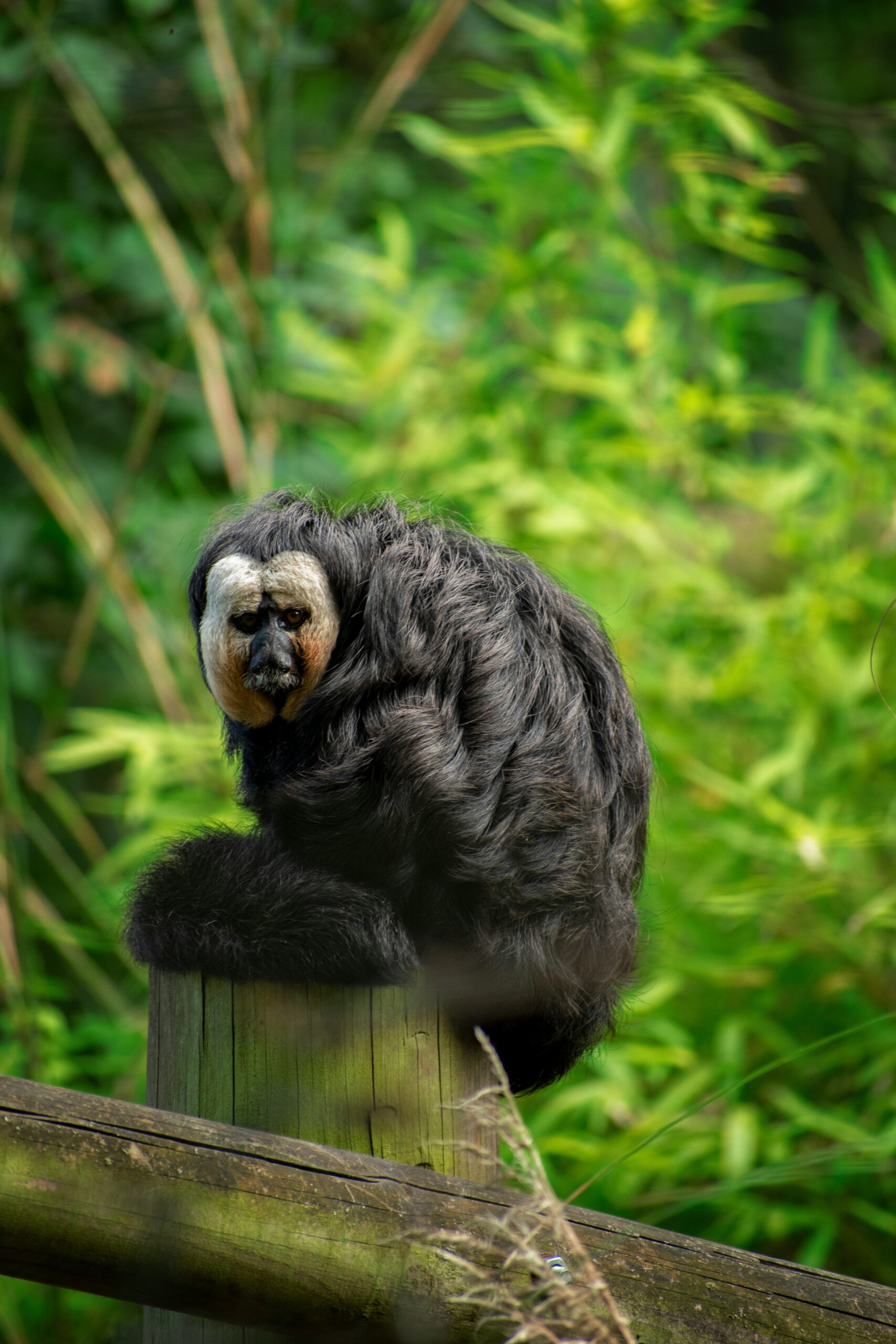
Saki monkeys (Genus Pithecia)
Description
They are small to medium-sized New World primates recognized for their distinctive long, bushy, non-prehensile tails and dense fur, which can be black, gray, brown, or reddish depending on the species.
Their fur creates a hood-like appearance around the head and shoulders. Males and females often display sexual dimorphism, with males typically having darker fur and females lighter or more grizzled coats.
They have powerful jaws and specialized teeth adapted for cracking hard seeds and nuts. Sakis are arboreal and highly agile, moving predominantly by quadrupedal walking and leaping between branches.
They are diurnal and tend to live in small monogamous pairs or family groups.
Where it can be seen
Saki monkeys inhabit tropical forests across northern and central South America, with a range extending from the Guiana Shield area (including French Guiana, Guyana, Suriname, and Venezuela) to the Amazon basin and northern Bolivia.
They prefer mature tropical rainforests, swamp forests, palm forests, and secondary forests, usually staying high in the canopy but sometimes descending to lower limbs or bushes to forage.
Species and its variety around South and Central America
There are roughly 16 recognized species of true sakis under the genus Pithecia. Notable species include the white-faced saki (Pithecia pithecia), pale-headed saki (Pithecia albicans), monk saki (Pithecia monachus), and golden-faced saki (Pithecia chrysocephala). These species differ in color patterns, facial markings, and geographic distribution but share similar behaviors and diets.
Other related monkeys are the bearded sakis (genus Chiropotes) which also inhabit the Amazonian forests.
Fun Fact about Saki Monkeys
Saki monkeys have specialized lower front teeth that enable them to crack open hard nuts and seeds, giving them access to nutritious food sources unavailable to many other animals.
Their thick bushy tails are not prehensile but serve as excellent balance aids when leaping through trees. They are sometimes called “flying monkeys” due to their ability to leap impressive distances (up to 10 meters) from branch to branch.
Males of some species have striking white or pale facial hair, contrasting with darker bodies, making them easily identifiable.

Cebuella niveiventris
Description
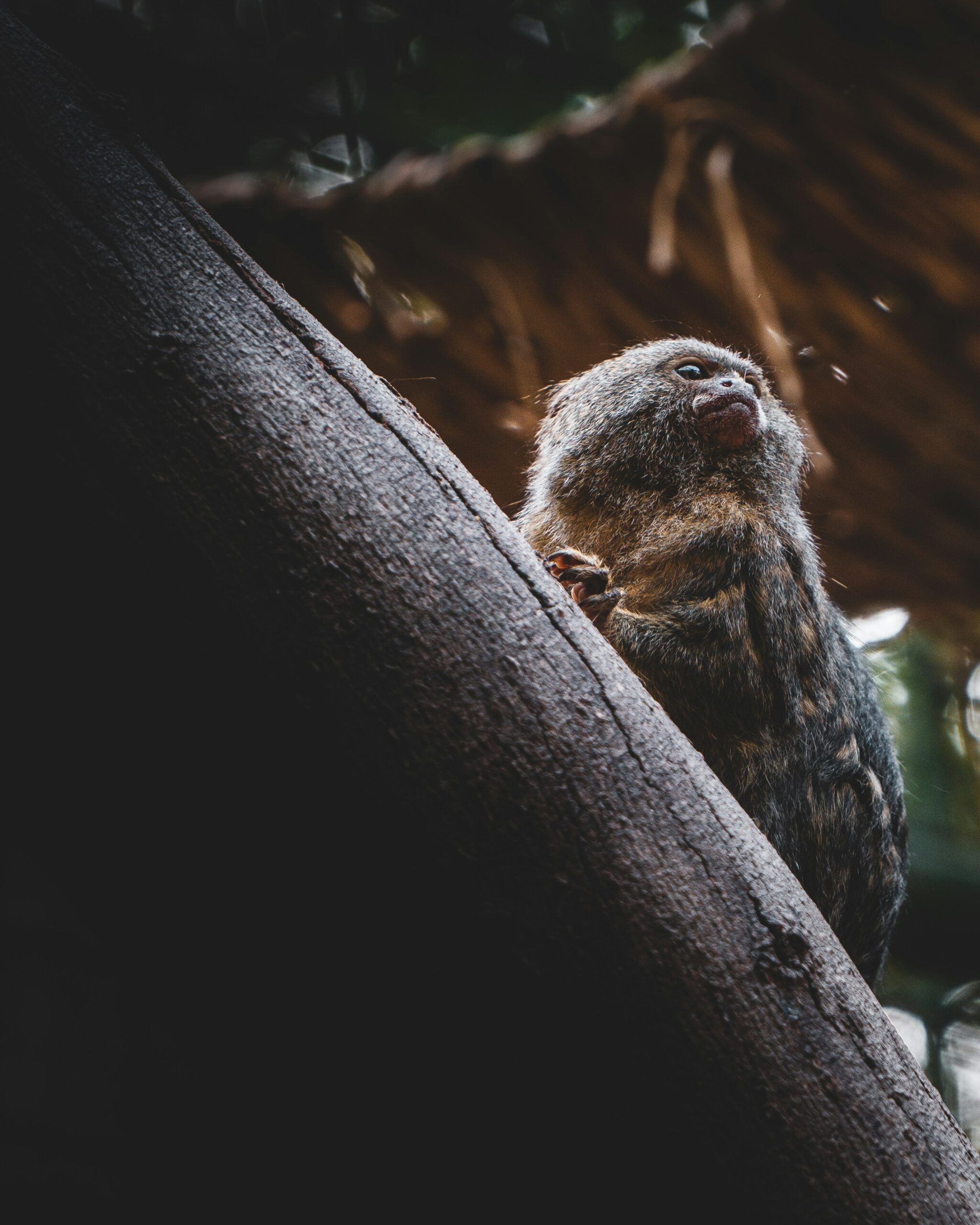
Cebuella niveiventris, commonly known as the Eastern Pygmy Marmoset or white-bellied pygmy marmoset, is one of the smallest monkeys in the world. Adults measure between 4.6 to 6 inches (117 to 152 mm) in head-to-body length, with tails often longer than their bodies, up to 9 inches.
Their fur is a mix of fawn and gray with yellow and black markings on the back and head, while their underside is whitish or orange-to-white. They have large lower incisors and claw-like nails that help them gnaw into tree bark to access sap and gum, a major part of their diet. These tiny primates are known for their agility and ability to turn their heads nearly 180 degrees to watch for predators.
Where it can be seen
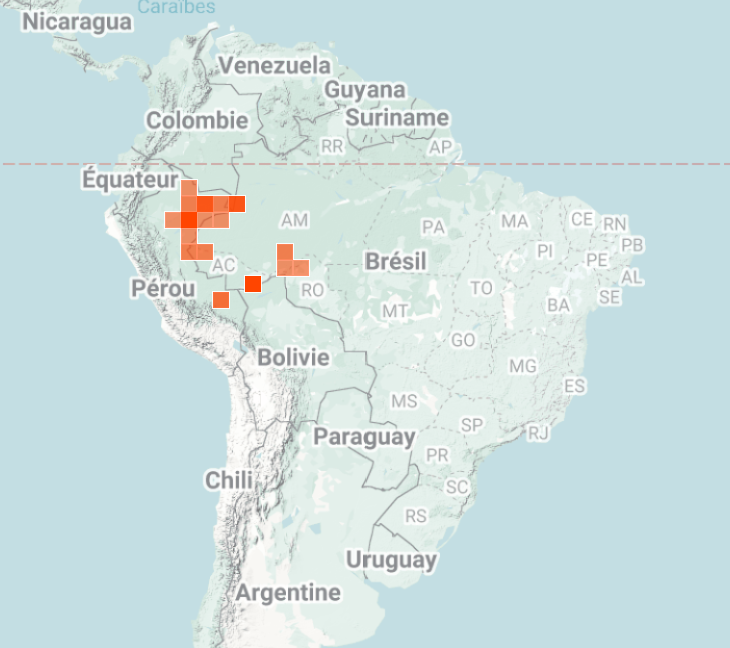
The Eastern Pygmy Marmoset inhabits the southwestern Amazon Basin, including northeastern Peru, western Brazil (Amazonas and Acre states), eastern Bolivia, and recently confirmed regions of Ecuador north of the Marañón River.
They prefer gallery forests along riverbanks and dense undergrowth habitats, typically staying less than 18 meters above the ground. Their range is separated from the western pygmy marmoset by large rivers like the Amazon and Napo.
Species and its variety around South and Central America
The genus Cebuella consists of two recognized species: the western pygmy marmoset (Cebuella pygmaea) and the eastern pygmy marmoset (Cebuella niveiventris). These species differ slightly in color and geographic range but share similar ecological niches and specialized gum-feeding behavior. Both species exhibit social group dynamics usually consisting of 2 to 9 individuals with strong family bonds and cooperative care for young.
Fun Fact about Cebuella niveiventris
Due to their extremely small size, Eastern Pygmy Marmosets are also called “finger monkeys.”
Despite their tiny stature, they are capable of remarkable leaps and have adapted unique clawed nails instead of flat nails to help them cling to and climb thin branches. The males also play an active role in caring for offspring, including cleaning the babies right after birth.
Monk Saki (Pithecia monachus)
Description
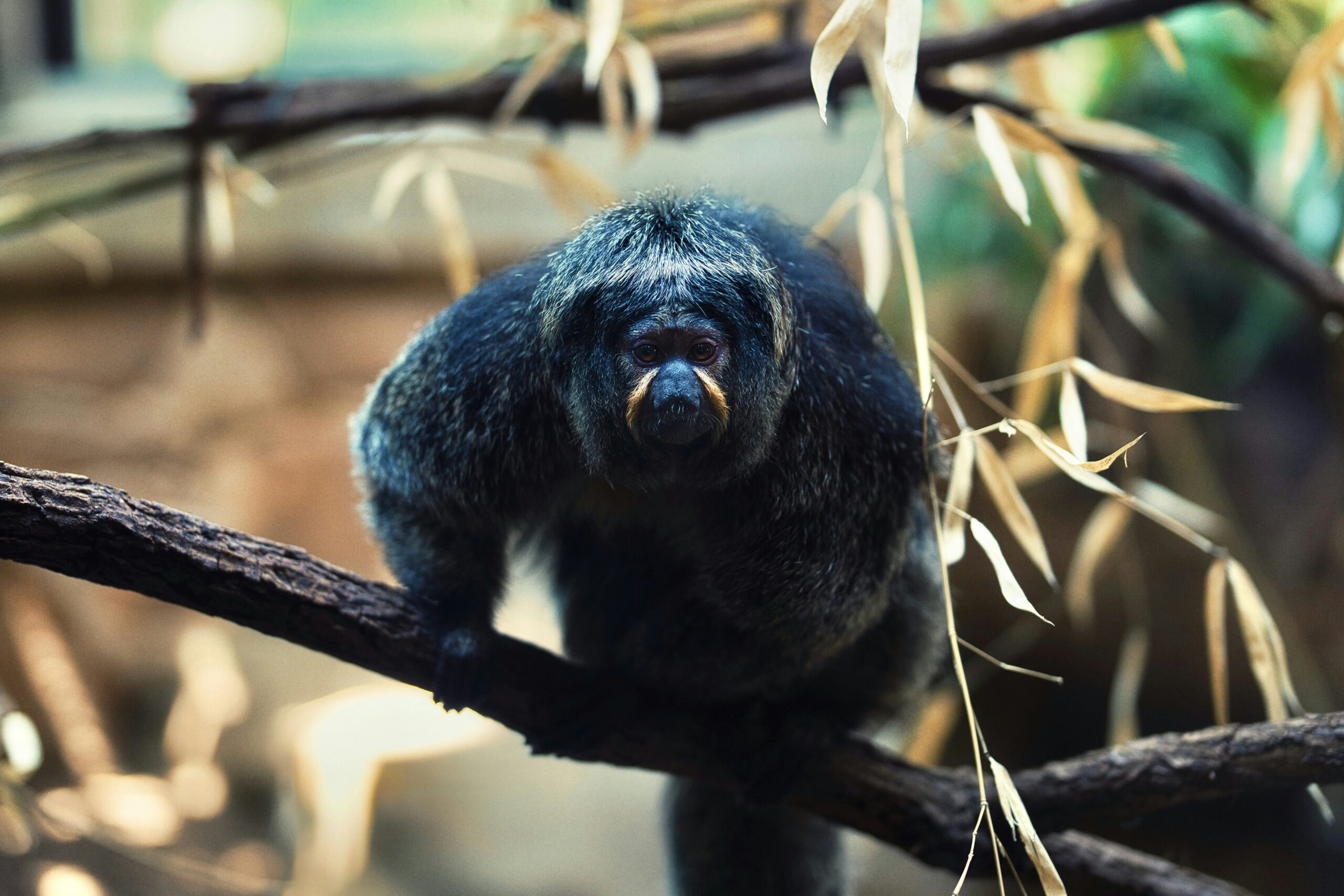
Also known as Geoffroy’s monk saki, this medium-sized New World monkey has a body length of about 37 to 48 cm and a thick, non-prehensile tail measuring between 30 to 55 cm.
It has dense, coarse, grizzled gray-black fur covering most of the body with pale hands, feet, and face. The face is partly bald with a beard and is framed by a hood of curly black fur. Monk sakis have powerful jaws with forward-facing incisors to crack seeds and hard-shelled fruits, which form a staple of their diet.
They are typically shy and arboreal, spending most of their time in the high canopy of the Amazon rainforest, moving by quadrupedal walking and impressive leaping.
Where it can be seen
Monk sakis are native to the Amazon basin, primarily found in mature rainforests along the Jurua and Japura-Caquerta rivers in Brazil and extending into the Andean foothills of Peru.
They inhabit the high, dense canopy but can descend to lower forest levels for foraging. Their range includes parts of northwestern Brazil, northeastern Peru, Colombia, and Ecuador.
Species and its variety around South and Central America
Pithecia monachus is one of several species within the genus Pithecia. Recent taxonomic revisions propose around 16 distinct saki monkey species, with P. monachus representing the western Amazonian clade.
These species vary in coat coloration, facial hair, and geographic distribution but share similar arboreal, frugivorous lifestyles.
Monk sakis are part of a complex that also includes species like the white-faced saki (Pithecia pithecia), found more to the northeast.
Fun Fact about Monk Sakis
When threatened or alarmed, monk sakis exhibit piloerection—raising their fur to appear larger and more intimidating.
They are sometimes called “flying monkeys” due to their remarkable ability to leap long distances (up to 10 meters) between trees while foraging or escaping predators.
Their social groups usually consist of monogamous pairs and offspring, with family group sizes averaging around four to five individuals.
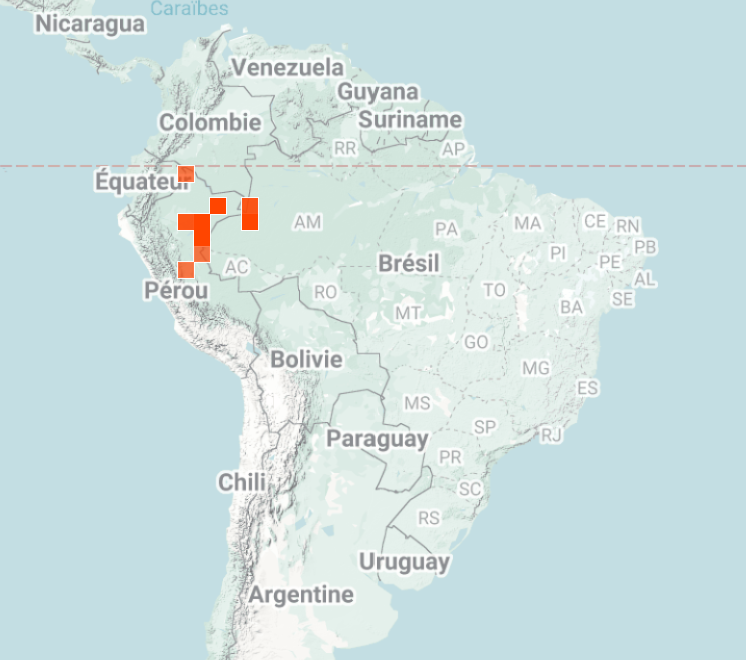
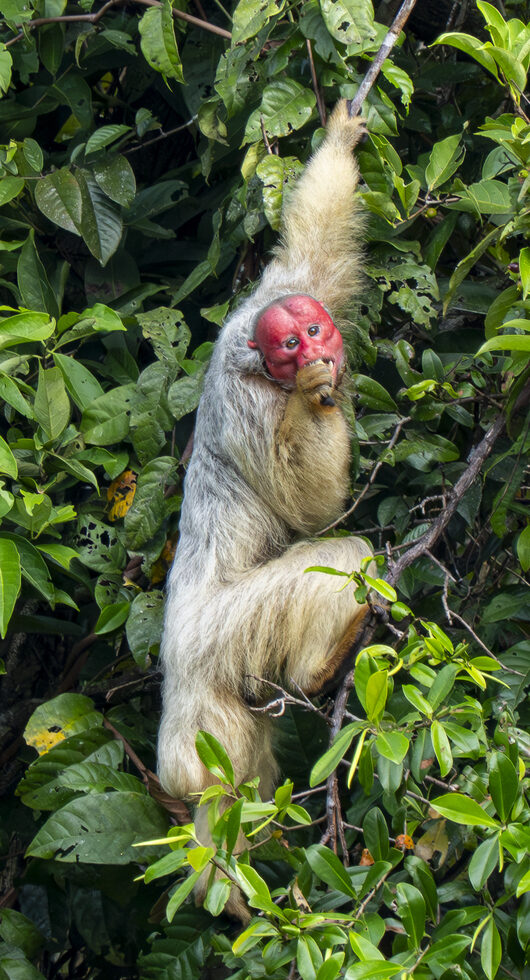
Red-Faced Uakari (Cacajao calvus)
Description
This monkey is a distinctive New World primate known for its striking bright red, almost bald face, and a short, fluffy coat ranging from reddish-brown to orange.
It has a short, non-prehensile tail that is much shorter than most other monkeys of its size. The monkey’s unique face coloration is due to a high concentration of blood vessels just beneath the skin, which serves as an indicator of health and vitality.
Red-Faced Uakaris measure around 35–50 cm in body length, not including their tail, and weigh between 2 to 3 kg.
Where it can be seen
Red-Faced Uakaris live in the flooded forests of the Amazon Basin, primarily in the eastern regions of Peru and western Brazil.
They prefer swampy or seasonally flooded tropical rainforests near rivers and lakes, where malaria-carrying mosquitoes are common.
Their habitat is quite specialized, limiting their distribution to these unique flooded forest ecosystems.
Species and its variety around South and Central America
The Red-Faced Uakari is one of four recognized subspecies of the Bald Uakari (Cacajao calvus), including the Ucayali Bald Uakari (C. c. ucayalii) and the Novaes' Bald Uakari (C. c. novaesi).
These closely related subspecies exhibit slight variations in coat color ranging from light blonde to deep orange-red, but all share the characteristic bright red bald face. All members of this group are considered vulnerable or endangered due to habitat loss and hunting.
Fun Fact about Red-Faced Uakaris
The bright redness of their face is a signal of good health and social status.
Uakaris affected by diseases such as malaria display paler faces, which leads to rejection by potential mates.
This visible health cue helps maintain the group's overall health and influences mate selection.
Additionally, despite their bald faces, red uakaris can display at least 10 different facial expressions, which play a vital role in communication.
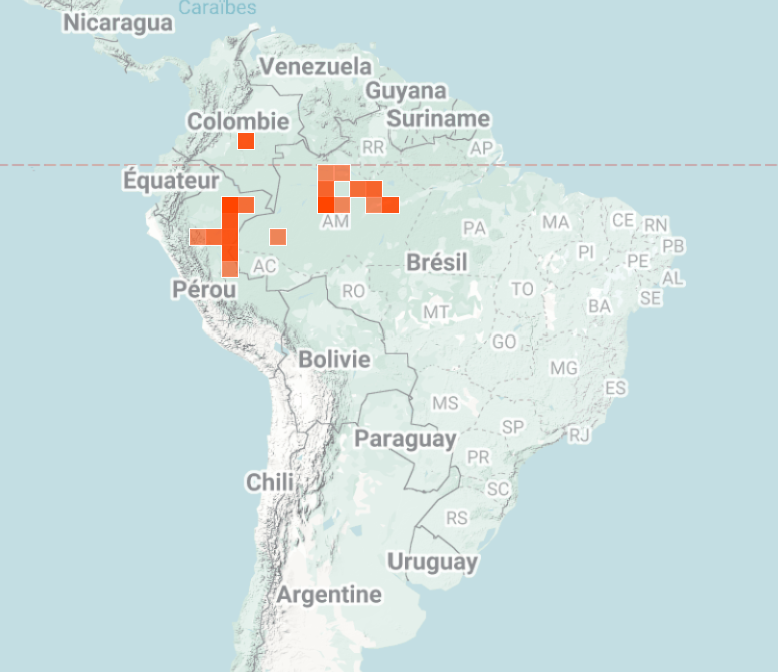
Woolly Monkey
Description
Woolly monkeys (genus Lagothrix) are among the largest New World monkeys, known for their thick, dense, wool-like fur that varies from grayish and brown to reddish hues.
They have powerful limbs, a large rounded head, and a long prehensile tail almost as long as their body, which acts as a fifth limb to help them navigate the canopy. Weighing up to 13 kg (29 lbs) for females and 20 kg (44 lbs) for males, they are robust climbers and primarily arboreal.
Woolly monkeys have broad, protruding bellies and strong social bonds within groups that can include up to 30 members. Their diet consists mainly of fruits, leaves, and insects.
Where it can be seen
Woolly monkeys inhabit tropical and cloud forests of the Amazon Basin in Colombia, Peru, Ecuador, Brazil, Bolivia, and possibly Venezuela.
They prefer mature, continuous, undisturbed rainforests with a dense canopy and are generally found high in the forest, between 7 and 12 meters above ground, but occasionally come down as low as 2 meters to access food or lick minerals from the forest floor.
Species and its variety around South and Central America
The genus Lagothrix includes several closely related species, including the common or brown woolly monkey (Lagothrix lagothricha), gray woolly monkey (Lagothrix lagothricha cana), Colombian woolly monkey (Lagothrix lagothricha lugens), silvery woolly monkey (Lagothrix lagothricha poeppigii), and the Peruvian yellow-tailed woolly monkey (Lagothrix flavicauda).
Most recent studies support classification into two primary species with multiple subspecies, distinguished by subtle differences in fur color and geographic distribution.
Fun Fact about Woolly Monkeys
Woolly monkeys are among the most skilled climbers in the rainforest, zipping through the canopy at speeds up to 55 km/h using their prehensile tails as an extra hand.
Their tails are so strong they can hang their entire body weight from just their tail!
Rough play is vital for social bonding, especially among younger monkeys learning the troop’s social rules.
Females often migrate to new groups upon maturity, whereas males tend to remain in their birth groups.


Owl Monkey
Description
Night monkeys, also known as owl monkeys or genus Aotus, are unique as the only nocturnal monkeys in the New World. They are small primates with body lengths ranging from about 24 to 37 cm and weigh between 0.5 to 1.25 kg.
Their most distinctive feature is their large, round eyes that improve night vision, helping them navigate and forage in low light. Unlike many nocturnal mammals, night monkeys lack the reflective tapetum lucidum layer in their eyes, but their spherical lenses allow excellent vision in the dark.
They have dense woolly fur, short tails that are not prehensile, and relatively flat faces with small, hidden ears—giving them the name Aotus, meaning “earless.”
Where it can be seen
Night monkeys inhabit a range stretching from Panama in Central America through much of South America, including countries like Colombia, Ecuador, Peru, Bolivia, and northern Argentina.
They thrive in diverse forest environments such as tropical lowland rainforests, cloud forests, savannas, and even disturbed or secondary forests.
They are arboreal and primarily active at night, resting in tree hollows or leaf nests during the day.
Species and its variety around South and Central America
The genus Aotus includes about 11 recognized species, broadly divided into two groups: the northern gray-necked group (e.g., Aotus lemurinus) and the southern red-necked group (e.g., Aotus nigriceps, Aotus azarae).
Each species has subtle differences in fur coloration, facial markings, and habitat preferences but all share nocturnal behavior and monogamous social structures.
Night monkeys live in small family groups consisting of a monogamous pair and their offspring.
Fun Fact about Night Monkeys
Night monkeys are monogamous, forming lifelong pair bonds, with males playing a significant role in infant care including carrying and grooming the young.
Their vocalizations include soft hoots and calls that help maintain communication in the darkness.
Despite their nocturnal lifestyle, they rely on a mix of olfactory, auditory, and visual signals to interact, which is unusual among nocturnal primates.
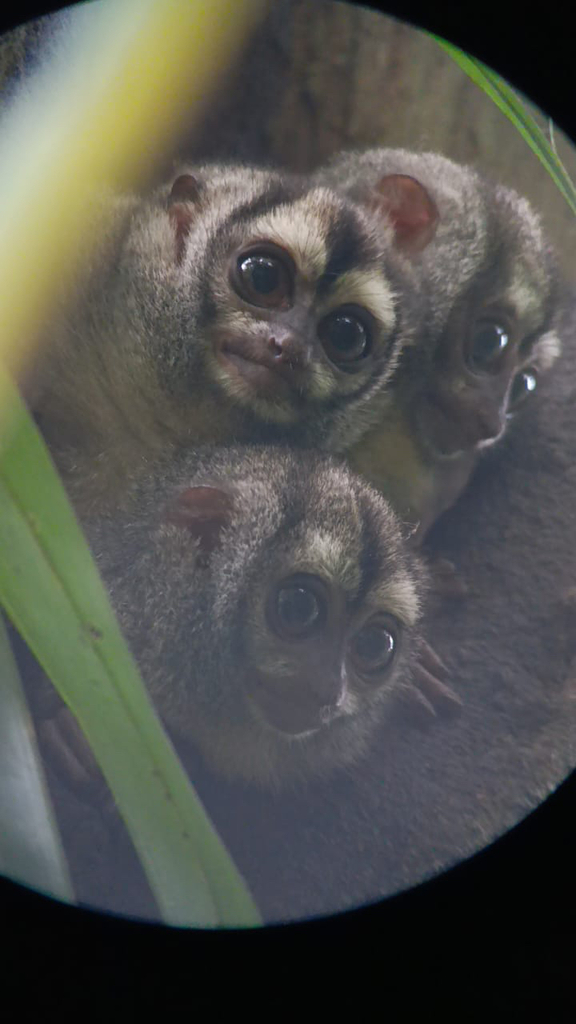

Red Howler Monkey
Description
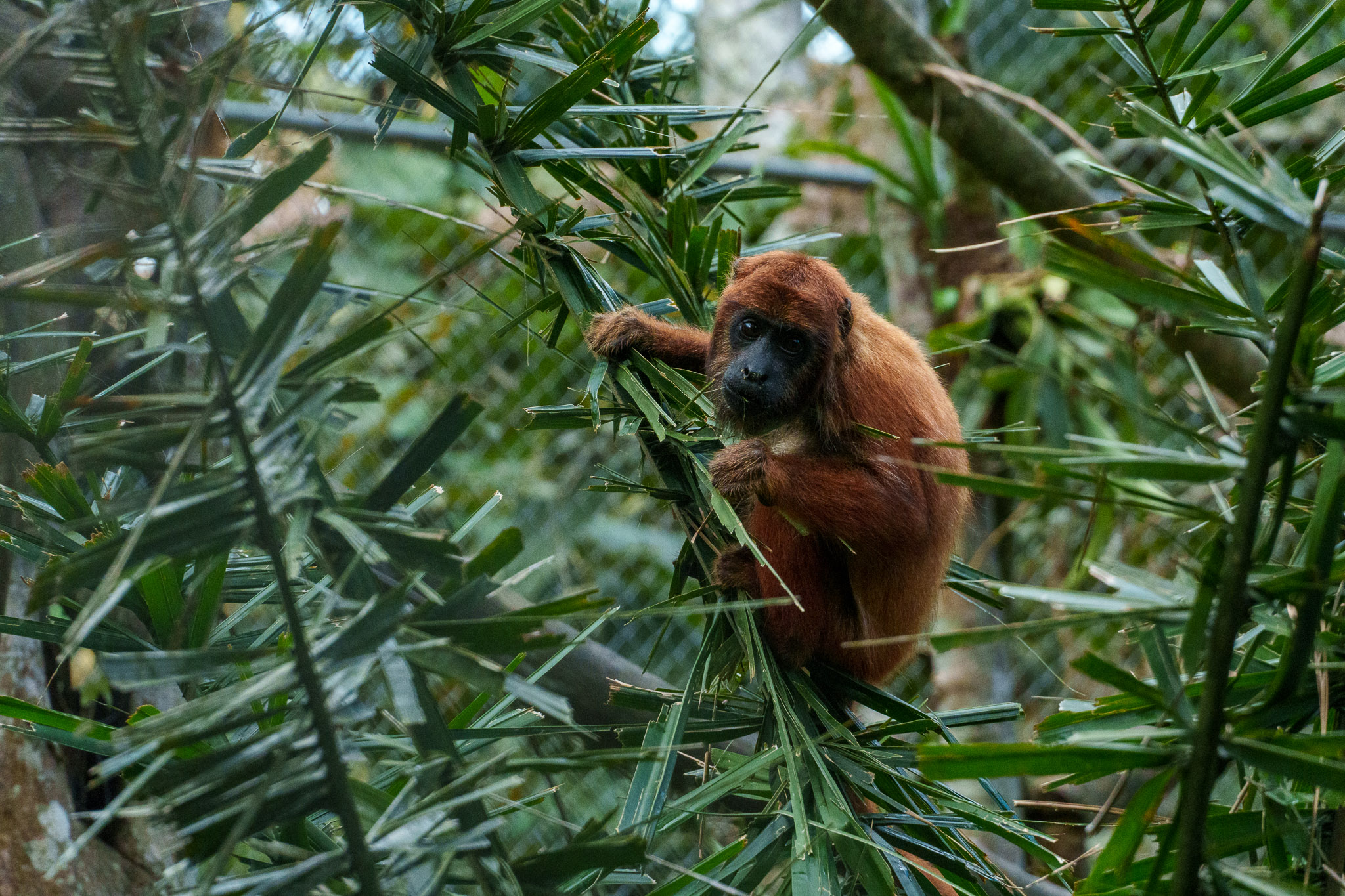
Alouatta seniculus, commonly known as the red howler monkey, is one of the largest New World monkeys, easily recognizable by its reddish-brown thick fur and prominent throat sac.
This throat sac amplifies its howling calls, which are among the loudest animal vocalizations and can be heard up to 5 kilometers away.
The monkeys have a robust body, long limbs, and a prehensile tail used for balance and support in the treetops. Males are larger than females, with body lengths ranging from 49 to 72 cm and weights between 4 and 9 kg.
They have a distinctive facial structure with a slightly protruding snout and a beard-like tuft of fur.
Where it can be seen
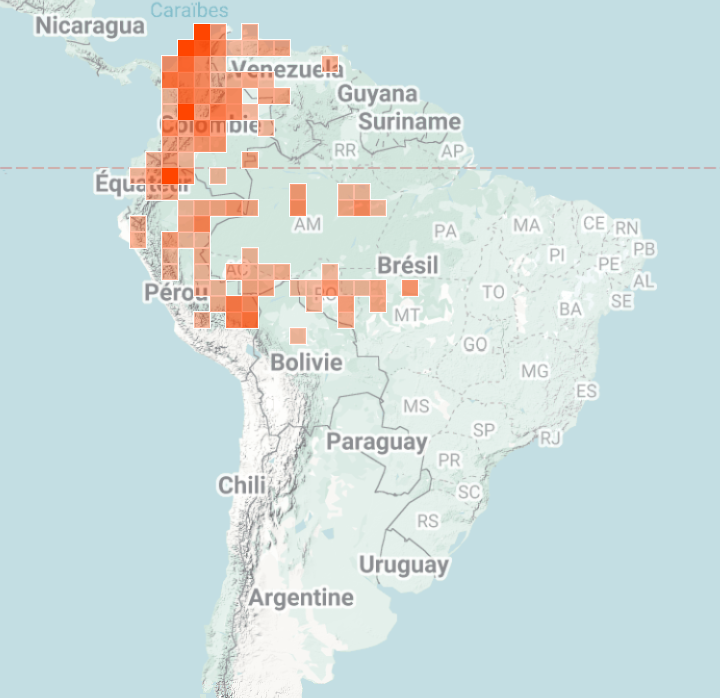
Red howler monkeys inhabit the northern half of South America’s tropical forests, including Brazil (Amazonas), Colombia, Ecuador, Peru, Venezuela, and French Guiana.
They prefer humid lowland rainforests, cloud forests, mangrove swamps, and gallery forests, often living high in forest canopies but sometimes venturing lower for food or during the wet season.
Their habitat ranges broadly in elevation from lowland areas up to 1000 meters or more. I have seen them in a sanctuary in the Yungas in Bolivia—their red coloration is indeed very impressive!
Species and its variety around South and Central America
Alouatta seniculus has several subspecies, including A. s. seniculus (Colombian red howler), A. s. arctoidea (Ursine howler), and A. s. juara. These subspecies vary regionally and show slight differences in vocalization, size, and fur color.
The red howler is widely distributed compared to other howler species and is an adaptable folivore with a diet mainly of leaves, supplemented by fruits and flowers.
Fun Fact about Red Howler Monkeys
Their howling calls serve as territorial and social communication, often performed during dawn and dusk as “dawn choruses” that echo through the forest to warn other groups of their presence. Typically, males are the primary vocalists.
They also have a curious reaction to rainy weather, often howling right before or as rain begins and then huddling to wait it out.
Despite their robust size, red howler monkeys sleep up to 15 hours a day, conserving energy due to their folivorous diet.
Ready to Meet the Monkeys of the Amazon Rainforest ?
The Amazon and Central American rainforests are truly remarkable homes to an incredible diversity of monkey species, each with unique behaviors, appearances, and adaptations.
From the playful capuchins to the vocal howler monkeys, the secretive night monkeys, and the fascinating red-faced uakaris, these primates offer unforgettable wildlife experiences for any jungle explorer.
Spotting monkeys in their natural habitat requires knowledge, patience, and respect for the jungle environment, but the reward is a closer connection to some of the most intelligent and social animals on the planet.
Now you have the basic knowledge to distinguish between a howler monkey, squirrel monkey, spider monkey, and many others.
So, gear up for your next adventure with curious eyes and open ears—you’re bound to discover the magic of the monkey rainforest world the next time you visit the Amazon or Central America.
Ready for a monkey-spotting journey of a lifetime? The rainforest awaits!

Freebie For You !
Thanks for sticking around until the end — that really means a lot. To show my appreciation, I’ve prepared something special for you: a Travel Guide 101 packed with my favorite tips, useful websites, and practical info to help you plan your next adventure.