
Colombia Travel Guide
Colombia surprised me more than I expected. I knew about the beaches and the cities, but nothing prepared me for how green and mountainous the country is. In Santander, around Medellín, where the city sits in a valley between two walls of mountains, or in the hills of Salento, the landscapes kept stopping me in my tracks.
Then there are the coasts. The Caribbean side is lively and more developed, while the Pacific feels wild and remote, with jungle running straight into the ocean. Two seas, two completely different worlds.
This Colombia travel guide brings together the places I explored over several trips, from Cartagena and the coffee region to Bahía Solano, Muzo and the hidden corners of the countryside. You’ll find ideas to shape your route, detailed guides to plan each stop, and honest advice on traveling safely.
I’ve been back to Colombia several times, traveling mostly by bus and flying when I wanted to jump between regions. Both work really well, and the bus rides are often a chance to watch those mountains roll by.
Some of my favorite memories came from the less obvious places: going down into the Muzo emerald mines, rappelling into the Cueva de la Tronera and watching humpback whales off Bahía Solano.
They take more effort to reach, but they’re what made Colombia feel like a real adventure.
Quick Facts
When to go
Colombia works all year, since the weather depends more on altitude than on the season. The Caribbean coast is hot year-round, and December to March is the driest time in the mountains.
Daily budget
Colombia is a bit cheaper than Peru. Around $30 a day covers accommodation and food, since cheap meals and budget stays are easy to find everywhere. Add a little extra for tours and activities.
Getting around
Long-distance buses connect all the main cities, and domestic flights link the regions and the Pacific coast.
Currency
Colombian peso (COP).
Visa
Most travelers from Europe and the Americas don’t need a visa for stays of up to 90 days.
Highlights
Chasing Whales in Bahía Solano
Bahía Solano is one of the best places in South America to see humpback whales, but they don't show up on demand.
I spent three days trying, from scuba dives to a solo trip to the wild beach of Huina, before I finally filmed a mother and her calf on my last morning.
My guide covers the whale season, how to get there and how to get on a boat without paying a fortune.
Going Down Into the Emerald Mines of Muzo
Muzo isn't a tourist town. It's a mountain town where everything revolves around emeralds, and the road from Bogotá is an adventure in itself.
With Jorge, I visited the hand-dug tunnels, the valley where teams blast the hillside with water, and the river where hundreds of people search for stones. Then I tried mining myself.
My guide explains how to get there, where to stay, how the tour works and how to buy emeralds at a fair price.
Rappelling Into Cueva de la Tronera
Near El Peñón, in Santander, a huge heart-shaped hole opens in the middle of green fields. Locals call it El Corazón del Mundo.
After a short walk through the countryside, you rappel deep into the cave, then walk through it surrounded by the echoing calls of hundreds of birds.
My guide covers the buses from Barbosa, the only two guides who run the tour, and what to bring, like proper boots and a sweater.
Region
Cartagena and the Caribbean Coast
Cartagena is where most Colombia trips begin, and it’s easy to see why. The old town is colorful and full of energy. My tip is to walk it very early in the morning, when the streets are empty and the light is soft, then come back at night when the music takes over.
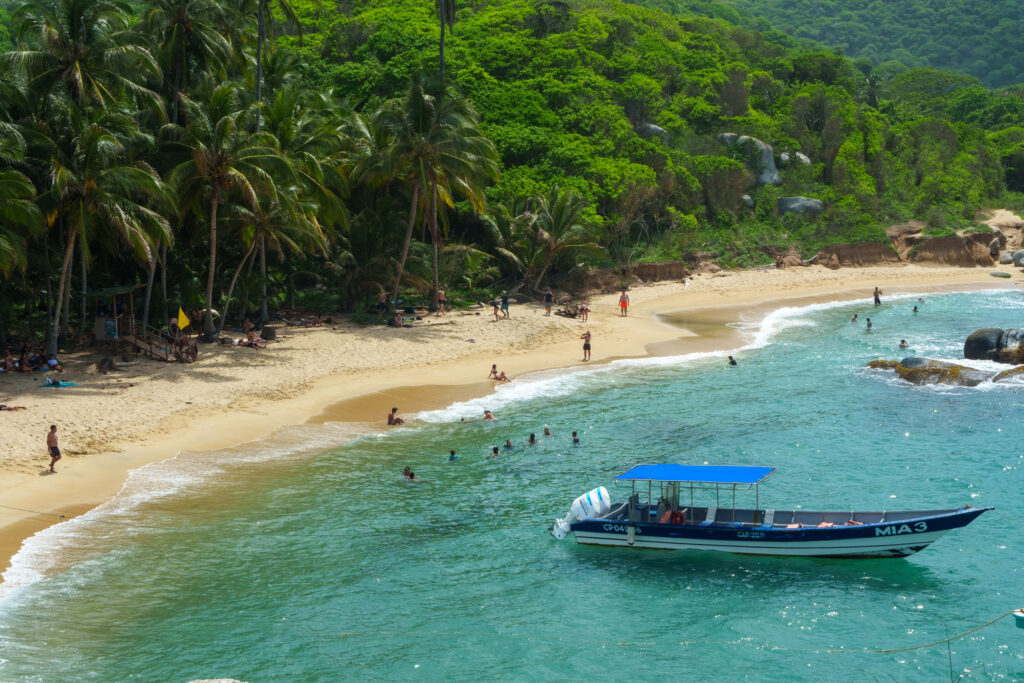
From the city, I took a boat to the Islas del Rosario and went diving with Cartagena Divers, including my first wreck dives at the naval museum site. Further along the coast, I stayed in Taganga, a small fishing village with plenty of dive shops, and spent a night in Tayrona Park at Cabo San Juan before hiking out early to spot monkeys and birds.
The Caribbean is the most developed coast in Colombia. If you’re short on time, it’s the easiest place to get a bit of everything: city life, beaches, diving and jungle.


The Wild Pacific Coast
The Pacific coast feels like another country. Jungle and mountains cut it off from the rest of Colombia, so there are almost no roads. You arrive by boat from Buenaventura or on a small plane from Medellín, Cali or Bogotá.
I came here twice for the whales. Years ago in Juanchaco, I watched humpbacks jump out of the water from a local fisherman’s boat. More recently, I flew to Bahía Solano in June, a little before the season, and it took me three days of trying before I finally filmed a mother and her calf with my drone.
For the best chances, come between mid July and November. Even outside the season, the diving is worth it. During one safety stop, I heard whales singing underwater, and I’ll never forget that sound.

Whale Watching in Colombia: Bahia Solano, Wild Animals, and the Best Whale Season Experience
Medellín, Salento and the Coffee Region
This is the Colombia that surprised me the most, with green mountains everywhere you look. Medellín sits in a long valley with mountains rising on both sides, and the road south to Salento, around 5 to 7 hours by bus, winds through some of the best landscapes in the country.
I’ve been to Salento twice, seven years apart. The town is more touristy now, but the Valle de Cocora hike is still a must, with wax palms up to 60 meters tall, a hummingbird house and hanging bridges in the cloud forest.
Life is slower here than on the coast. Coffee tours, small colorful towns and long walks make it the perfect break between two adventures.

Santander, Boyacá and Off-the-Beaten-Path Adventures
Some of my best memories in Colombia come from places most travelers skip. In Muzo, the emerald capital of the world, Jorge, a former miner who now runs a small hotel in town, took me down into the tunnels that locals dig by hand into the hillside. I watched hundreds of people search the river for green stones, and I even tried mining myself.
In Santander, near El Peñón, I rappelled into Cueva de la Tronera, a huge heart-shaped hole known as El Corazón del Mundo. You go down the first 50 meters on your own, then the guide lowers you into the void. It was one of the biggest adrenaline rushes I’ve ever had.
The region is also full of colonial villages like Barichara and Villa de Leyva. With extra time, add Caño Cristales, the river that turns red and pink between June and November. These places take more effort to reach, but that’s exactly what makes them special.


Recommendations
Get Your Yellow Fever Vaccine Before You Leave
Get vaccinated at least 10 days before your trip, wherever you’re flying from. Airlines can ask for proof before you even board, and some national parks and jungle regions also require it. Keep your yellow card with your passport.
Pack for Several Climates
One trip can take you from the hot Caribbean coast to cool mountain towns and humid jungle. Pack light clothes, a warm sweater and a rain jacket, plus sunscreen and insect repellent.
Learn Some Spanish Before You Go
Outside Medellín and Bogotá, where some young people speak a bit of English, very few people speak it. Daily life gets complicated without a little Spanish. The good news is that you learn fast once you’re there.
Give Remote Places Extra Time
Places like Muzo, El Peñón or Bahía Solano take time to reach, with only a few buses a day and long mountain roads. Plan to arrive the day before your activity, and avoid traveling after dark.
People Also Ask
- Is Colombia safe for travelers?
In my experience, yes. I’ve been three times, as a backpacker, a student in Medellín and a digital nomad, and nothing bad ever happened to me. In big cities, wear your backpack in front on public transport and use Uber or InDrive at night. Avoid a few border regions and check the current situation before you go.
- How many days do you need in Colombia?
I recommend three weeks for a first trip. That’s enough to see two or three regions, roughly one per week. If you want to really dive into the culture, plan a month to a month and a half.
- Where should I go on a first trip to Colombia?
Start with Cartagena and the Caribbean coast, then Medellín and the coffee region around Salento. That combination gives you city life, beaches and green mountains in one trip. With more time, add the Pacific coast or Santander.
- Should I visit the Caribbean or the Pacific coast?
They’re two different worlds. The Caribbean is more developed, with lively cities like Cartagena, easy beaches and good diving, while the Pacific is wild, remote and the place to see whales. If you’re short on time, choose the Caribbean. If you love nature, try to see both.
- When can you see whales in Colombia?
Humpback whales visit the Pacific coast from mid July to November, and the most spectacular jumps usually happen from August. I went to Bahía Solano in June, a bit early, and it took me three days to find them. You won’t see them on the Caribbean side.
- Is Salento worth visiting?
Yes. The town is more touristy than on my first visit, but the Valle de Cocora hike, the coffee tours and the green landscapes are still some of the best things to do in Colombia. It’s easy to combine with Medellín, around 5 to 7 hours away by bus.
- Can you visit the emerald mines in Muzo?
Yes, but not through a classic tour agency. I went with Jorge, a former miner who runs a small hotel in town and takes travelers into the tunnels, along the river and to the valleys where people search for emeralds. Plan at least a day and a half, as the road from Bogotá is long.
- How should I pay in Colombia?
I paid for a lot of things in cash, especially outside the big cities, but cards work in many places too. These days I also use WanderWallet, which works well across South America. My review explains how it works.
Start Planning Your Colombia Trip
Colombia is one of those countries where you can easily build a trip around your interests. Beach lovers can focus on the Caribbean, wildlife travelers can head to the Pacific, and hikers will find enough mountains and valleys to stay busy for weeks.
For a first trip, I would start with Cartagena and the Caribbean coast, then fly or bus to Medellín and finish in the coffee region. That combination gives you city, beach, culture, nature and some of the best landscapes in the country.
If you have three or four weeks, add Bahía Solano for whales, Muzo for emeralds or Caño Cristales for one of the most unusual rivers in South America. These places take more effort to reach, but they are what make a Colombia trip feel special.
Before you go, read my honest guide on whether Colombia is safe. It covers the practical advice, the areas to approach carefully and the mindset I would recommend for a first visit.
Colombia rewarded me with some of my favorite travel moments in South America. If you are looking for a country with variety, energy and real adventure, it deserves a high place on your list.